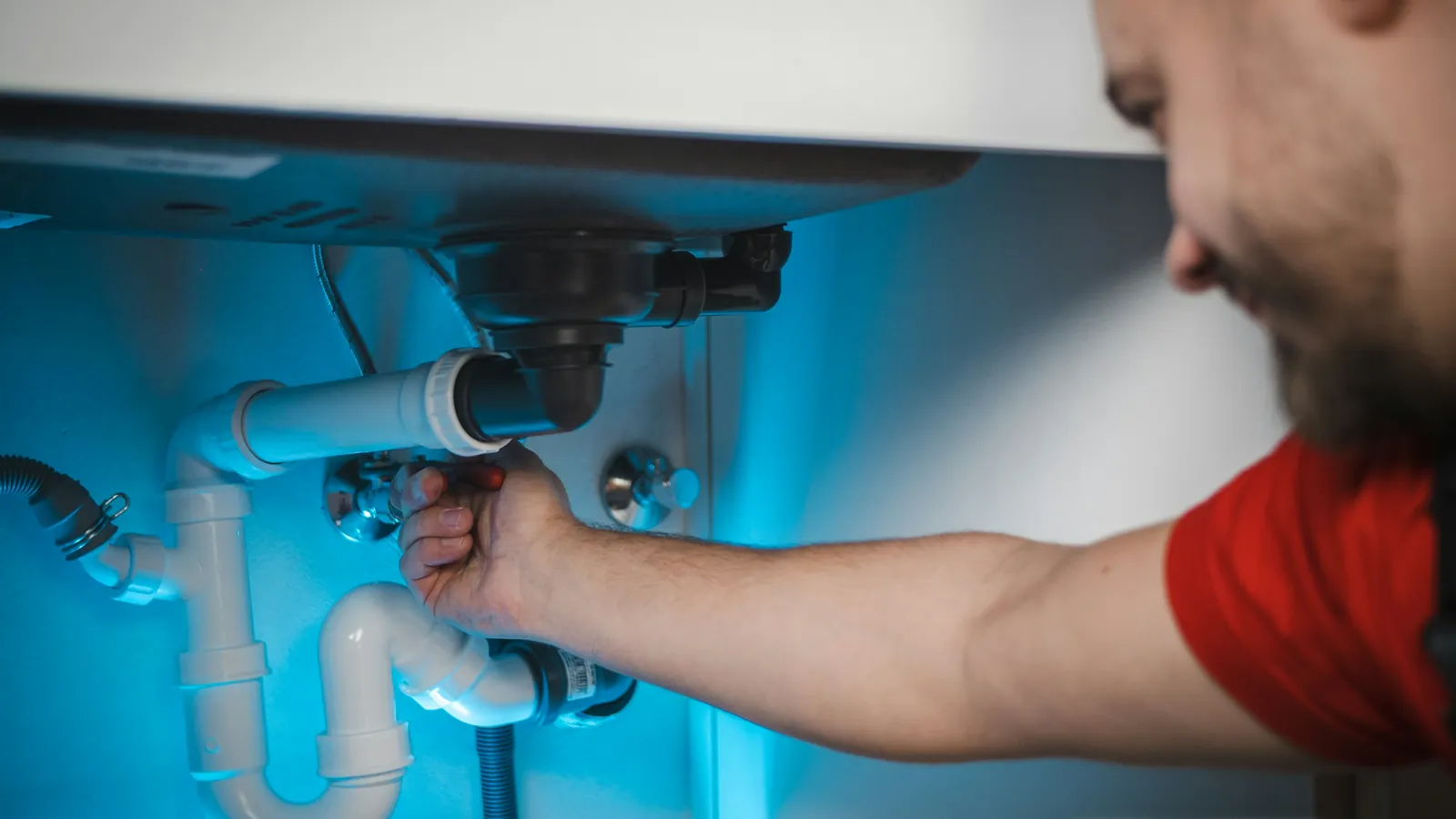
For Homeowners
Water treatment specified from your water, not a catalogue
Filtration, softening, reverse osmosis and disinfection each remove something different. A test of your own supply is what decides which of them you need — and which you are being sold without needing.
Licensed contractor
One company accountable for the job
Free water test
No obligation, and a technician rather than a commissioned salesperson
Permits & inspections handled
Pulled under our licence, not left for you to chase
Coverage confirmed for your address
Service areas: Arizona and Virginia
Test first. Everything else follows from the result.
Water treatment is subtractive: every stage removes something specific and does nothing about anything else. A softener will not fix a chlorine taste. A carbon filter will not stop scale in your water heater. Ultraviolet disinfection will not touch iron staining.
So the equipment cannot be chosen before the water is known. A specification offered before a test is a product being sold rather than a system being designed — and that is the single most useful thing to know when comparing quotes.
If you are on a private well, testing is your responsibility and nobody does it unless you arrange it. If you are on a municipal supply, your utility publishes an annual water quality report, which is a real starting point even though it describes water leaving the plant rather than arriving at your tap.
Services offered
What a water treatment job with us covers
Installation and replacement of whole-home and point-of-use treatment, specified against what your water actually contains.
Sediment filtration
Installation of the first stage that protects everything downstream of it, sized to the service line and the household draw.
Softening
Installation of ion-exchange softening where hardness is the problem, including the drain connection the plumbing code treats as indirect waste.
Carbon filtration
Installation of carbon stages for taste, odour and disinfection by-products, specified from your utility's own water quality report.
Reverse osmosis
Point-of-use installation at the kitchen sink where the target is dissolved solids rather than whole-home flow.
Disinfection
Installation of UV or equivalent treatment where the supply is a private well or is otherwise not continuously disinfected.
System replacement
Replacing equipment that has reached the end of its service life, including the discharge and air gap details an inspector looks at.
This is installation and replacement work, specified from a published water quality report or a test of your supply — not from a sales chart. Coverage is confirmed per service area rather than promised as blanket availability.
Benefits
Why homeowners choose Seamless Home for water treatment
Specified from your water
Equipment is chosen after your water is known, never before. A specification offered before a test is a product being sold, not a system being designed.
Whole-home and drinking water
Point-of-entry treatment for the water your pipes, water heater and showers see, and point-of-use treatment at the tap you drink from.
Maintenance in writing
Every stage has a consumable. The schedule, and who performs it, belongs in the written scope you can hold us to later.
One accountable contractor
The workmanship obligation on the plumbing connection sits with the contracting party, not with whichever crew was on site.
How it works
From water test to working system
Four steps, and the equipment is not chosen until the second one.
- 1
Request a free assessment
Tell us what you need and where the property is. We confirm whether we cover your address for this trade before anything else happens.
- 2
Assessment and written quote
A technician, not a salesperson on commission, reviews your water test (or what the test needs to cover) and the plumbing. The specification and price come in writing, and nothing has to be decided on the spot.
- 3
Permit and installation
Where a plumbing permit is required it is pulled under our licence. The discharge and backflow details are installed to code, with every stage placed where it can be serviced.
- 4
Inspection, handover and support
The inspection is passed where one applies, the consumables schedule is handed over, and the workmanship obligation stays with us rather than with a crew you would have to track down.
Start by separating two different complaints
Aesthetic complaints are the ones you notice: taste, smell, cloudiness, staining on fixtures, scale in the kettle, laundry that feels stiff, soap that will not rinse. These are real problems worth solving and they are matters of nuisance and of wear on your plumbing and appliances rather than of safety. They are also the ones most readily diagnosed, because the symptom usually points at the cause.
Health-based contaminants are the ones you cannot notice. They have no taste, no smell and no appearance, which is exactly why they require a test rather than a judgement. If this is your concern, the right first calls are a certified testing laboratory and your local health department — before any contractor, including us. Nothing on this page is a health assessment, and no contractor should offer you one.
The reason to separate them early is that they lead to different equipment and different urgency, and a quote that blurs the two is difficult to evaluate. Knowing which conversation you are having is what lets you ask whether a proposed stage addresses your actual complaint.
What each stage actually does
A complete system is usually several of these in sequence, and the order matters — later stages depend on earlier ones having done their job.
Sediment filtration
Removes suspended grit, sand and rust particles. It is often the first stage not because it is the point of the system but because it protects everything downstream from clogging — and it is the stage with a cartridge you will actually have to change.
Softening
Addresses hardness: dissolved calcium and magnesium. Hardness is what produces scale in kettles and water heaters, spotting on glassware and the sense that soap will not rinse off. Conventional softeners exchange those minerals for sodium and periodically flush to a drain.
Carbon filtration
Targets chlorine and chloramine taste and odour, and a range of organic compounds. On a municipal supply this is the stage that most often resolves the complaint that started the conversation, because the taste people object to is frequently the disinfectant.
Reverse osmosis
Forces water through a membrane that rejects a broad range of dissolved substances. It is slow and produces a reject stream, so it is usually installed at a single tap rather than for the whole house — drinking and cooking water rather than showers.
Disinfection
Where a test shows bacteriological contamination, which is far more common on a private well than on a treated municipal supply. Ultraviolet treatment is the usual approach and depends on the water first being clear enough for the light to pass through it.
Specific contaminant treatment
Where a test identifies something particular — iron, manganese, sulphur, arsenic, nitrate or another — the treatment is selected for that substance and specified against the standard covering it. This is the stage that cannot be designed without a test result.
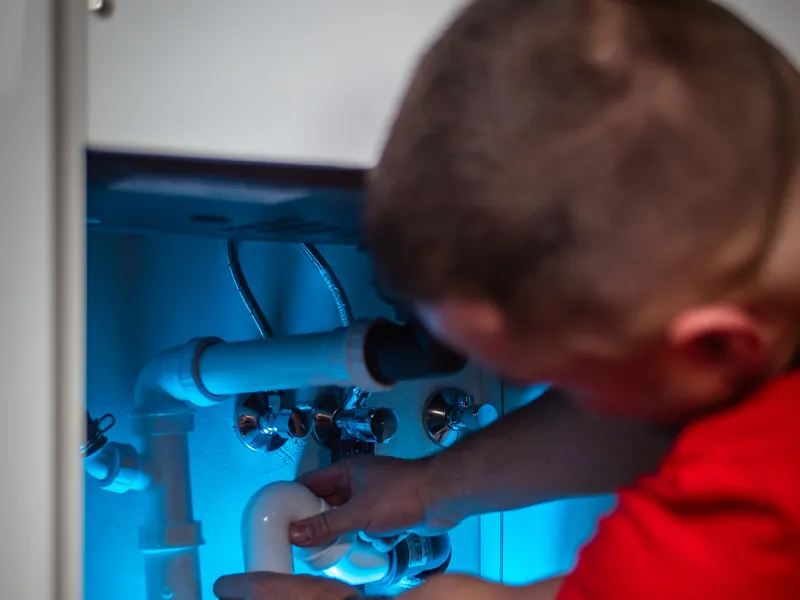
Whole-home or one tap
Point-of-entry treatment — the whole-home position — treats water where it enters the building, so every fixture gets it. That is where hardness, sediment and chlorine belong, because those affect your pipes, your water heater, your appliances, your laundry and your showers, not just what you drink.
Point-of-use treatment handles a single fixture, usually the kitchen sink. That is where reverse osmosis belongs: it is slow, it produces a reject stream, and running an entire house through it would mean substantially more equipment to no purpose. Drinking and cooking water is the use case.
Most complete installations are therefore both, and a proposal offering only one of the two is worth asking about. A whole-home system alone may leave the drinking-water question unaddressed; a single under-sink unit alone does nothing for the scale shortening the life of your water heater.
The installation details that decide an inspection
This is plumbing work, so the licence classification involved is a plumbing one and, where a permit is required, it is generally a plumbing permit. Requirements vary by jurisdiction and are established for your address rather than assumed. Three details account for most of what goes wrong.
Where the discharge goes. A softener regenerating and a reverse osmosis unit both need to discharge, and how that connects to your drain is a code question rather than a matter of convenience. Some jurisdictions and some septic arrangements also restrict softener discharge specifically.
Backflow protection. Anything connected to a potable supply has to be incapable of sending water back into it. This is the same principle that governs irrigation and boiler connections, and it exists so that treatment equipment can never contaminate the water it was installed to treat.
Access for service. Every stage above has a consumable, so equipment installed where cartridges cannot be reached or salt cannot be carried is a maintenance problem being built in on purpose. It is worth looking at the proposed location with that in mind before anyone starts.
Where the discharge goes. A softener regenerates by flushing brine to a drain, and the plumbing code treats that as indirect waste — it may not be connected directly. On a property with a septic system there is a second question, because several states prohibit softener regenerant to an onsite system outright while others permit it only with conditions. Where a water softener is allowed to discharge sets out the air gap requirement and why the septic answer has to come from the local authority before equipment is chosen rather than after it is installed.
As with any home improvement work, what is in the written scope is what you can hold anyone to later — including the maintenance schedule and who performs it. Our contract review checklist works on any contractor's agreement, and what a home improvement contract must contain sets out the terms many states require in writing.
Where Seamless Home fits
Seamless Home is a licensed contractor. On the projects it takes it contracts as the accountable party, holds the permit, and engages the installing crew — a vetted local partner — as its subcontractor. It does not keep its own crews. That is the same structure behind PV solar installation and battery backup, and the reason it matters is the same: a workmanship question later does not depend on whether a particular crew is still trading.
Because water treatment is a plumbing trade rather than an electrical one, availability can differ from PV solar at the same address. Coverage is confirmed per service area rather than promised as blanket availability, so the first step is checking your area rather than choosing equipment.
What we will not do is quote a system from a page. Nothing here recommends specific equipment, and no figure on this page is a price, because both depend on a test result that does not exist yet.
Local water quality pages
Arizona metros, each cited to that city's own Consumer Confidence Report rather than to a valley-wide average: Phoenix, Mesa, Scottsdale, Chandler, Gilbert, Tempe, Peoria, Surprise, Avondale, Goodyear, Glendale, Casa Grande, Flagstaff, Yuma, Lake Havasu City, Marana, Bullhead City and Tucson; Virginia: Virginia Beach, Norfolk, Richmond, Arlington, Alexandria, Chesapeake, Suffolk, Portsmouth, Newport News, Lynchburg, Harrisonburg, Charlottesville, Fredericksburg, Danville, Manassas, Blacksburg and Roanoke; Massachusetts: Boston, Worcester, Framingham, Waltham, Newton, Lexington, Watertown, Brookline, Somerville, Cambridge, Springfield, Lowell, Brockton, New Bedford, Fall River, Lynn, Lawrence, Haverhill, Medford, Malden, Revere, Arlington, Chelsea, Melrose, Everett, Winthrop and Quincy. Coverage is confirmed per service area, not assumed from the city name.
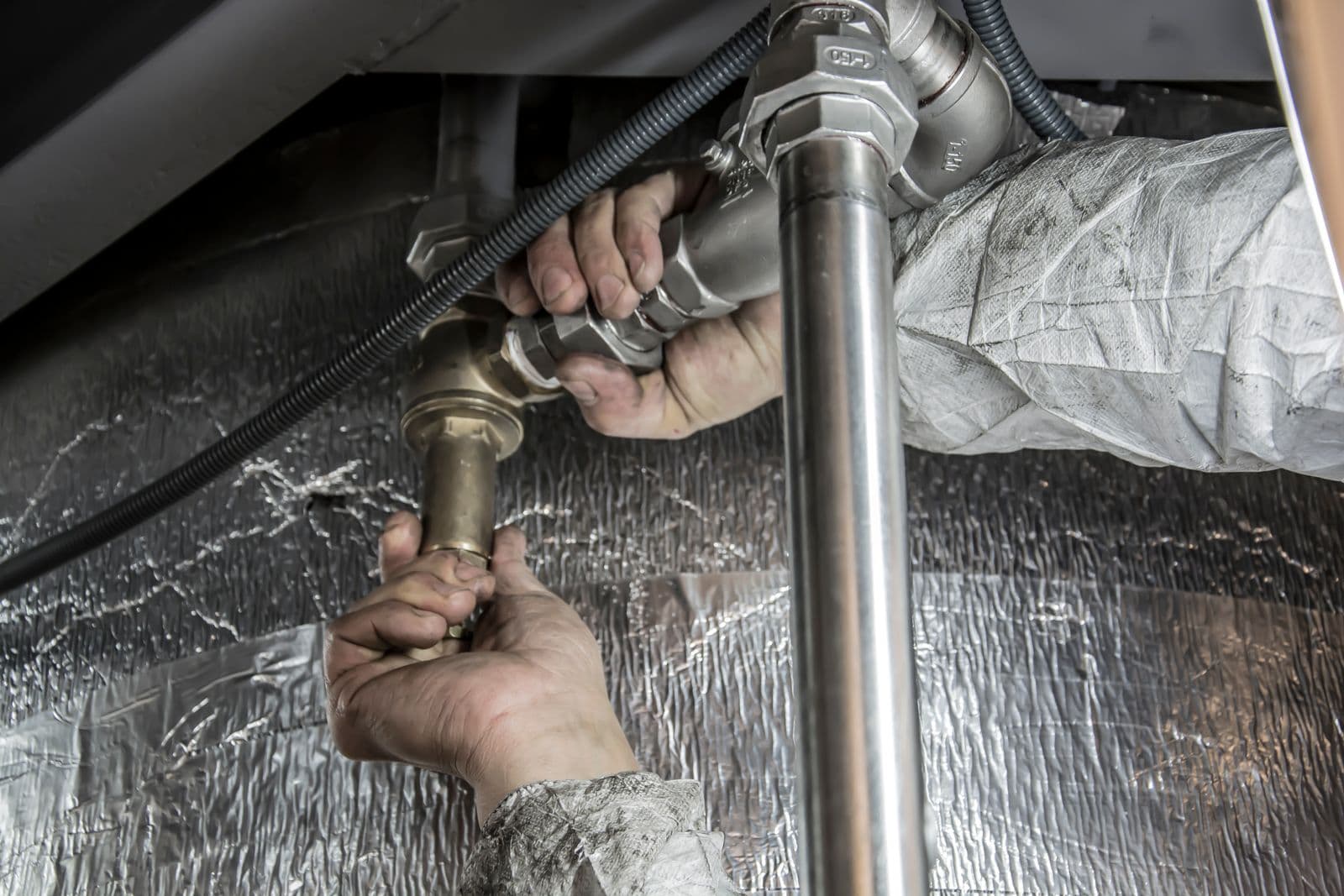
What the work actually looks like
Treatment equipment is plumbing. Most of the job is the connection, the drain and the code detail behind it.


Frequently Asked Questions
Do I need a water test before choosing equipment?+
Yes, and this is the single most important thing on this page. Water treatment is subtractive: each stage removes something specific, so what is in your water determines the equipment. A softener does nothing about chlorine taste. A carbon filter does nothing about hardness. Ultraviolet disinfection does nothing about iron staining. A specification produced before a test is not a design, it is a product being sold. If you are on a private well, testing is your responsibility and no one does it for you unless you arrange it. If you are on a municipal supply, your utility publishes an annual water quality report that is a genuinely useful starting point, though it describes water leaving the treatment plant rather than water arriving at your tap.
What is the difference between whole-home and point-of-use treatment?+
Point-of-entry, usually called whole-home, treats water where it enters the building so every fixture receives it. That is the right place for hardness, sediment and chlorine, because those affect your plumbing, your water heater, your appliances and your showers rather than only your drinking water. Point-of-use treats one fixture, typically the kitchen sink. That is the right place for reverse osmosis, because treating the entire house through a slow membrane that produces a reject stream would be wasteful and would need considerably more equipment. Most complete systems end up being both: point-of-entry for the water the building sees, point-of-use for the water you drink.
Does a water treatment installation need a permit?+
It depends on the jurisdiction and on what is being installed, and it is established for your address rather than assumed. The work is plumbing, so where a permit is required it is generally a plumbing permit, and the trade licence involved is a plumbing classification rather than an electrical one. Two details drive most of the requirements: a softener or a reverse osmosis unit needs somewhere to discharge, and how that discharge may connect to your drain is a code matter rather than a preference; and any connection to a potable supply raises backflow protection, which exists so treatment equipment can never contaminate the water it is connected to. An installation that ignores either is a failed inspection at best.
Will a filter make my water safe to drink?+
That is not a question a page can answer, and treating it as one would be irresponsible. Whether a supply is safe depends on what is in it, which requires a test, and if a test identifies a health-based contaminant then the treatment has to be selected specifically for that substance and specified against the standard that covers it. Certification standards exist separately for aesthetic effects like taste and odour, for health-related contaminant reduction, for reverse osmosis systems, for softeners and for ultraviolet disinfection — and a product certified under one is not thereby certified under another. If you have reason to think your water is unsafe, the right first calls are a certified testing laboratory and your local health department, not a contractor.
How much maintenance does a system need?+
More than most proposals emphasise, and it is worth asking about before you buy rather than after. Sediment and carbon stages have cartridges or media that are consumed and have to be replaced on a schedule. A conventional softener needs salt added and will regenerate periodically. A reverse osmosis unit has both pre-filters and a membrane, on different intervals. Ultraviolet disinfection has a lamp with a service life that ends whether or not it still appears to be lit, which is why those systems typically monitor it. A system nobody maintains gradually stops doing the thing it was installed for, and in the case of a clogged filter can become the problem. Ask for the consumables schedule and its cost as part of the quote.
Is a salt-free conditioner the same as a softener?+
No, and the distinction is worth understanding because the two are marketed interchangeably. A conventional ion-exchange softener removes hardness minerals from the water, so a hardness test afterwards reads lower. Salt-free conditioners do not remove them; the approaches in this category aim to change how those minerals behave so they are less inclined to form hard scale, and the water remains chemically hard. That can be a reasonable trade where a drain for regeneration discharge is impractical or where sodium addition is a concern, but it is a different mechanism with different expectations, and it should be presented as such rather than as a softener without the salt.
Who is accountable for the installation?+
On projects Seamless Home takes, Seamless Home contracts as the licensed contractor and the installing crew is a vetted local partner engaged as its subcontractor — the same structure used for PV solar and storage. In practice that means the workmanship obligation on the plumbing connection sits with the contracting party rather than with whichever crew was on site, and equipment is separately warranted by its manufacturer for the term on that product. Coverage is confirmed per service area rather than promised as blanket availability, and because water treatment is a plumbing trade it can differ from PV solar availability at the same address. That is worth confirming first.
Related resources
Phoenix water quality
What the City of Phoenix 2025 Water Quality Report actually lists, cited to the CCR and EPA MCLs, and which treatment addresses which finding.
Learn more →Mesa water quality
Three zones, Val Vista versus Signal Butte, and a 2025 CCR with hardness from 0.4 to 25 grains.
Learn more →Tempe water quality
City of Tempe 2024 CCR (PWS AZ0407100): SRP-first mix, arsenic, TTHM, HAA5 and hardness.
Learn more →Peoria water quality
West Valley CAP/SRP/wells mix from the City of Peoria 2024 CCR (PWS AZ0407096).
Learn more →Tucson water quality
Colorado River water recharged and recovered — why Tucson's TTHM numbers look different from the Valley.
Learn more →All home services
PV solar, battery backup and water treatment under one accountable contractor.
Learn more →Home improvement contract review checklist
Read any contractor's agreement against the terms that are supposed to be in it.
Learn more →What a home improvement contract must contain
Mandated terms, deposit limits and cancellation rights that apply to work like this.
Learn more →The implied warranty on home improvement work
The workmanship obligation that exists whether or not a contract mentions it.
Learn more →Bring a test result, or start with getting one
Tell us what you are noticing and where you are. We will confirm whether the trade is available in your area and what the test needs to cover before anything is specified.
Get a Free Water Test