Marana, Arizona
Marana Water Quality
Well water from the Tucson Basin Aquifer. The 2025 Marana Municipal report found PFOS, PFHxS and PFOA, plus 1,4-dioxane at 0.36–0.41 ppb against a 0.35 ppb health advisory. The Town is planning more treatment.

PFOS 16.8–17.9 ppt · PFHxS 21.2–21.5 ppt · PFOA 6.49–7.02 ppt · 1,4-dioxane 0.36–0.41 ppb · nitrate up to 6.04 ppm.
The short answer
Marana Municipal runs on well water, so disinfection byproducts are low (trihalomethanes peaked at 10.8 ppb). What stands out is PFAS: PFOS at 16.8–17.9 ppt, PFHxS at 21.2–21.5 ppt and PFOA at 6.49–7.02 ppt, plus 1,4-dioxane at 0.36–0.41 ppb against a 0.35 ppb health advisory.
The Town says untreated wells exceed EPA's April 2024 PFAS limits and has proposed four new treatment sites. Until that treatment reaches your area, reverse osmosis or carbon at the tap is the practical step, after a test at your house.
Get a free test
Tell us your Marana address. We confirm coverage first, then schedule a licensed technician to test at your tap — no charge, no obligation.
What filtration does — and does not
Carbon and reverse osmosis solve different problems. Marana's report points mostly at PFAS.
Where Marana water comes from
Groundwater, chlorinated by the Town.
Five Town wells
Marana Municipal pumps groundwater from the Lower Santa Cruz portion of the Tucson Basin Aquifer through five wells, 187 to 228 feet deep.
Chlorinated, then piped
Water is stored in reservoirs and treated with calcium hypochlorite. Chlorine averaged 1.07 ppm in 2025, and trihalomethanes peaked at 10.8 ppb.
One of several Town systems
Marana Water runs separate systems, including Picture Rocks, Airline/Lambert, Hartman Vistas, Palo Verde, Silverbell Gateway and Tortolita Mountain. Each has its own report. The Town's map shows which one, or which other provider, serves an address.
What the 2025 Marana Municipal report actually says
Results are from the Town of Marana's 2025 Annual Water Quality Report for Marana Municipal (AZ0410150). They are system-level figures, not a reading at your tap.
PFOS 16.8–17.9 ppt
Sampled in April and October 2025. The report lists PFAS under unregulated contaminants. The Town's own water-quality page says untreated wells exceed the PFAS limits EPA set in April 2024.
PFHxS 21.2–21.5 ppt, PFOA 6.49–7.02 ppt
Two more PFAS from the same 2025 sampling. PFHxS is the highest PFAS result in the report.
1,4-dioxane 0.36–0.41 ppb
Against a 0.35 ppb health advisory; the report describes current levels as "at or just below" it. There is no federal limit, and the Town is studying treatment for affected areas.
Nitrate up to 6.04 ppm
Range 0.57–6.04 ppm against the 10 ppm limit. Above 5 ppm, the report advises anyone caring for an infant to ask a health care provider.
Arsenic up to 3.1 ppb
Range 1.0–3.1 ppb against the 10 ppb limit, from natural deposits. No violation.
No violations in 2025
The report lists no violations for Marana Municipal. Copper was 0.063 ppm at the 90th percentile with no site over the action level, and the Town has located no lead service lines.
Marana next to Tucson and Bullhead City
To the southeast, Tucson Water mostly delivers Colorado River water recharged into the aquifer and recovered through wells, and its report is about arsenic and nitrate. On the Colorado River in Bullhead City, well water also showed PFAS, with PFOS up to 7.3 ppt. Marana Municipal's PFOS result is more than twice that, and its report adds PFHxS and 1,4-dioxane.
Where these figures come from
Everything on this page traces to the Town of Marana.
- Town of Marana — 2025 Annual Water Quality Report, Marana Municipal (PDF) — source, detected contaminants, PFAS and 1,4-dioxane sampling, and the violations statement.
- Town of Marana — Water Quality — the Town's water systems, service-line inventory, PFAS treatment plans and address map.
Matching treatment to the finding
Marana's report supports drinking-water treatment for PFAS and nitrate. It does not support a default equipment sale.
Reverse osmosis at the kitchen tap
Under-sink RO reduces PFOS, PFOA, PFHxS and nitrate in drinking and cooking water — the findings that matter most in this report.
Carbon for PFAS across the house
Activated carbon reduces PFAS. A whole-house system covers showers and every faucet, not just the kitchen.
1,4-dioxane is harder
Softeners do nothing for it, and a filter sold for PFAS is not automatically certified for 1,4-dioxane. Check the certification for that contaminant specifically before buying.
Test before buying anything
These are system-level results. The Town is also adding treatment. A tap test shows what's reaching your house today.
How the free test works
A licensed technician tests at your kitchen tap, walks the plumbing, and tells you which of the findings above applies to your house and which does not. There is no charge and no obligation.
Seamless Home is the licensed contractor of record on the work that follows. Installation is performed by vetted installing partners engaged as our subcontractors, and the workmanship obligation stays with us. Coverage is confirmed per service area rather than promised as blanket availability.
What a water treatment job with us covers
Installation and replacement of whole-home and point-of-use treatment, specified against what your water actually contains.
Sediment filtration
Installation of the first stage that protects everything downstream of it, sized to the service line and the household draw.
Softening
Installation of ion-exchange softening where hardness is the problem, including the drain connection the plumbing code treats as indirect waste.
Carbon filtration
Installation of carbon stages for taste, odour and disinfection by-products, specified from your utility's own water quality report.
Reverse osmosis
Point-of-use installation at the kitchen sink where the target is dissolved solids rather than whole-home flow.
Disinfection
Installation of UV or equivalent treatment where the supply is a private well or is otherwise not continuously disinfected.
System replacement
Replacing equipment that has reached the end of its service life, including the discharge and air gap details an inspector looks at.
This is installation and replacement work, specified from a published water quality report or a test of your supply — not from a sales chart. Coverage is confirmed per service area rather than promised as blanket availability.
What the work actually looks like
Treatment equipment is plumbing. Most of the job is the connection, the drain and the code detail behind it.
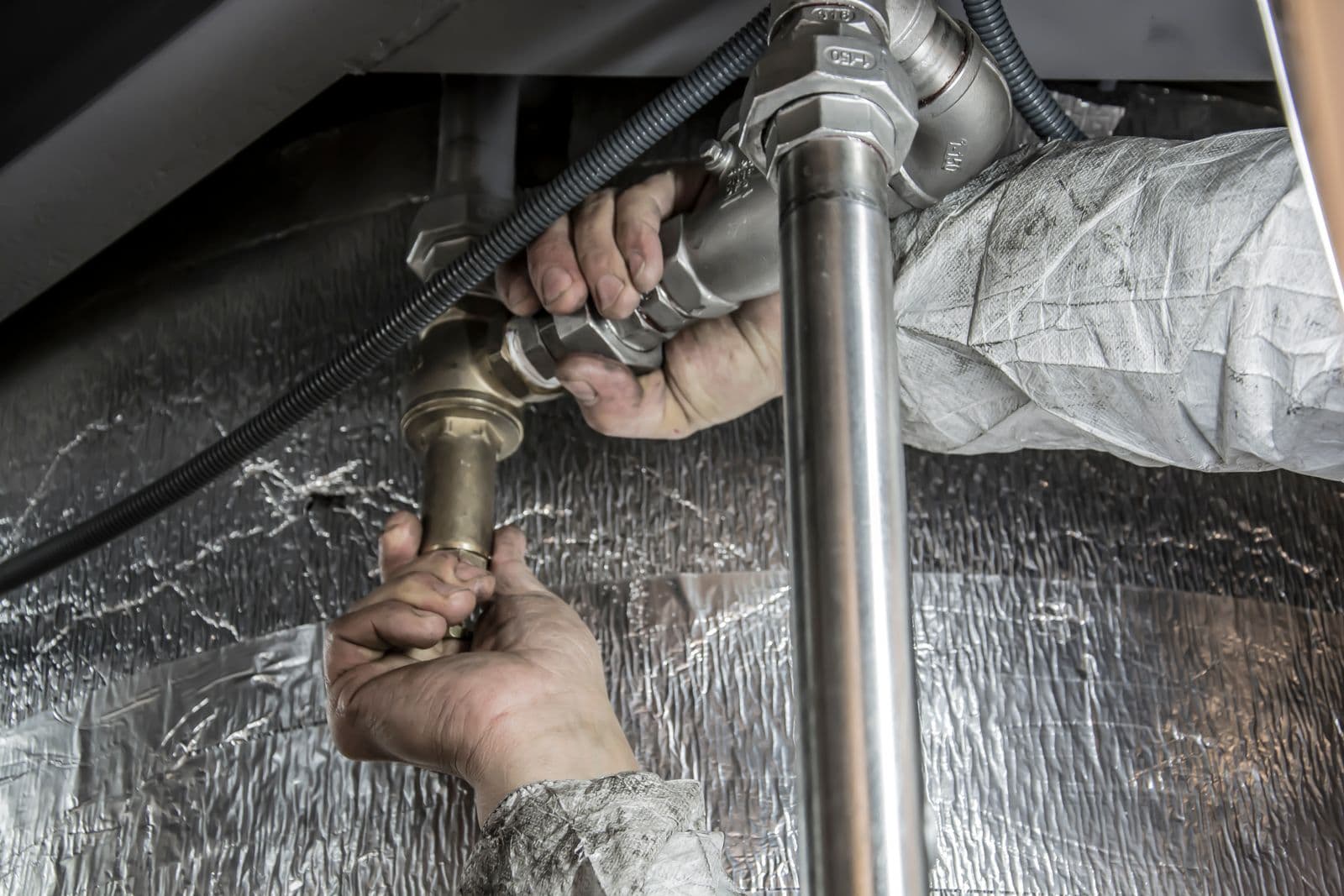


Marana water, answered plainly
Where does Marana's water come from?+
For the Marana Municipal system, from five Town wells in the Lower Santa Cruz portion of the Tucson Basin Aquifer. The water is chlorinated with calcium hypochlorite before it reaches homes.
Is there PFAS in Marana water?+
In the Marana Municipal system, 2025 sampling found PFOS at 16.8–17.9 ppt, PFHxS at 21.2–21.5 ppt and PFOA at 6.49–7.02 ppt. The Town says wells not treated at its two existing treatment campuses exceed EPA's April 2024 PFAS limits.
What is Marana doing about it?+
The Town has two treatment campuses that treat three wells for PFAS and 1,4-dioxane. A 2023 feasibility study proposed four more sites: Marana Park, Pioneer Well, Heritage Park and Airport NW Well.
Is 1,4-dioxane a concern?+
The 2025 report found 0.36–0.41 ppb against a 0.35 ppb health advisory. It has no federal limit. Check that a filter is certified for 1,4-dioxane specifically; a PFAS rating does not cover it.
Does this report cover my address?+
Only if you're on Marana Municipal (AZ0410150), which serves areas including Gladden Farms, Rancho Marana and Marana Vistas. Other Marana Water systems have their own reports, and the Town's map shows which provider serves your address.
Where do these figures come from?+
The Town of Marana's 2025 Annual Water Quality Report for Marana Municipal and the Town's water-quality page. Third-party aggregators are not used.
Related resources
Home water purification and treatment
The national service page behind this one.
Learn more →Tucson water quality
Recharged Colorado River water, with arsenic and nitrate results.
Learn more →Bullhead City water quality
Well water with PFOS and PFOA above 4 ppt.
Learn more →Tucson battery backup
Battery backup on Tucson Electric Power.
Learn more →All home services
Water, battery, HVAC and solar under one licensed contractor of record.
Learn more →Get a free test at your tap
A licensed technician tests at your kitchen tap and tells you which findings apply to your house — PFAS, nitrate or arsenic. No charge, no obligation, and coverage confirmed at your address first.
Get a free test