Tucson, Arizona
Home Battery Backup in Tucson
Southern Arizona monsoon takes feeders down, and grid-tied solar shuts off with them. In Tucson the outskirts add well-pump surge — and TEP is not a Valley utility.
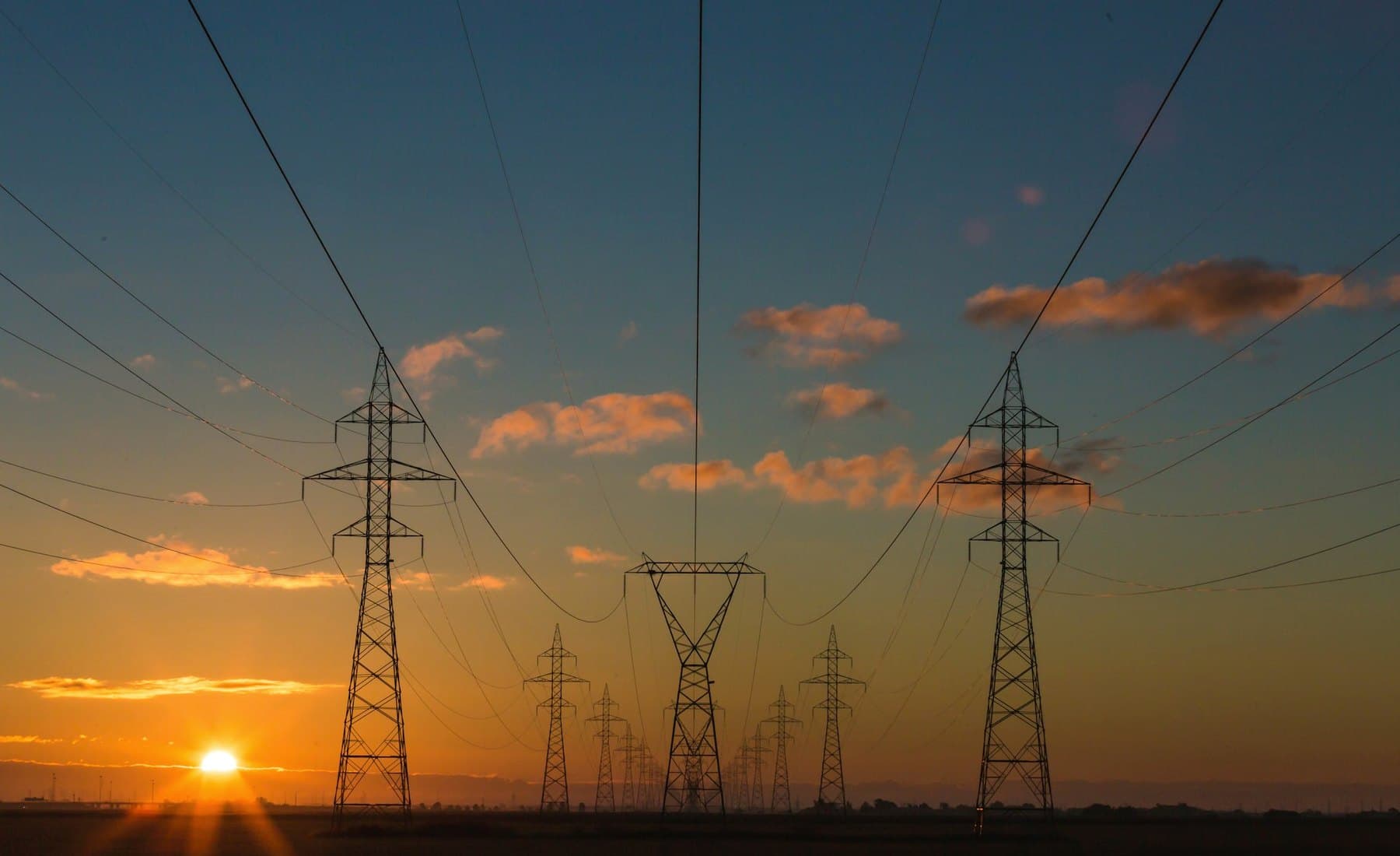
Anti-islanding still applies. A foothills well pump changes the inverter conversation. A midtown address usually does not.
The short answer
If you already have solar in Tucson, a battery covers the outage job grid-tied solar cannot do alone. Monsoon is the local trigger. On the outskirts, a well pump can dominate the critical-load panel; in the city proper, refrigeration and controls usually come first.
TEP rules are confirmed at the address. Coverage is confirmed per service area rather than promised as blanket availability.
Find out what a battery would run in your house
Tell us your Tucson-area address and whether you already have solar or a well. We confirm coverage first, then size to a critical load panel — not to a Valley flyer.
Southern Arizona outages, Tucson constraints
Separate metro, separate utility, monsoon still in charge — and wells only where the parcel actually has one.
Monsoon in a separate grid geography
Tucson is not a Phoenix suburb. Monsoon storms still drop feeders, and grid-tied solar still shuts down on anti-islanding — but the utility map, the feeder geography and the housing stock are southern Arizona, not the Salt River Valley.
Well pumps on the outskirts
Inside the city, municipal water is common. On the edges and in the foothills, private wells show up. A well-pump surge is a real inverter-selection problem — the one Massachusetts detail that actually transfers — and it is not assumed for a midtown Tucson address.
TEP is not SRP or APS
Tucson Electric Power interconnection rules and any storage-related programs are confirmed for your address. Copying a Valley utility flyer onto a Tucson proposal is how paperwork bounces.
What a Tucson battery actually runs
Heat makes refrigeration essential. Outskirts wells change inverter selection. Neither fact is a Massachusetts ice narrative.
Refrigeration and networking — almost always
Heat still makes food spoilage the first failure. Networking matters when the neighbourhood is dark.
Cooling controls — not days of whole-home AC
Same honesty as Phoenix: a critical-load battery is not a multi-day refrigerated cooling plant unless it was sized that way on purpose.
Well-pump surge — when the parcel has a well
Starting current can dwarf every other load on the critical panel. That is an address question on the outskirts, not a default for every Tucson ZIP.
Evaporative coolers versus refrigerated systems
Older stock may still lean on evaporative cooling. The electrical load profile differs from a refrigerated condenser — another reason a neighbour's battery size is not yours.
Why we will not quote a battery size from this page
A midtown bungalow on municipal water and a foothills house on a well can share a metro and need different inverters. See also Tucson water quality and Valley battery pages for Phoenix. The heating and cooling side of the same Tucson house is covered in HVAC in Tucson, including the altitude derate that applies to gas equipment above 2,000 feet.
For siting under IRC Section R328, use the home battery siting checker.
What a home battery job with us covers
Installation of storage and the backup circuits behind it, with the siting and utility paperwork handled.
Battery installation
Wall or floor-mounted storage installed to the listing and to the residential code sections that govern where it may go.
Backup and critical load panel
Deciding and wiring which circuits stay live, and which must never be on backup — the choice that defines what an outage feels like.
Integration with existing PV solar
Connecting storage to an array that is already on the roof, including whether the existing inverter supports it.
Transfer switch and disconnection
The equipment that separates the house from the grid during an outage, which is what makes backup legal as well as possible.
Siting to code
Location, clearances, separation and impact protection assessed against the adopted code before anything is mounted.
Permit, inspection and utility approval
The electrical permit, the inspection, and the utility's own approval step where storage touches the service.
This is installation work. No runtime, capacity or incentive figure is quoted before your loads and your utility are confirmed. Coverage is confirmed per service area rather than promised as blanket availability.
What the work actually looks like
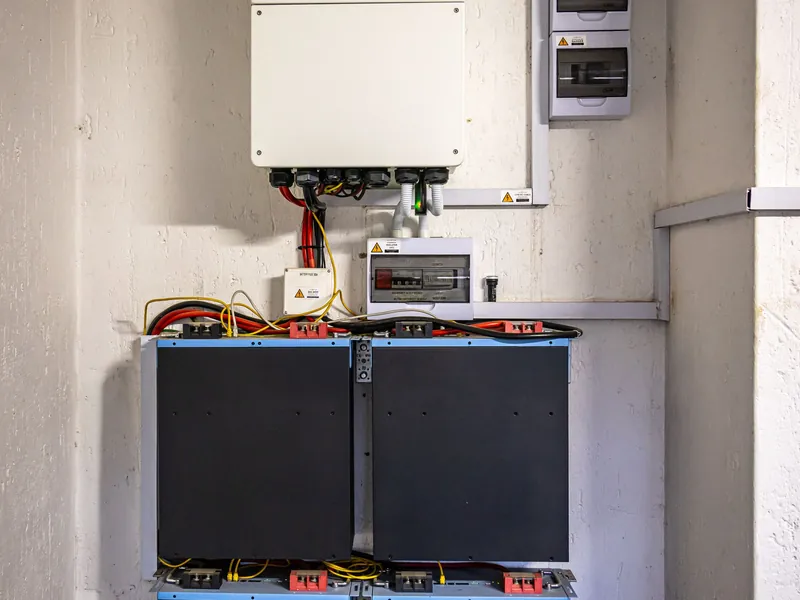
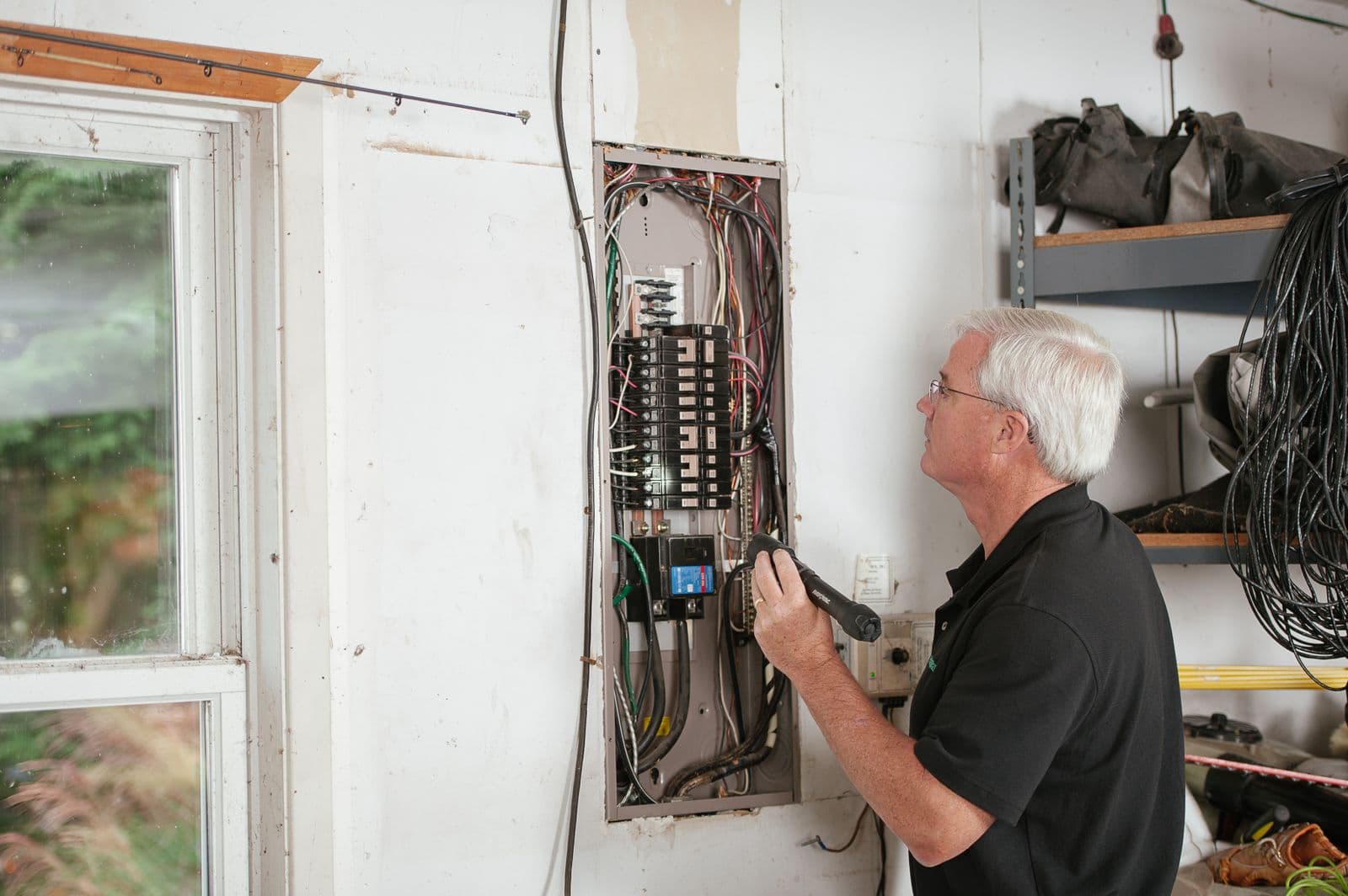
A battery job is an electrical job. The panel, the circuits and the disconnection are most of it.

Battery backup in Tucson, answered plainly
My solar already works. Why will it not run during a Tucson outage?+
Because a grid-tied inverter must shut down when it loses the grid. Without a battery and isolation switching, the array is offline in a monsoon outage even in bright sun.
Do I need to size for a well pump?+
Only if you have one. Midtown municipal water and a foothills well are different designs. We confirm at the address rather than assuming from the city name.
Is Tucson just a Phoenix clone?+
No. Same monsoon physics and anti-islanding rule; different utility (TEP), different metro, and a higher chance of well pumps on the outskirts. The Massachusetts ice narrative still does not belong here.
What incentives apply, and what will this cost?+
Terms are confirmed for your address and utility. We will not quote unverified dollars. Seamless Home does not provide tax advice.
Who installs it, and who is responsible afterwards?+
Seamless Home is the licensed contractor of record. Installation is performed by vetted installing partners engaged as our subcontractors. Coverage is confirmed per service area rather than promised as blanket availability.
Related resources
Home battery backup in Yuma, AZ
APS grid batteries in Yuma, and what they can't do for a house.
Learn more →Home battery backup installation
The national service page: essential-circuit, whole-home and managed-load backup compared.
Learn more →Home battery backup in Phoenix, AZ
Valley monsoon and heat — related climate, different utility map.
Learn more →Tucson water quality
The other Tucson local page: 2024 main-system CCR for PWS AZ0410112.
Learn more →Home battery siting checker
The four locations IRC R328 permits, and the rooms it never does.
Learn more →All home services
Battery backup, water treatment, HVAC and solar under one licensed contractor of record.
Learn more →Find out what a battery would actually run in your house
A panel-level look at your service, your existing solar and the circuits you want kept up — at no cost, and with no runtime promised before anyone has seen the house.
Get a Free Estimate