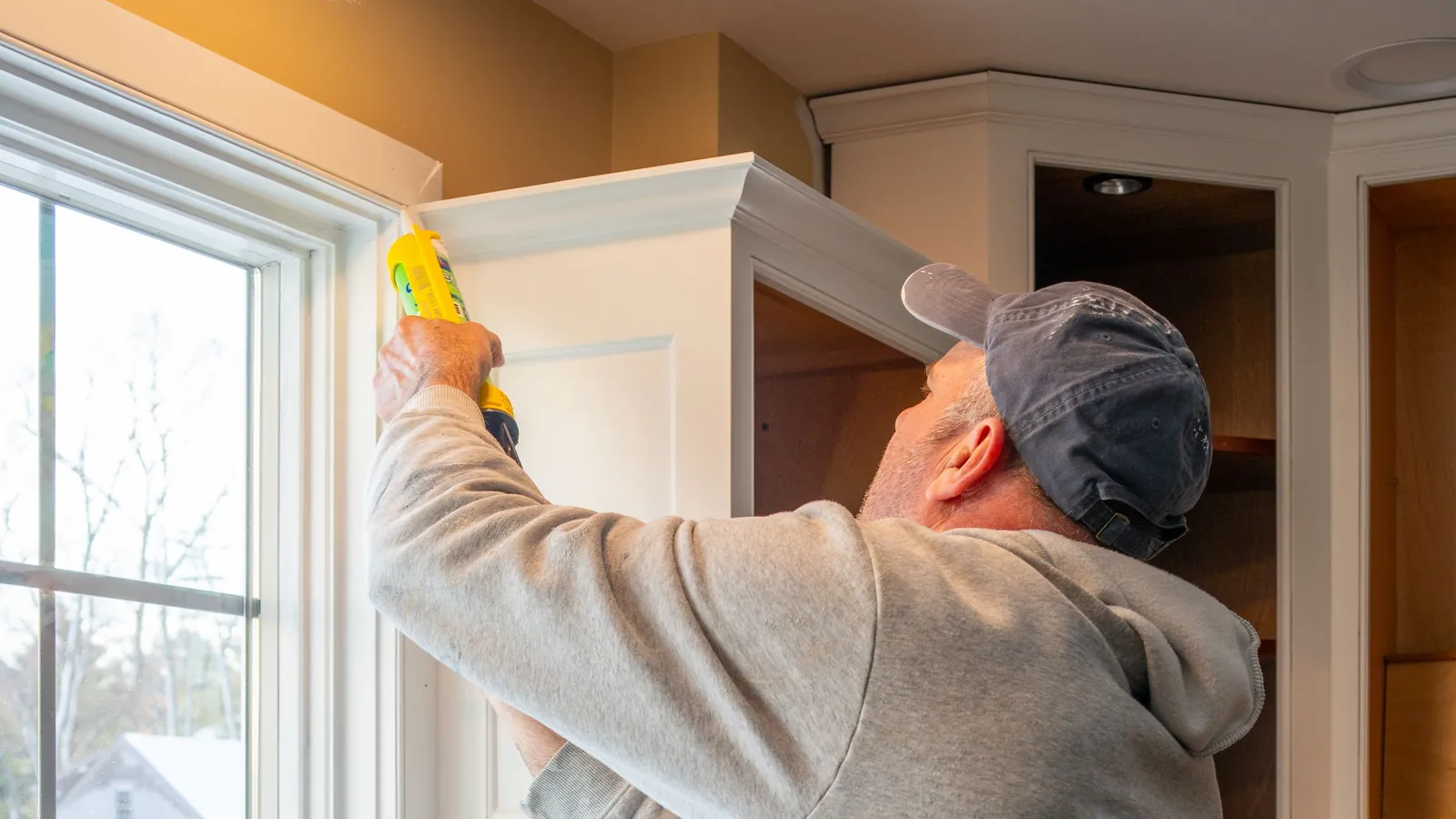
For Homeowners
Remodeling, renovation and roofing
Kitchens, baths, interior reconfiguration, additions and roof work — run as permitted projects with a written scope and one contractor of record, rather than as a sequence of trades you are left to coordinate.
Licensed contractor
One company accountable for the job
Free home assessment
No obligation, and a technician rather than a commissioned salesperson
Permits & inspections handled
Pulled under our licence, not left for you to chase
Coverage confirmed for your address
Checked before anything is designed or priced
The written scope is the whole project
A remodel is the job where the most gets agreed out loud and the least gets written down. Equipment has a model number; a kitchen has a hundred decisions, many taken while work is already underway — and those are precisely the ones that turn into a dispute.
A scope worth signing names the work room by room, says which fixtures and finishes are included and at what allowance, states what is excluded, and says in advance how something found behind a wall gets priced and who decides. That last clause is the one that separates a manageable surprise from an argument.
Seamless Home is a licensed contractor and, on the projects it takes, the contractor of record: the permit is ours and the trades on site are vetted local partners engaged as our subcontractors. Coverage is confirmed per service area rather than promised as blanket availability.
Services offered
What a remodeling job with us covers
Renovation and replacement work, run under one licensed contractor of record with the scope written down first.
Kitchens and baths
Renovation where plumbing, electrical and ventilation all move at once, which is what makes these the jobs that most often go wrong.
Interior renovation
Finishes, layout changes and the trades behind them, sequenced so the work is not waiting on itself.
Additions
Structural work with design, permitting and inspection carried as part of the job rather than handed back to the homeowner.
Window and door replacement
Replacement including the flashing and air sealing at the opening — the part that decides whether the new unit performs.
Coordination with energy work
Where HVAC, PV solar, storage or roofing is happening on the same house, sequenced as one project instead of competing ones.
A written scope and a contract that complies
A home improvement contract that contains what your state requires it to contain, agreed before work starts.
Coverage is confirmed per service area rather than promised as blanket availability.
Benefits
Why homeowners choose Seamless Home for remodeling
Room-by-room written scope
Fixtures, finishes, allowances and exclusions named in writing, so what was agreed is what you can hold anyone to.
Change pricing agreed in advance
How something found behind a wall is priced, who approves it and what happens to the schedule is settled before work starts.
Sequenced with your other projects
Roof before anything mounted on it, cable while the walls are open, and HVAC revisited after an addition.
One contractor of record
The permit is pulled under our licence and the inspections are ours to schedule and pass.
How it works
From walk-through to final inspection
The scope is written before anyone quotes a number.
- 1
Request a free assessment
Tell us what you need and where the property is. We confirm whether we cover your address for this trade before anything else happens.
- 2
Assessment and written quote
A technician looks at the space and at what is likely behind the walls. The scope is written room by room, with allowances, exclusions and a change-order clause, before any number.
- 3
Permit and installation
Permits are pulled under our licence, trades are sequenced so the seams between them are ours to manage, and framing-stage inspections are passed before walls close.
- 4
Inspection, handover and support
The final inspection is passed and the project handed over against the written scope. The workmanship obligation stays with us.
What this covers
Remodeling and renovation on one side, roofing on the other, and the sequencing between them and the energy work.
Kitchens and baths
The two rooms where a remodel touches every trade at once — layout, cabinetry, plumbing, electrical, ventilation and finishes — which is why they are the projects most exposed to a vague written scope.
Interior renovation
Reconfiguring existing space: removing or moving walls, converting a basement, attic or garage, opening a floor plan. Anything structural brings engineering and its own inspection sequence.
Additions
New conditioned space, which is a different class of project — foundation, framing, envelope, and a revisit of whether the existing heating, cooling and electrical service can carry what you have added.
Roof replacement
Tear-off, decking assessment, underlayment, flashing at every penetration and edge detail. The decking condition underneath is the item that most often changes a price, and it is unknowable until the old covering is off.
Roof repair and leak diagnosis
Finding where water actually enters rather than where it appears. These are frequently different places, and the gap between them is why a repair can fail twice before anyone finds the real path.
Coordination with energy work
A reroof before an array, an HVAC revisit after an addition, cable pulled while walls are open. Sequencing these together is the cheapest version of all of them.
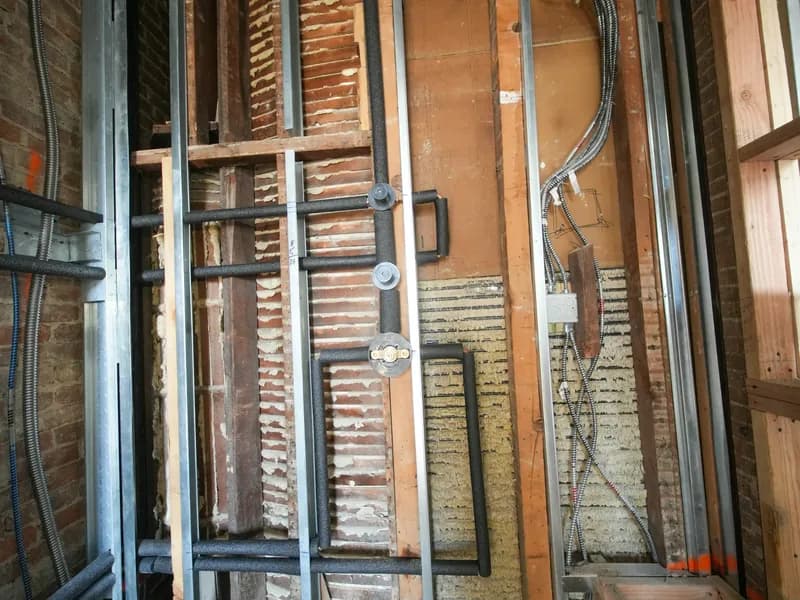
What is behind the wall is the real variable
Every experienced contractor knows this and not all of them say it before signing. On a renovation the recurring discoveries are old wiring that cannot be reused, plumbing that is not where the drawings assumed, rot or water damage, a wall that turns out to be carrying load, and in older houses materials that require licensed abatement before anything else can proceed. On a roof it is the decking, which nobody can assess until the covering is off.
The answer is not to promise none of this will happen. It is to agree the mechanism in advance — how a discovery is priced, who approves it, and what happens to the schedule — so the conversation is procedural rather than adversarial. A change agreed verbally and never written into the scope is a dispute waiting for a trigger, which is why what a home improvement contract must contain is worth reading before you sign anyone's.
On a roof the same principle applies one step earlier, because the cheaper option is not always a legal one. Laying a new covering over the old is permitted only in defined circumstances and prohibited outright in three — what the code allows on a recover versus a tear-off is worth establishing before you compare two quotes that are not describing the same work.
Two details on a basement finish are decided by framing and are effectively unverifiable afterwards. A room somebody sleeps in below grade needs an escape opening that meets four separate minimums at once, and a window at both dimensional minimums still fails on area. The laundry duct is the other one: its 35-foot allowance is spent by elbows before any straight pipe is counted, and the dryer vent length calculator does that arithmetic while the route can still be changed. The drain beside it has its own set of numbers, measured from a point below the pipe, and the washing machine standpipe checker walks the height window, the trap size and the distance to the vent. The bathroom fan is the third of these: where a bathroom exhaust fan has to vent covers the duct that has to reach the outdoors and the airflow rating that is not the one printed on the box.
Outside, the equivalent is the guard. When a deck or porch needs a guard sets out the 30-inch trigger, the heights, the three different opening limits that apply to one stair, and the single question that decides two of those rules at once. Where a kitchen is in scope, whether the range hood needs makeup air is worth settling while the hood can still be changed. Where windows are in scope on an upper floor, whether a window needs fall protection changes what gets ordered rather than how it is fitted, and a garage conversion or a room over the garage runs into the drywall separation between the garage and the house. And roofing covers the work above it.
Three more are settled at the framing stage and inspected on the same visit, which is why they are worth pricing into the scope rather than discovering in an open stud bay. Fireblocking and draftstopping are two different requirements, with different materials and different thicknesses, and every trade that ran a pipe through a plate created work for one of them. A basement finish brings the emergency escape opening with it whether or not a bed is drawn on the plan — the egress window compliance checker scores a specific window and its well against all of it. And under the floor, crawl space ventilation is a choice between two complete designs, not a question of how many vents to leave open. Above the ceiling, whether an attic needs an access opening at all is a measurement rather than a default, and the two thirty-inch rules in that section are taken from opposite faces of the same joist. Outside the house, a deck is held on by a ledger that the code gives two separate jobs, and the deck ledger connection checker reports both, withholding a fastener spacing entirely where the conditions the table was derived under are not met. On the plumbing side, a house that has acquired a pressure-reducing valve or a backflow preventer also needs thermal expansion control at the water heater, which is the usual cause of a relief valve that weeps.
Our contract review checklist works on any contractor's agreement, including ours. It is the same list we use.
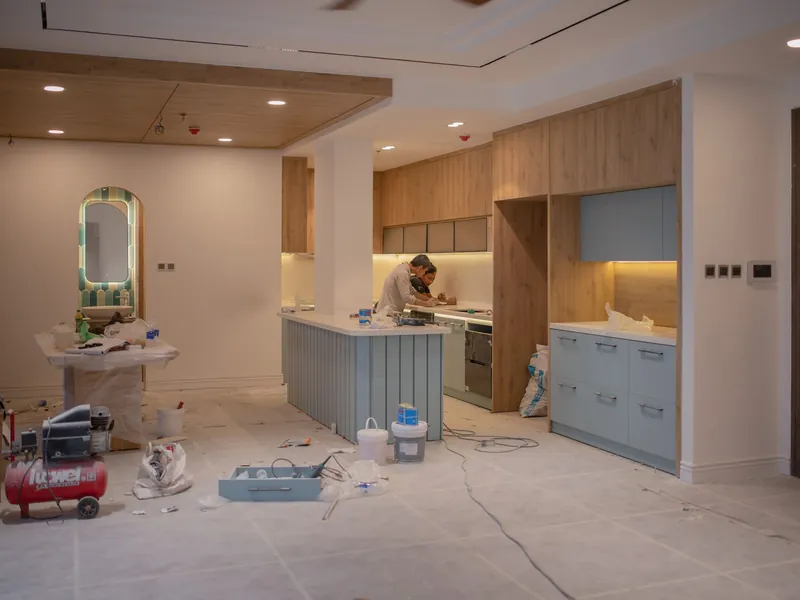
Sequencing, which is where the money is
Most of what makes these projects expensive is doing them in the wrong order. Three cases come up constantly.
Roof before anything mounted on it. An array on a roof with a few years left has to come off and go back on to replace the covering — removal and reinstall is a real cost and an entirely avoidable one. If PV solar is anywhere in your plans, the roof question comes first.
Cable while the walls are open. Renovation is the cheapest moment to run anything for automation, cameras or network, and to add or move circuits. Retrofitting the same cable later is the same material and several times the labour.
Heating and cooling after an addition. New conditioned space changes the load the existing system was sized for, so the HVAC question is better revisited while the project is live than discovered a season later.
Roofing, and the dispute it usually produces
The single most common roofing dispute is not about the roof. It is about who is responsible when water appears after two companies have worked on the same surface — a roofer and whoever mounted something through it.
Materials carry a manufacturer's warranty on the product. The installation — the flashing, the penetration details, the valley and edge work — is workmanship, and that obligation sits with the contracting party rather than with whichever crew was on the roof. It also exists whether or not a contract mentions it: the implied warranty of workmanlike performance applies in most states.
Keeping the roof and anything penetrating it under one contractor removes the argument entirely, which is the practical reason we would rather do both than one. Who is liable if an installation damages your roof sets out how the responsibility actually divides when it does go wrong.
Two questions are worth settling before anyone is on the roof. Whether a new covering may go over the existing one at all is a code question rather than a price one — the roof recover eligibility checker works through the three conditions that rule it out. And if the covering is tile, some of it will break, which is normal and should be priced in writing rather than argued about later.
What the work actually looks like
Most of a remodel's outcome is decided before the first finish goes on — in the scope, the sequence and the contract.



Frequently Asked Questions
Why does the written scope matter more on a remodel than on other work?+
Because a remodel is the project where the most is decided verbally and the least is written down. Equipment replacement has a model number; a kitchen has a hundred choices, many made while work is underway, and the ones agreed in conversation are precisely the ones disputed later. A scope worth signing names the work room by room, says which fixtures and finishes are included and at what allowance, states what is explicitly excluded, and describes what happens when something is found behind a wall. It is also a legal matter rather than only a practical one: the description of work is a term most states require, and it is what any later disagreement is measured against. What a home improvement contract has to contain sets out the full list.
What changes a remodel price after the work has started?+
Almost always something that could not be seen at survey, which is why an honest contractor talks about this before it happens rather than after. The recurring ones are what is behind the walls — old wiring that cannot be reused, plumbing that is not where the drawings assumed, water damage or rot, and in older houses materials that require licensed abatement before anything else proceeds. Structural surprises appear when a wall turns out to be load-bearing. On a roof it is the decking condition, which nobody can assess until the covering is off. The right way to handle all of these is not to pretend they will not occur, but to agree in advance how they get priced and who decides — which is what a change-order clause is for.
Do I need a permit for a kitchen remodel or a new roof?+
Usually, and it is established for your address rather than assumed. Broadly, cosmetic work such as paint and flooring often does not require one, while anything that moves or adds plumbing, alters electrical circuits, changes structure, or replaces a roof covering generally does. Additions always do. Permits matter beyond compliance for two practical reasons: unpermitted work surfaces at resale, where it can delay or reduce a sale and sometimes has to be retroactively legalised at your cost, and an insurer investigating a loss traced to unpermitted work may take a position on it. Where Seamless Home is contractor of record, the permit is pulled under our licence and the inspections are ours to schedule and pass.
How much can a contractor ask for up front?+
Less than is often requested. Most states cap the deposit a home improvement contractor may take, frequently at a percentage of the contract price or a fixed dollar figure, whichever is lower — California's cap, for example, is the lesser of $1,000 or 10 percent. Beyond the deposit, payments should be tied to defined progress rather than to dates, so that what you have paid tracks what has actually been built. A request for a large proportion of the price before work begins is the most reliable early warning sign in this trade. Deposit and progress-payment limits covers how these rules are structured. None of this is legal advice; confirm your own state's figures.
Should the roof be done before solar panels or a battery?+
If the roof is near the end of its service life, yes, and the arithmetic is straightforward. An array installed on a roof with a few years left has to be removed and reinstalled to replace the covering underneath it, which is a separate project with a separate cost that is entirely avoidable by sequencing. The same logic applies to anything else mounted on or penetrating the roof. Where the roof has substantial life remaining this is not a concern, and a survey establishing the covering, the number of layers and the approximate age is what decides it. Doing both under one contractor also removes the most common dispute in this area, which is who is responsible when a leak appears at a penetration after two companies have worked on the same roof.
Who is responsible if a leak appears after a roof job?+
The contracting party, under its workmanship obligation, and that is a different thing from a material warranty. Roofing materials carry a manufacturer's warranty on the product; the installation — the flashing, the penetration details, the edge and valley work — is workmanship and sits with the company that contracted for the job. Because Seamless Home contracts as the licensed party and engages the installing crew as its subcontractor, that obligation does not depend on the crew still being in business. It is worth knowing that an implied warranty of workmanlike performance exists in most states whether or not a contract mentions it, and that the hardest cases are roofs where more than one company has worked — which is an argument for keeping the roof and anything mounted on it with one accountable party.
Can renovation be combined with the other work you do?+
Yes, and it is usually the cheaper sequence rather than merely a convenience. Open walls are the least expensive moment to run cable for automation, cameras or an EV charger, and to move or add circuits. An addition changes the heating and cooling load, so revisiting the HVAC sizing while the project is live is better than discovering the system is now undersized a season later. A reroof is the natural moment to settle anything that will be mounted on the roof. Combining them under one contractor also means one permit conversation and one party accountable for the seams between trades, which is where most multi-contractor projects go wrong.
Related resources
What a home improvement contract must contain
The statutory reference behind this page: mandated terms, deposit caps and cancellation rights.
Learn more →Home improvement contract review checklist
Read any contractor's agreement against the terms that are supposed to be in it.
Learn more →HVAC installation and replacement
Why an addition or a converted space changes what the existing system was sized for.
Learn more →All home services
Six trades under one licensed contractor, with the permit and the warranty in one place.
Learn more →Start with a scope, not a ballpark
Tell us what you want done and where you are. We will confirm coverage for your area, then put the work in writing before anyone quotes a number.
Get a Free Estimate