For Homeowners
One contractor accountable for the whole job
Solar, battery backup or water treatment — with the licence, the permits, the inspections and the warranty in one place, and the crew on site working as our subcontractor rather than as a referral.
What Seamless Home is, for a homeowner
Seamless Home is a licensed contractor that installs home energy and water systems through vetted local installing partners engaged as its subcontractors. It does not keep its own crews, and it is not a referral service that hands you to a third party and steps out of the contract.
That distinction decides what happens when something goes wrong. Because the contractor licence, the building permit and the utility interconnection are Seamless Home's, the party your jurisdiction holds responsible for the work and the party you signed with are the same company — so a workmanship question two years from now does not depend on whether the crew that was on your roof is still trading.
Coverage is confirmed per service area rather than promised as blanket availability, and it can differ by trade at the same address. That is the first thing worth checking, and it is the first thing a free assessment request establishes — before anyone books a visit, and before you give us anything beyond an address.
Three things we install
They answer three different questions, so they are three separate pages rather than one list.
PV solar installation
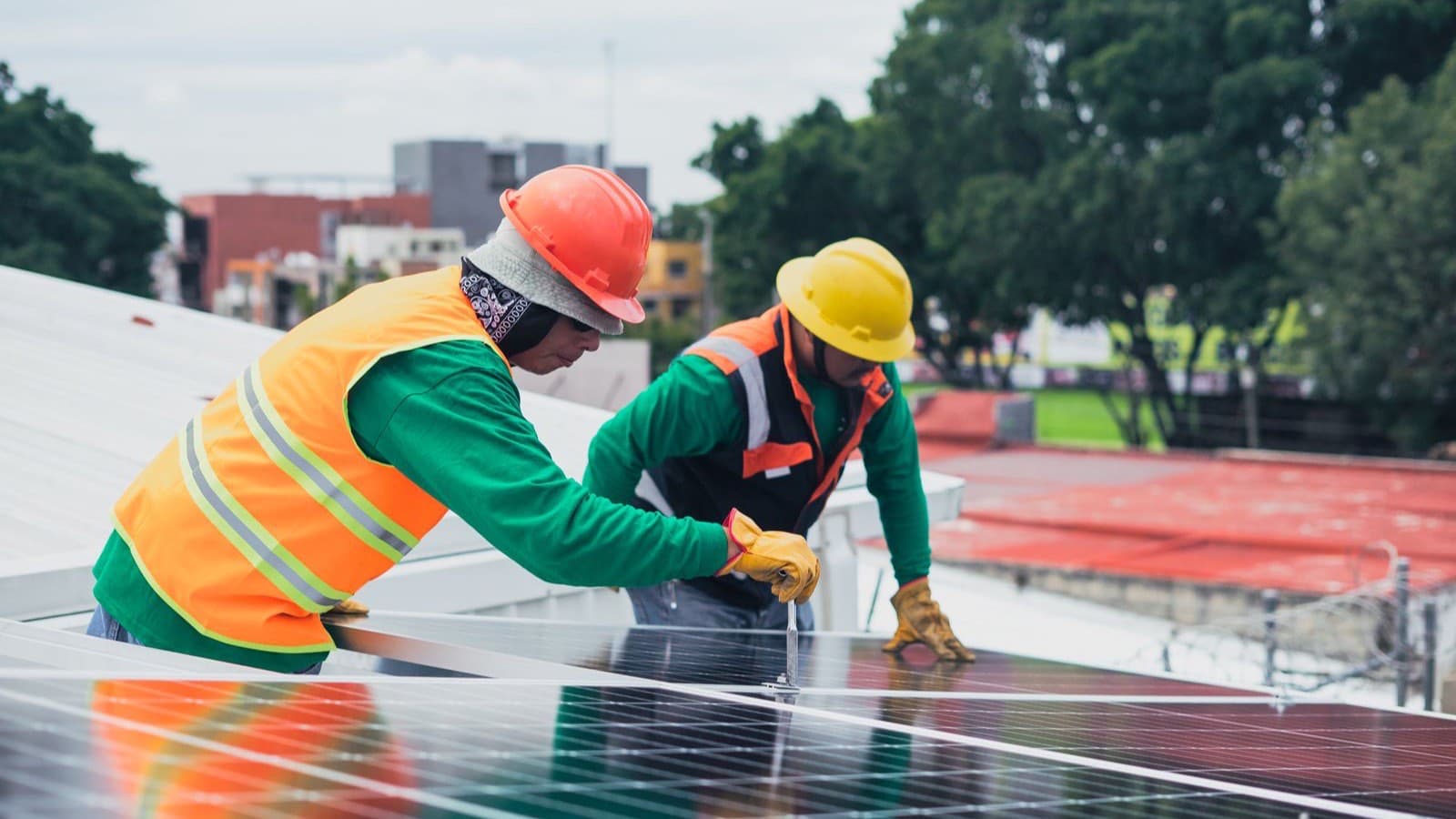
A roof or ground-mounted system: site survey, structural and electrical engineering, permit, utility interconnection, inspection and permission to operate. The approvals are the long part, not the install day.
Battery backup, with or without PV solar
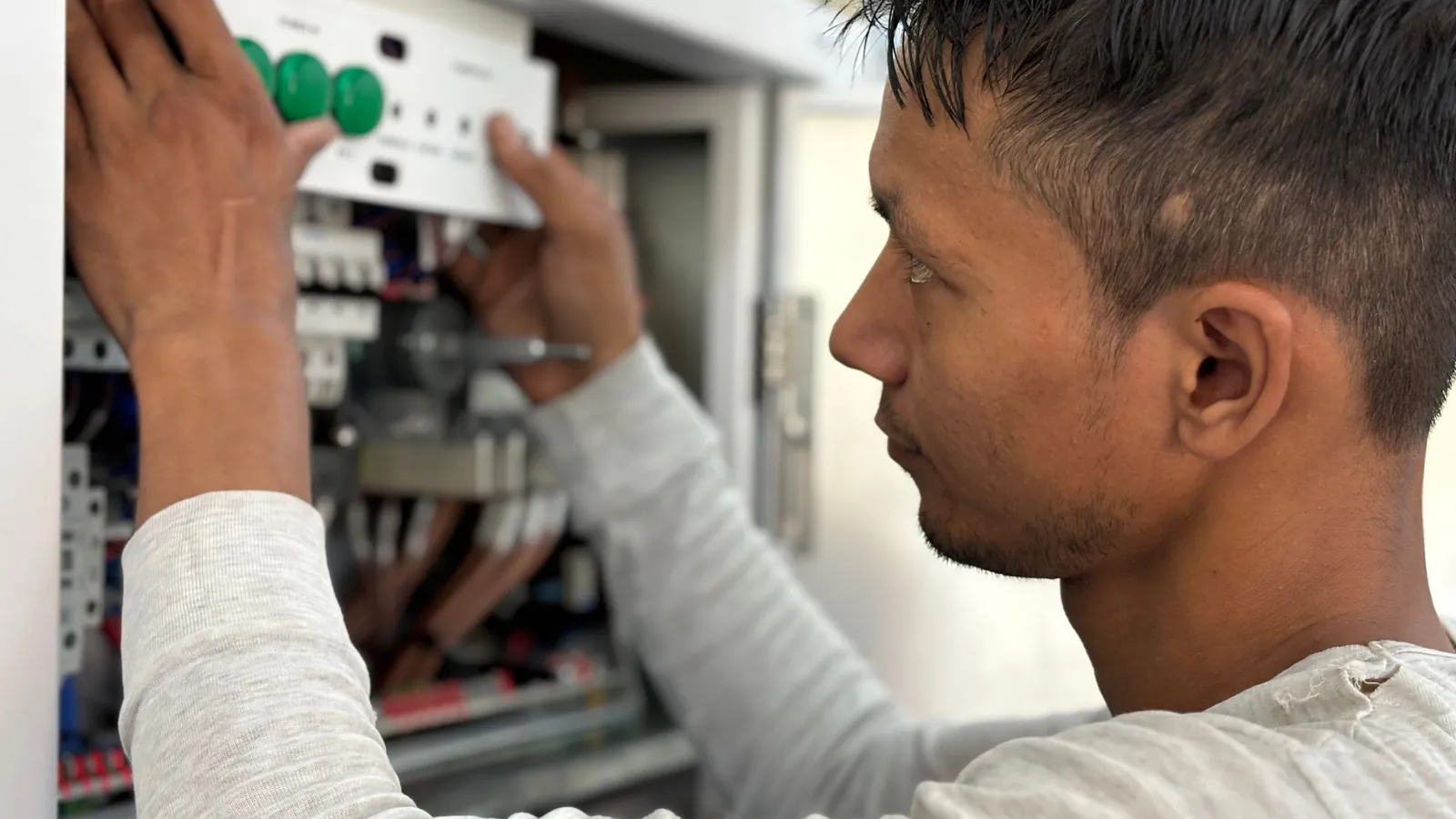
Storage on its own is a legitimate project. What matters is deciding which circuits stay live in an outage and for how long — a scope question settled before anything is quoted, not after.
Water treatment and purification
Whole-home filtration, softening or point-of-use treatment, specified from a test of your actual water rather than from a catalogue. What is in the water decides the equipment.
Which one do you need?
PV solar installation if you want to generate your own electricity. The install itself is usually a day or two; the structural and electrical engineering, the permit, the utility interconnection and the inspection are what set the timeline. Start here if you are also asking about a roof, a panel upgrade or an EV charger, because those ride on the same project.
Battery backup if the problem you are solving is an outage rather than a bill. Storage does not need PV solar to be worth installing, and the decision that drives everything else is which circuits you want live when the grid is down. If you already have a standby generator, that changes the design rather than ruling it out.
Water treatment if the complaint is taste, odour, staining, scale or a specific contaminant. This is the one where the order matters most: a test of your actual water decides the equipment, and any specification offered before a test is a guess with a price on it.
Two of these also have a local page, written for the conditions in a specific metro rather than in general: Phoenix water quality and home battery backup in Worcester. Where one exists for your area it is the more useful starting point, because the water chemistry and the outage pattern are local facts rather than national ones.
If more than one applies, they can be sequenced on a single project rather than contracted separately — which usually matters because the electrical service is the shared constraint between PV solar, storage and anything with a pump or a heater.
What one accountable contractor actually changes
These are structural consequences of who holds the licence, not service promises.
One licensed party on the permit
The contractor licence, the permit application and the utility interconnection are ours. The company a building department holds responsible and the company you call are the same company.
The crew works as our subcontractor
Seamless Home does not keep its own crews. The installers on your property are vetted local partners engaged as our subcontractors — so their work sits under our licence rather than beside it.
Financing on our own paper
Where a project is financed, it runs through a multi-lender panel rather than a single in-house lender. You are not routed to whichever lender a salesperson is paid the most to place.
Permits and inspections are our desk
Design, plan review, revisions, the inspection appointment and the sign-off are handled as part of the job rather than passed back to you as homework.
A named scope before you sign
Panel upgrades, roof repair, trenching and other work a property turns out to need are established at survey and priced into the proposal — the cost does not change when it is found early, only who is surprised by it.
Coverage confirmed for your address
Coverage is confirmed per service area rather than promised as blanket availability. Which trades are available where you live depends on the installing partners in that area, so it is checked before anything is promised.
How the process runs
1. Coverage check. Whether the trade you need is available at your address, before anything is designed or priced. This comes first because it is the question a proposal depends on.
2. Survey, or a water test. Someone establishes the conditions that decide the design — roof covering, framing, electrical panel and shading for PV solar; the panel and the circuits you want backed up for storage; a laboratory or certified test of your supply for water treatment.
3. Design, engineering and a priced scope. Including anything the property turns out to require, such as a main panel upgrade. These are established now rather than raised as a change order later — the cost is the same either way, but only one version of it is a surprise.
4. Permit and utility review. Prepared and submitted for you, including any revisions the jurisdiction asks for. On a generating or storage system there is usually a separate utility application as well, which runs on its own clock.
5. Installation. Performed by the vetted local installing partner engaged as our subcontractor, under our licence and our permit.
6. Inspection, sign-off and — where applicable — permission to operate. A generating or storage system is not finished when the equipment is on the wall. It is finished when the jurisdiction has passed it and, where the utility is involved, when they have authorised it to run.
Questions worth asking any contractor, including us
These are the questions that separate a contractor from a sales operation, and they are worth asking whoever you end up hiring.
Whose licence is the permit pulled under, and is that the company I am signing with? If those are two different companies, establish which one owes you the workmanship obligation before you sign, not after. Who the contractor of record is explains why the answer decides everything else.
What is in the written scope, and what was only said out loud? A contract has to describe the work, and an item agreed verbally that never reached the document is the most common source of a later dispute. Our home improvement contract review checklist is the same list we use, and it works on anyone's contract.
What has to be true before you can start, and who is chasing it? Permits, utility approvals, an HOA or a landlord. If the answer is that you will be chasing them, that is a real cost being moved onto you.
How much is due up front? Most states cap the deposit a home improvement contractor may take, and the cap is often far below what gets asked for. See deposit and progress-payment limits. None of this is legal advice; confirm your own state's rules.
Frequently Asked Questions
Is Seamless Home the contractor, or a referral service?+
Seamless Home is a licensed contractor and, on the projects it takes, the contractor of record. It does not install with its own crews — the installers on site are vetted local partners engaged as its subcontractors. The practical difference from a referral is where accountability sits: with a referral, you are handed to a third party and your contract is with them. Here the licence, the permit and the interconnection are Seamless Home's, so the party the jurisdiction holds responsible is the party you contracted with.
Do you serve my area?+
That has to be checked rather than assumed. Coverage is confirmed per service area rather than promised as blanket availability, because which trades can be performed in a given area depends on the installing partners there — and it can differ between PV solar, storage and water treatment at the same address. Ask before anything else; it is the first question a proposal depends on.
Can I get battery backup without buying PV solar?+
Yes. Storage without generation is its own project with its own design question, and it is a common one — the goal is usually outage coverage rather than reducing a bill. It still needs a permit, an electrical design and in most areas a utility notification, because the equipment is capable of energising circuits. The scope decision that matters is which circuits stay live and for how long.
What happens to the permits and the inspection?+
They are handled as part of the project. Design and plan preparation, the permit application, any revisions the jurisdiction asks for, the inspection appointment and the sign-off all sit with Seamless Home rather than with you. Where a utility interconnection is involved, that application and the permission-to-operate step are handled the same way. A homeowner should not be the party chasing a plan reviewer.
Who honours the warranty if something goes wrong later?+
Two distinct things are usually being asked about. Equipment is warranted by its manufacturer for the term on that product. The installation itself — the mounting, the penetrations, the wiring, the plumbing connection — is a workmanship obligation that sits with the contracting party rather than with whichever crew happened to be on site. Because Seamless Home contracts as the licensed party and engages the installers as subcontractors, a workmanship question does not depend on that crew still being in business.
Will you tell me what a project costs on this page?+
No, and a page that did should be treated with suspicion. Every one of these projects is priced from conditions at a specific property: for PV solar the roof, framing, shading and electrical service; for storage which circuits are being backed up; for water treatment what a test of your actual water shows. Published figures for any of them are averages of other people's houses. The honest sequence is a survey or a water test first, then a price.
Are there federal tax credits available for a system bought in 2026?+
Not the residential one. The 30% federal Residential Clean Energy Credit under Section 25D, which a homeowner claimed on a system they bought and owned, applied to property installed through December 31, 2025 and is not available for property placed in service after that date. Anyone still quoting a 30% federal credit to a homeowner buying in 2026 is working from stale information. State, local and utility incentives are a separate matter, vary widely and should be confirmed with the administering authority. Seamless Home does not provide tax advice.
Explore the three services
PV solar installation for homeowners
What the survey establishes, why approvals set the timeline, and what has to be true before a system can legally run.
Learn more →Home battery backup installation
Storage with or without PV solar, and the circuit-by-circuit scope decision that drives the whole design.
Learn more →Home water purification and treatment
Why a test of your own water comes before any equipment recommendation, and what each treatment stage does.
Learn more →What a home improvement contract must contain
The terms your state requires in writing before work begins — useful whoever you hire.
Learn more →Start with whether we cover your address
Tell us where you are and what you are trying to solve. If the trade you need is not available in your area we will say so rather than route you elsewhere.
Get In Touch