Boston, Massachusetts
HVAC in Boston, MA
Boston is cold-climate: the heat pump has to heat in January, the panel is often already full, and summer humidity still punishes an oversized coil.
IECC 5A is not Virginia 4A. A heat pump sold as a cooling upgrade will lean on strip heat all winter. That is the Boston miss.
The short answer
Searching HVAC Boston usually means the heat failed on a cold night, a conversion from oil or gas is on the table, or a heat pump quote ignored the panel. Boston is IECC zone 5A. The usual error is treating a cold-climate heat pump like a cooling-only swap.
Seamless Home is a licensed contractor. The crew on site is a vetted local installing partner engaged as our subcontractor. Coverage is confirmed per service area rather than promised as blanket availability.
Start with a load calculation, not a quote
Tell us your Boston-area address and what is failing. We confirm coverage first, then size to the house and the panel rather than to the unit coming out.
What a cold-climate city actually asks of a system
This is the part a national HVAC page — and a humid-South or desert rule of thumb — cannot tell you.
Cold-climate 5A, not mixed-humid 4A
Boston sits in IECC climate zone 5A on the DOE climate-zone map — colder winters than Richmond or Arlington, with a real heating season that dominates the design. Copying a Virginia 4A heat-pump sales script into Boston is how strip heat becomes the everyday plan.
Heat pumps have to heat here
A heat pump that 'works in Massachusetts' on a brochure still has to be selected and commissioned for design-day cold. Backup heat strategy, outdoor-unit placement and defrost behaviour are the Boston conversation — not whether cooling exists in July.
Urban panels and three-deckers
Many Boston services are already full of heat pumps, EV chargers and electric ranges. The HVAC job often starts with whether the panel can accept another load, not with a product photo. A Back Bay brownstone and a West Roxbury ranch do not share a service.
Summer humidity still matters
Coastal summer air is humid. Oversizing for a rare heat wave still short-cycles and leaves the house clammy. Cold-climate design does not excuse skipping latent load in July.
Where that climate classification comes from
The DOE climate-zone map places Boston in zone 5A. We are not putting unofficial design temperatures on this page; those belong in a load calculation for a specific house.
What a replacement in Boston actually involves
Heating capacity and panel capacity decide whether the system works in January. Commissioning decides whether anyone proved it.
Load calculation on this house, in 5A
Heating and cooling loads from the house and from Boston cold-climate design conditions. The old furnace nameplate is a clue, not a specification.
Distribution that matches the housing stock
Steam-to-forced-air conversions, ductless heads in tight rooms, and basements that flood in a nor'easter all change the delivery method. Equipment without a path for air is not a system.
Electrical capacity, once
A cold-climate heat pump is a substantial electrical load. If solar or a battery is also on the table, the panel is the shared constraint — see also battery backup in Boston.
Permit and commissioning
Mechanical replacement is permitted work. Commissioning then measures airflow, charge and heating capacity in the climate the system will actually run in.
Why we will not quote a tonnage from this page
A South End brownstone, a Dorchester three-decker and a West Roxbury colonial can share a ZIP prefix and need completely different systems. For outage backup on the same urban panel constraint, see home battery backup in Boston. For the water side of the same house, see Boston water quality, where the supply is unusually soft and the live finding is lead in the service line rather than anything in the reservoir.
Check a proposal with the HVAC replacement quote checker. What an AHRI certificate proves is the matched combination.
What an HVAC job with us covers
Replacement and new installation, from the sizing calculation through to the measurements that prove the system works.
System replacement
Furnace, air conditioner, heat pump or air handler, sized to the house rather than matched to the nameplate on the unit coming out.
Load calculation first
Orientation, glazing, insulation, infiltration and duct location — the calculation that decides the equipment, done before the equipment is chosen.
Ductwork
Replacement, sealing and modification where the duct system is part of why the old one underperformed. Ducts are part of the system, not an upsell.
Electrical capacity
Confirming the service and circuit the new equipment needs, and the panel work where it does not already exist.
Refrigerant and line sets
Line set reuse or replacement assessed rather than assumed, and the charge set by measurement at start-up.
Permit, inspection and commissioning
The permit pulled, the inspection attended, and airflow, charge and temperature split measured and recorded at handover.
This is installation and replacement work. Coverage is confirmed per service area rather than promised as blanket availability.
What the work actually looks like
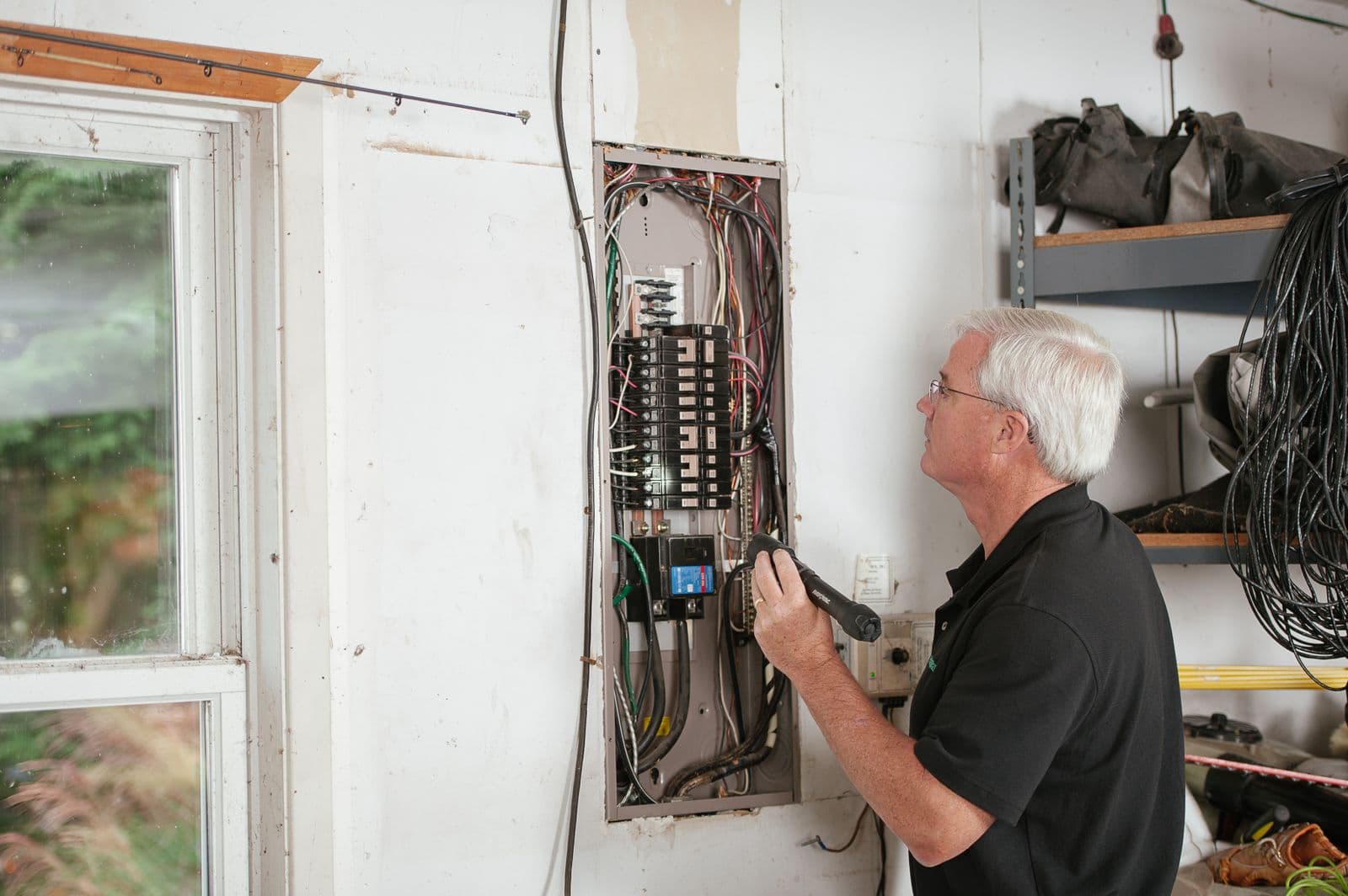
Replacement work, not stock smiles — the measurements and connections that decide whether a system performs.


HVAC in Boston, answered plainly
Why is Boston HVAC different from Richmond or Phoenix?+
Boston is IECC 5A cold-climate. Richmond is 4A mixed-humid. Phoenix is 2B hot-dry. The failure modes reverse: Boston has to heat on design-day cold; Phoenix has to cool on a 110-degree afternoon; Richmond has to dehumidify without short-cycling.
Will a heat pump keep a Boston house warm in January?+
When selected and commissioned for cold-climate operation, yes. When sold as a cooling upgrade with backup heat as an afterthought, no. That is the consultation, not a website promise.
Do I need to upgrade my electrical panel?+
Sometimes. Dense Boston housing often has little spare capacity. We will not guess from a ZIP code. Panel capacity is confirmed at the address.
Are there rebates or tax credits?+
Massachusetts program terms are set per program year and change. Federal residential energy credit rules changed for property placed in service after December 31, 2025. Seamless Home does not provide tax advice.
Who installs it, and who is responsible afterwards?+
Seamless Home is the licensed contractor of record. Installation is performed by vetted installing partners engaged as our subcontractors. Coverage is confirmed per service area rather than promised as blanket availability.
Related resources
HVAC installation and replacement
The national service page: load calculation, ducts, electrical capacity, permit and commissioning.
Learn more →HVAC in Worcester, MA
Inland cold-climate contrast: oil-heat conversions and central Massachusetts design days.
Learn more →Home battery backup in Boston, MA
The panel constraint shared with a heat-pump upgrade.
Learn more →HVAC in Richmond, VA
Mixed-humid 4A — the humidity-oversizing opposite of a cold-climate miss.
Learn more →All home services
HVAC, battery backup, water treatment and solar under one licensed contractor of record.
Learn more →Start with a load calculation, not a quote
Tell us your Boston-area address and what is failing. We confirm coverage first, then size the system to the house and the panel rather than to the unit coming out.
Get a Free Estimate