Bullhead City, Arizona
Bullhead City Water Quality
Groundwater from City wells, not the river. The 2025 Mohave system report found PFOS and PFOA above the 4.0 ppt level it lists, arsenic up to 8.8 ppb and sodium at 230 ppm.

PFOS 7.3 ppt · PFOA 5.3 ppt · arsenic 8.8 ppb · nitrate 5.5 ppm · sodium 230 ppm (highest results).
The short answer
Bullhead City's Mohave system runs on well water, not the Colorado River, so disinfection byproducts are low (trihalomethanes 6 ppb). The findings that matter come from the ground: arsenic up to 8.8 ppb, nitrate up to 5.5 ppm and sodium at 230 ppm.
The 2025 PFAS sampling is the headline. PFOS reached 7.3 ppt and PFOA 5.3 ppt, both above the 4.0 ppt level the report lists. That points to reverse osmosis or carbon at the kitchen tap, after a test at your house.
Get a free test
Tell us your Bullhead City address. We confirm coverage first, then schedule a licensed technician to test at your tap — no charge, no obligation.
What filtration does — and does not
Carbon and reverse osmosis solve different problems. Bullhead City's report points at both.
Where Bullhead City water comes from
Groundwater, disinfected by the City.
Wells, not the river
The City's report says Bullhead City's water does not come from surface sources like rivers and lakes. City wells pump it from the underground aquifer.
Disinfected with chlorine
Chlorine averaged about 1 ppm across the system in 2025, and trihalomethanes, the byproduct that troubles many river-fed systems, were only 6 ppb.
Six City systems
Bullhead City Utilities runs six public water systems. This page covers the Mohave system (AZ0408032). Camp Mohave, Desert Foothills, North Mohave, Lake Mohave Highlands and Rio Vista have their own reports.
What the 2025 Mohave system report actually says
Limits are fixed. Results are from the City of Bullhead City's Mohave Water System Annual Water Quality Report for 2025. They are system-level figures, not a reading at your tap.
PFOS up to 7.3 ppt, PFOA up to 5.3 ppt
Sampling from February to September 2025 for 29 PFAS found PFOS as high as 7.3 ppt and PFOA as high as 5.3 ppt. The report lists 4.0 ppt for each. PFHxS (2.9) and PFBS (3.1) were also detected.
Arsenic up to 8.8 ppb
The highest arsenic result was 8.8 ppb (range 0–8.8) against the 10 ppb limit. Arsenic occurs naturally in the aquifer. No violation.
Nitrate up to 5.5 ppm
Nitrate reached 5.5 ppm against the 10 ppm limit. Above 5 ppm, the report advises anyone caring for an infant to ask a health care provider.
Sodium 230 ppm
Sodium was 230 ppm in the most recent sampling (2023). There is no federal limit, but it matters for anyone on a low-sodium diet.
Lead 1.8 ppb at the 90th percentile
September 2025 tap samples put lead at 1.8 ppb at the 90th percentile, with 1 sample over the 15 ppb action level. Copper was 0.18 ppm, none over.
Five monitoring and reporting violations
The report lists a disinfection-byproduct sample taken in the wrong month, missed quarterly nitrate samples, missed lead and copper monitoring, an incomplete service-line inventory and an incomplete prior report. None is a contaminant-level violation.
Bullhead City next to Lake Havasu City and Yuma
Downriver, Lake Havasu City also pumps groundwater, but its report is about minerals: 19 grains per gallon of hardness and 753 ppm of dissolved solids after a plant that removes manganese and arsenic. Yuma treats Colorado River canal water, and its issue is trihalomethanes near the limit. Bullhead City's Mohave report stands out for PFAS, with arsenic and nitrate behind it.
Where these figures come from
Everything on this page traces to the City of Bullhead City.
- City of Bullhead City — Mohave Water System Annual Water Quality Report for 2025 (PDF) — source, regulated results, PFAS sampling and the violations table.
- City of Bullhead City — Water Quality — the six City water systems and their reports.
Matching treatment to the finding
Bullhead City's report supports drinking-water treatment for PFAS, arsenic and nitrate. It does not support a default equipment sale.
Reverse osmosis at the kitchen tap
Under-sink RO reduces PFAS, arsenic, nitrate and sodium, which covers the main drinking-water findings in this report.
Carbon for PFAS on every tap
Activated carbon reduces PFOS and PFOA. A whole-house carbon system extends that to showers and other faucets.
Know your service line
The City's inventory is still being verified. If you're unsure what your service line is made of, a tap test checks lead at your faucet.
Test before buying anything
These are system-level results. A tap test shows what's reaching your house and which treatment, if any, it needs.
How the free test works
A licensed technician tests at your kitchen tap, walks the plumbing, and tells you which of the findings above applies to your house and which does not. There is no charge and no obligation.
Seamless Home is the licensed contractor of record on the work that follows. Installation is performed by vetted installing partners engaged as our subcontractors, and the workmanship obligation stays with us. Coverage is confirmed per service area rather than promised as blanket availability.
What a water treatment job with us covers
Installation and replacement of whole-home and point-of-use treatment, specified against what your water actually contains.
Sediment filtration
Installation of the first stage that protects everything downstream of it, sized to the service line and the household draw.
Softening
Installation of ion-exchange softening where hardness is the problem, including the drain connection the plumbing code treats as indirect waste.
Carbon filtration
Installation of carbon stages for taste, odour and disinfection by-products, specified from your utility's own water quality report.
Reverse osmosis
Point-of-use installation at the kitchen sink where the target is dissolved solids rather than whole-home flow.
Disinfection
Installation of UV or equivalent treatment where the supply is a private well or is otherwise not continuously disinfected.
System replacement
Replacing equipment that has reached the end of its service life, including the discharge and air gap details an inspector looks at.
This is installation and replacement work, specified from a published water quality report or a test of your supply — not from a sales chart. Coverage is confirmed per service area rather than promised as blanket availability.
What the work actually looks like
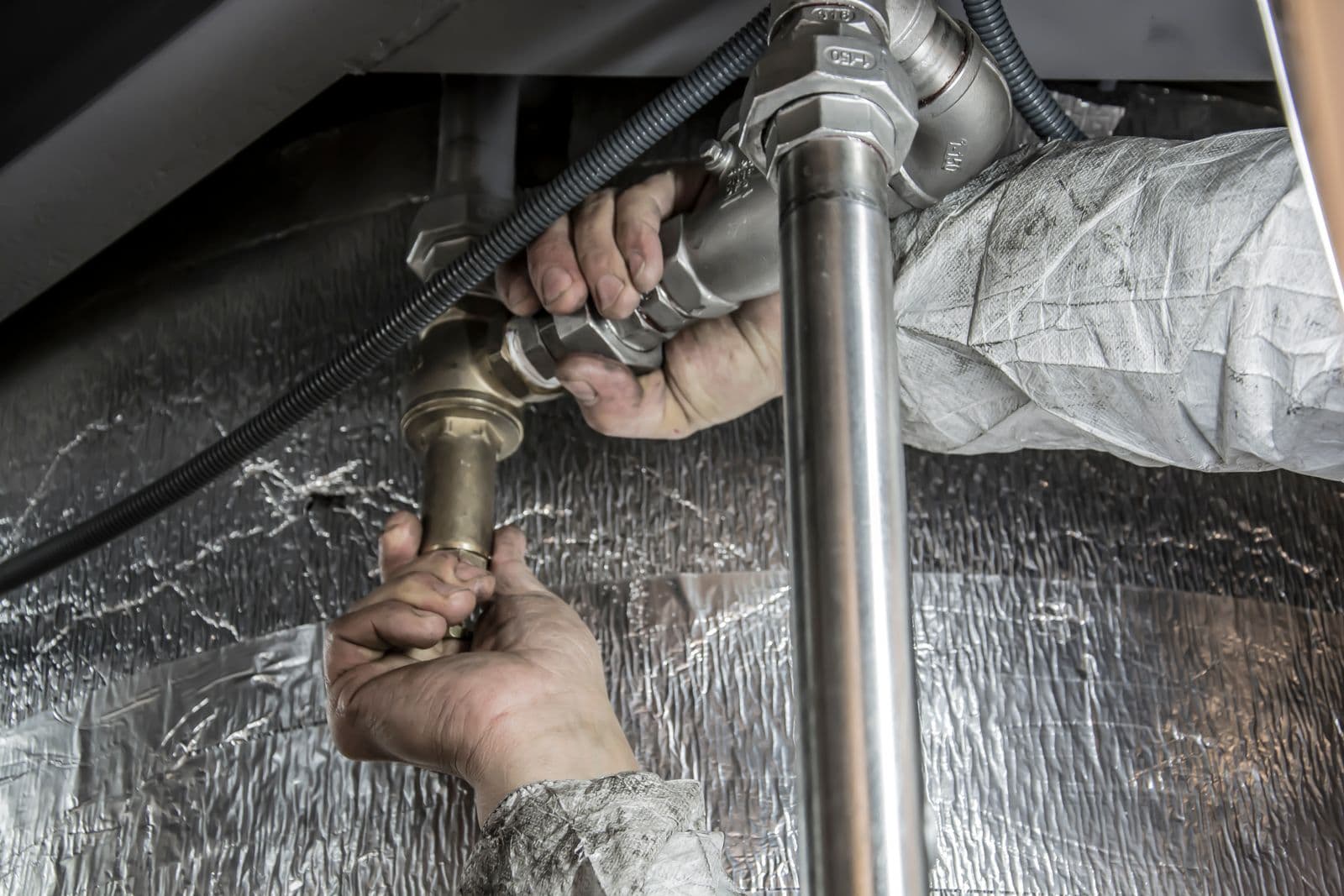
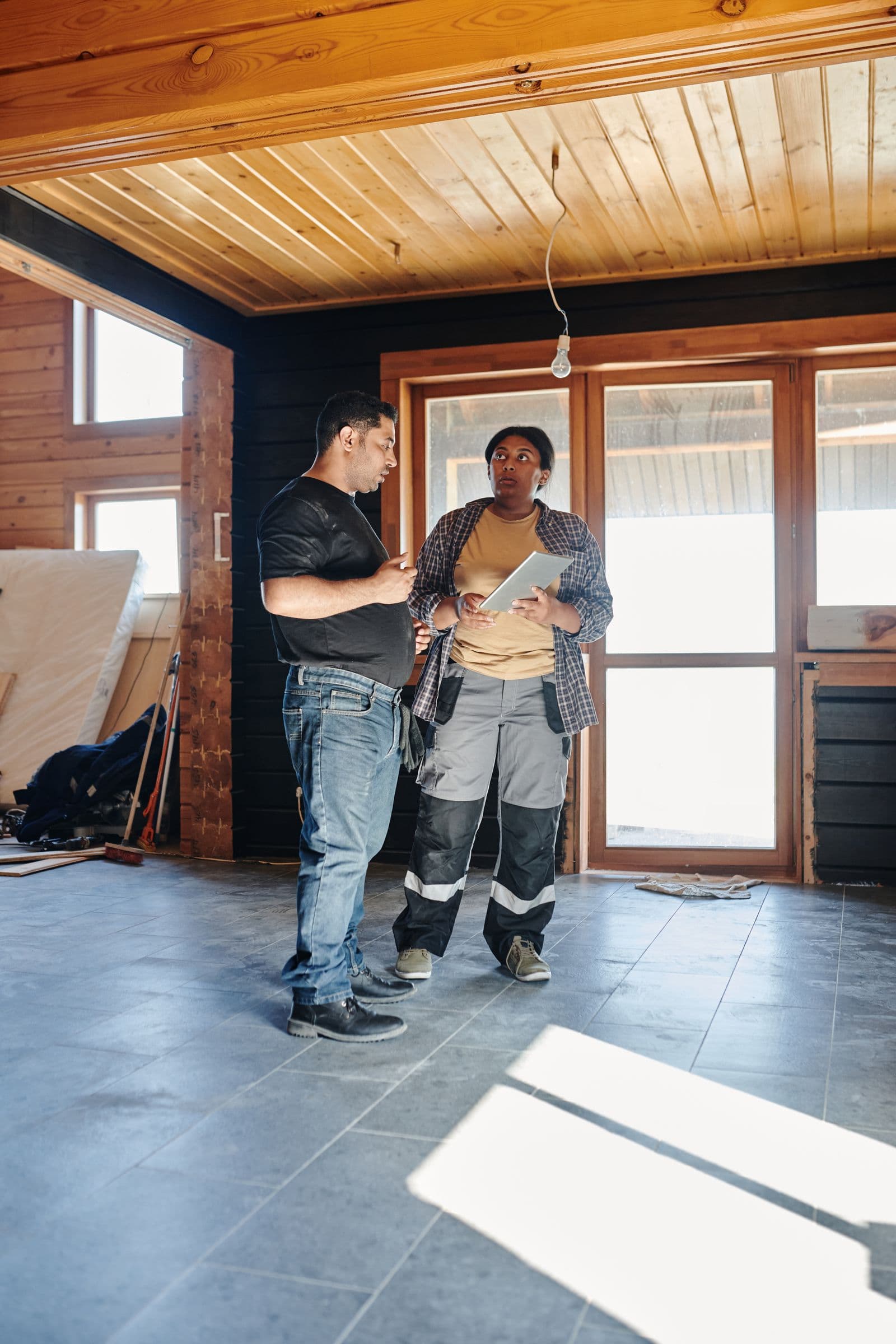
Treatment equipment is plumbing. Most of the job is the connection, the drain and the code detail behind it.

Bullhead City water, answered plainly
Where does Bullhead City's water come from?+
From wells that pump groundwater from the aquifer beneath the city, not from the Colorado River or Lake Mohave directly. The City disinfects it with chlorine before distribution.
Is there PFAS in Bullhead City water?+
In the Mohave system, 2025 sampling for 29 PFAS detected PFOS as high as 7.3 ppt, PFOA as high as 5.3 ppt, PFHxS at 2.9 ppt and PFBS at 3.1 ppt. The report lists 4.0 ppt for PFOA and PFOS.
Is there arsenic in Bullhead City water?+
Yes. The highest 2025 result was 8.8 ppb against the 10 ppb federal limit, from natural deposits. It was not a violation.
Did the Mohave system have violations in 2025?+
The report lists five, all for monitoring or reporting: a byproduct sample taken in August instead of July, missed quarterly nitrate samples, missed lead and copper monitoring, an incomplete service-line inventory and an incomplete prior report. It lists no contaminant-level violations.
Does this report cover my address?+
Only if you're on the City's Mohave system (AZ0408032). Bullhead City runs five other systems, each with its own report.
Where do these figures come from?+
The City of Bullhead City's Mohave Water System Annual Water Quality Report for 2025. Third-party aggregators are not used.
Related resources
Home water purification and treatment
The national service page behind this one.
Learn more →Lake Havasu City water quality
Groundwater with 19 gpg hardness and 753 ppm dissolved solids.
Learn more →Yuma water quality
Colorado River canal water with trihalomethanes near the limit.
Learn more →Lake Havasu City battery backup
UNS Electric's R-Tech pilot and on-peak demand billing.
Learn more →All home services
Water, battery, HVAC and solar under one licensed contractor of record.
Learn more →Get a free test at your tap
A licensed technician tests at your kitchen tap and tells you which findings apply to your house — PFAS, arsenic, nitrate or sodium. No charge, no obligation, and coverage confirmed at your address first.
Get a free test