Casa Grande, Arizona
Casa Grande Water Quality
Casa Grande-West is Arizona Water Company groundwater — not Central Arizona Project canal water. The 2025 CCR shows arsenic and nitrate under their limits but close enough to matter, plus fluoride and PFAS notes worth reading before anyone sizes a filter.

Nitrate as high as 9.37 ppm against a 10 ppm limit — on groundwater wells, not CAP canal water.
The short answer
Casa Grande-West drinks Arizona Water Company groundwater from wells around Casa Grande and Coolidge — not the CAP canal blend that serves much of metro Phoenix. The 2025 CCR shows arsenic at a 7.2 ppb running average (MCL 10) and nitrate as high as 9.37 ppm (MCL 10).
Fluoride reached 2.47 ppm (secondary notice for children under nine), and several PFAS compounds were detected in the related Pinal Valley monitoring set. No hardness figure is printed. A tap test is what decides whether softening, RO or a contaminant-specific filter belongs at your house.
Get a free test
Tell us your Casa Grande address. We confirm coverage first, then schedule a licensed technician to test at your tap — no charge, no obligation.
What filtration does — and does not
Softening, carbon and reverse osmosis solve different problems. Match the technology to the contaminant your tap actually shows.
Where Casa Grande-West water comes from
Groundwater wells — a different story from Phoenix metro canal blends.
Groundwater wells, not a canal
Arizona Water Company provides groundwater to Casa Grande-West customers from wells located throughout the greater Casa Grande and Coolidge areas.
Some wholesale from Pinal Valley
The system also receives some or all of its water wholesale through a direct connection with Arizona Water Company Pinal Valley (PWSID AZ0411009).
ADEQ Source Water Assessment
AWC works with ADEQ on source-water assessments. A low vulnerability designation means most protection measures are already in place or hydrogeology limits their impact.
What the 2025 Casa Grande-West report actually says
Limits are fixed. Results are from Arizona Water Company's 2025 CCR for Casa Grande-West — system-level figures, not a reading at your tap. A later report supersedes them.
Arsenic — HLRAA 7.2 ppb
Detected ND to 9.1 ppb in 2025 quarterly samples, with a highest locational running annual average of 7.2 ppb against an MCL of 10. The report notes the water complies with the EPA standard while containing low levels of arsenic.
Nitrate — up to 9.37 ppm
Nitrate as nitrogen ranged from 1.09 to 9.37 ppm in 2025 against an MCL of 10. The CCR prints the infant blue-baby-syndrome notice that applies when nitrate approaches or exceeds 10 ppm.
Fluoride — up to 2.47 ppm
Range 0.5–2.47 ppm against an MCL of 4. AWC printed the secondary (cosmetic) notice: children under nine should use alternative water or treated water when fluoride exceeds 2 mg/L to avoid dental fluorosis.
PFAS detected (compliance by 2029)
Pinal Valley regulatory averages for 2024–2025 include PFBS up to 91 ppt in the range, PFHxS up to 6.1 ppt (MCL 10), and several other PFAS; PFOA was ND and the Hazard Index averaged 0. Water systems have until 2029 to comply with PFAS MCLs.
Lead — 90th percentile ND
September 2024 lead and copper round: lead 90th percentile not detected, with one sample over the action level; copper 0.029 ppm. AWC reports no lead service lines identified on its inventory map.
2025 monitoring notes
A Q2 2025 arsenic sample at EPDS019 was collected on time but submitted to the lab late (missed monitoring violation; result well below MCL). A Level 2 assessment after a missed source-water sample following an August 8, 2025 coliform detection was completed October 1, 2025.
Casa Grande next to Goodyear, Phoenix and Yuma
West of here, Goodyear and Phoenix sit on different utility blends (Liberty/City and City of Phoenix / CAP stories). Down the interstate, Yuma has its own Colorado River and local-source picture. Casa Grande-West is AWC groundwater — arsenic, nitrate and fluoride are the first questions, not canal hardness marketing.
Where these figures come from
Everything on this page traces to Arizona Water Company's published CCR.
- Arizona Water Company — 2025 Annual Water Quality Report for Casa Grande-West (PDF) — detected contaminants, PFAS table, lead inventory statement, missed-monitoring and Level 2 assessment notes (PWSID AZ0411024).
- Arizona Water Company — Water Quality — index of current CCRs by system.
Matching treatment to the finding
Casa Grande's report supports a tap test and contaminant-matched equipment — not a default softener sale.
Test at your tap before sizing equipment
System averages are not your kitchen. Arsenic, nitrate and fluoride vary by well blend; a tap test shows which of those applies to your house.
Nitrate and infants
If you care for an infant under six months, the CCR's nitrate notice is the place to start — ask your health care provider, and confirm your tap result, before relying on any filter claim.
Fluoride above 2 mg/L
When fluoride exceeds 2 mg/L, the secondary notice recommends alternative or treated water for children under nine. Reverse osmosis is one technology certified for fluoride reduction; match the certification to the contaminant.
PFAS: certified reduction, not a cure-all
If PFAS is the concern, look for a system certified to reduce the specific compounds in your lab report. Whole-house vs under-sink depends on whether you care about cooking water, bathing or both.
How the free test works
A licensed technician tests at your kitchen tap, walks the plumbing, and tells you which of the findings above applies to your house and which does not. There is no charge and no obligation.
Seamless Home is the licensed contractor of record on the work that follows. Installation is performed by vetted installing partners engaged as our subcontractors, and the workmanship obligation stays with us. Coverage is confirmed per service area rather than promised as blanket availability.
What a water treatment job with us covers
Installation and replacement of whole-home and point-of-use treatment, specified against what your water actually contains.
Sediment filtration
Installation of the first stage that protects everything downstream of it, sized to the service line and the household draw.
Softening
Installation of ion-exchange softening where hardness is the problem, including the drain connection the plumbing code treats as indirect waste.
Carbon filtration
Installation of carbon stages for taste, odour and disinfection by-products, specified from your utility's own water quality report.
Reverse osmosis
Point-of-use installation at the kitchen sink where the target is dissolved solids rather than whole-home flow.
Disinfection
Installation of UV or equivalent treatment where the supply is a private well or is otherwise not continuously disinfected.
System replacement
Replacing equipment that has reached the end of its service life, including the discharge and air gap details an inspector looks at.
This is installation and replacement work, specified from a published water quality report or a test of your supply — not from a sales chart. Coverage is confirmed per service area rather than promised as blanket availability.
What the work actually looks like
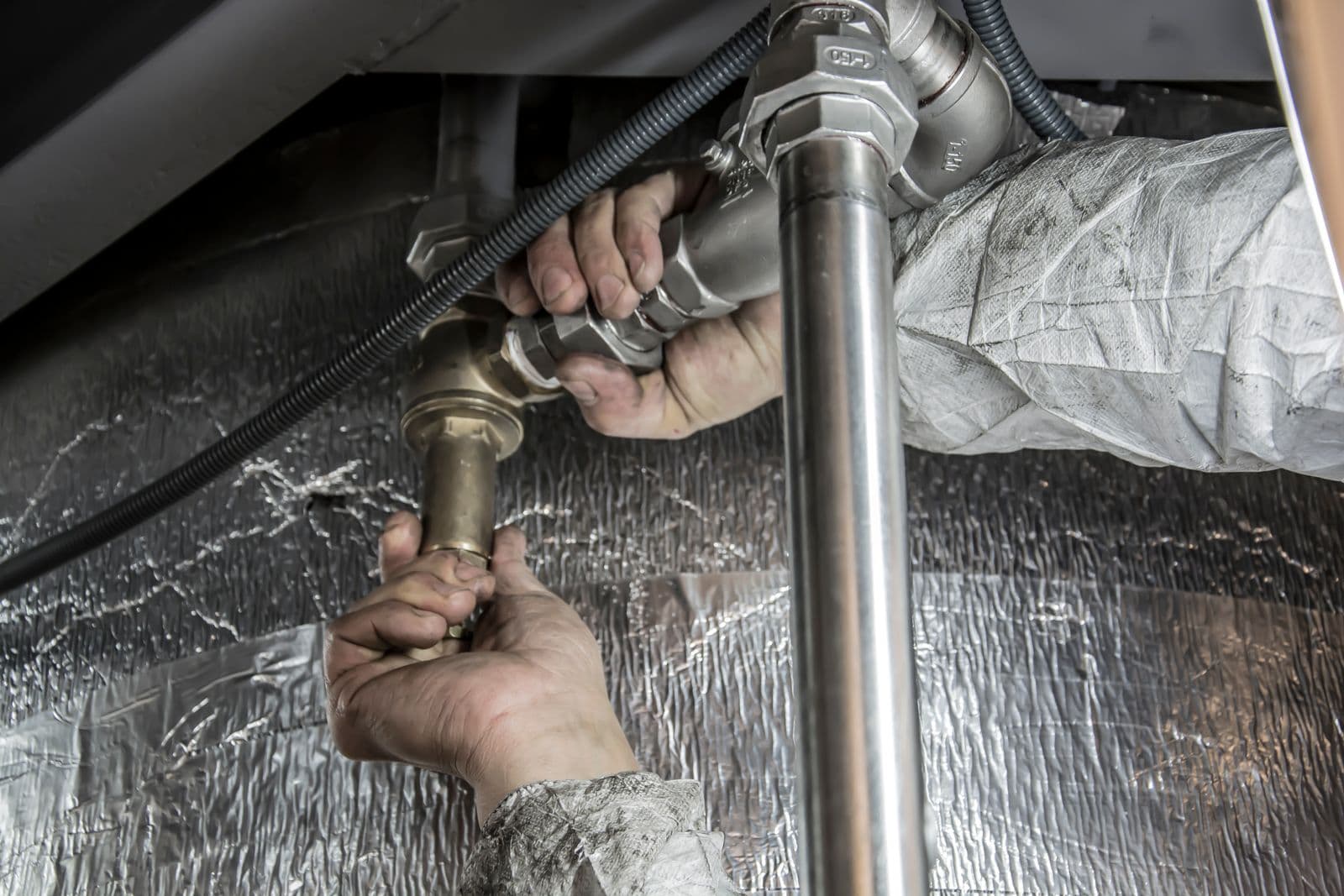
Treatment equipment is plumbing. Most of the job is the connection, the drain and the code detail behind it.


Casa Grande water, answered plainly
Who supplies Casa Grande-West drinking water?+
Arizona Water Company. The 2025 CCR covers Casa Grande-West (PWSID AZ0411024) and describes groundwater from wells in the greater Casa Grande and Coolidge areas, plus wholesale water from AWC's Pinal Valley system.
Is Casa Grande water hard?+
This CCR does not print a hardness figure, so we do not invent one. A tap test is the way to know whether softening belongs on the list for your house.
Should I worry about arsenic or nitrate?+
Both were detected under their MCLs in the 2025 report, but nitrate reached as high as 9.37 ppm against a limit of 10, and arsenic's running average was 7.2 ppb against 10. Those are system figures — a test at your tap is what decides treatment.
Are there lead service lines?+
Arizona Water Company states it has not identified any lead service lines and posts an interactive inventory map. One sample in the September 2024 lead round exceeded the action level even with a non-detect 90th percentile, which is why in-house plumbing still matters.
What about PFAS?+
The CCR reports several PFAS detections in the Pinal Valley monitoring set for 2024–2025 and notes that water systems have until 2029 to comply with PFAS MCLs. PFOA was not detected in that average; other compounds were. A later report supersedes these figures.
Where do these figures come from?+
Arizona Water Company's 2025 Annual Water Quality Report for Casa Grande-West, Arizona (PWSID AZ0411024), dated May 2026. Third-party aggregators are not used. A later report supersedes these figures.
Related resources
Home water purification and treatment
The national service page behind this one.
Learn more →Goodyear water quality
West Valley utility blend — a different source story.
Learn more →Phoenix water quality
City of Phoenix / CAP metro supply.
Learn more →Yuma water quality
Colorado River and local sources down I-8.
Learn more →All home services
Water, battery, HVAC and solar under one licensed contractor of record.
Learn more →Get a free test at your tap
A licensed technician tests at your kitchen tap and tells you which findings apply to your house — arsenic, nitrate, fluoride, hardness or none of them. No charge, no obligation, and coverage confirmed at your address first.
Get a free test