Lynchburg, Virginia
Lynchburg Water Quality
A mountain reservoir 21 miles away, gravity-fed to two plants, with the James River in reserve. The 2026 report's everyday facts: free chlorine, very low sodium, byproducts within limits, and extra lead testing after the service line inventory.
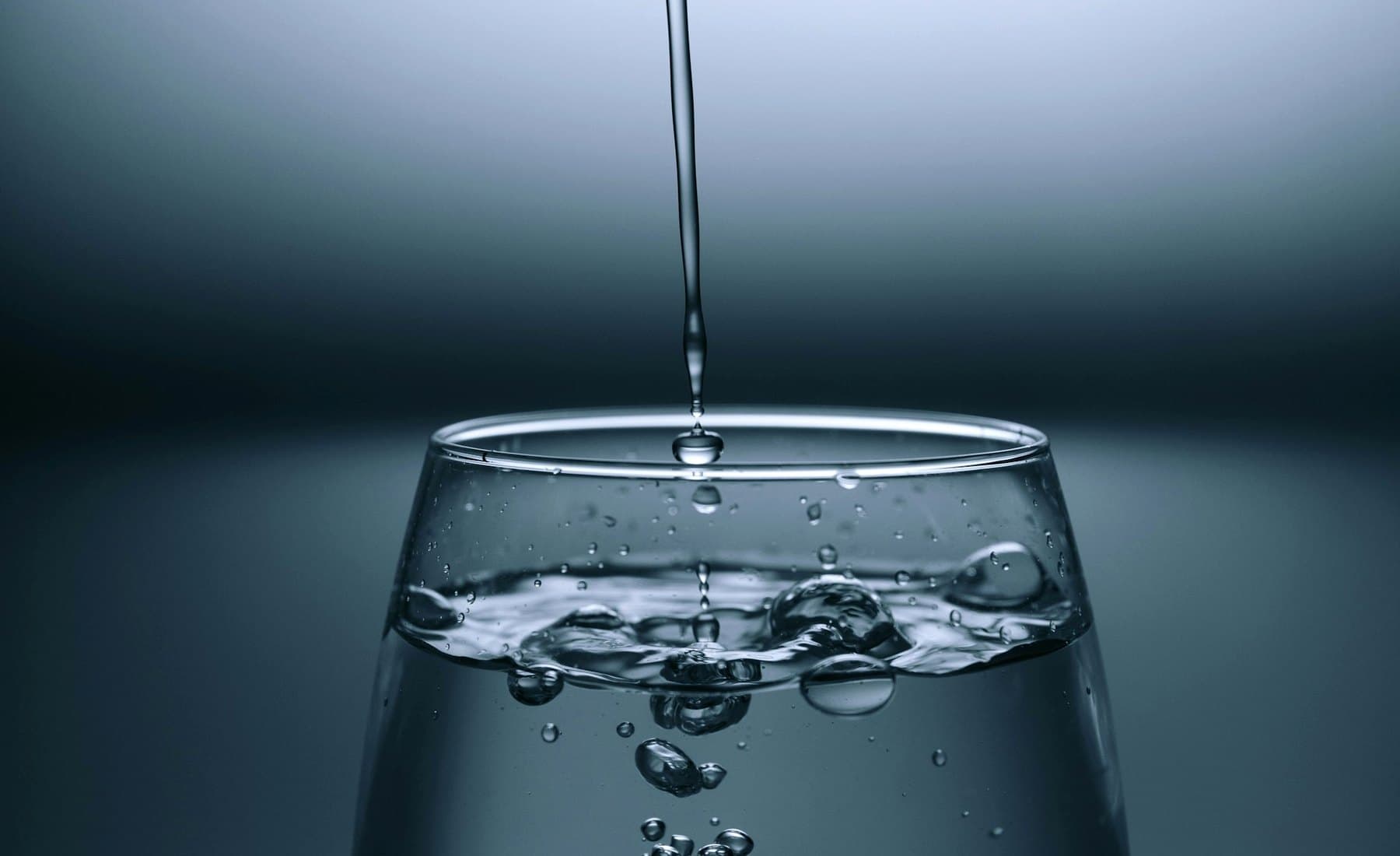
Chlorine 1.31 ppm on average, up to 1.97 — a free chlorine system, not chloramine.
The short answer
Lynchburg drinks mainly from the Pedlar Reservoir, a 138-acre lake in a national forest in Amherst County, carried just over 21 miles by gravity; the James River is used at certain times.
The 2026 report shows free chlorine at 1.31 ppm (not chloramine), sodium at 5.8 ppm, and byproducts within limits — TTHM 48 ppb with one result at 72. Lead was retested after the service line inventory and stayed low. If anything here justifies equipment, it is chlorine taste or byproduct margin at the kitchen tap.
Get a free test
Tell us your Lynchburg address. We confirm coverage first, then schedule a licensed technician to test at your tap — no charge, no obligation.
What filtration does — and does not
Softening, carbon and reverse osmosis solve different problems. Lynchburg's report is a free-chlorine and byproduct story, not a hardness purchase order.
Where Lynchburg water comes from
A forest reservoir and gravity, with the river as the second source — a different starting point from the coastal Virginia systems.
Pedlar Reservoir, in a national forest
The main source is the 138-acre Pedlar Reservoir in Amherst County, inside the George Washington and Jefferson National Forests. Water flows just over 21 miles by gravity to the City's two filtration plants.
The James River, at certain times
The report says water is also drawn from the James River at certain times. That is the same river Richmond treats downstream, but for Lynchburg it is the second source, not the everyday one.
Two plants: College Hill and Abert
Lynchburg Water Resources treats the water at the College Hill and Abert plants and serves more than 23,000 water customers in Lynchburg and parts of Amherst, Bedford and Campbell counties.
Both sources rated highly susceptible
The Virginia Department of Health's 2025 source water assessment classified both surface sources as highly susceptible to contamination because of land use and potential sources in the assessment areas. The report is clear that this does not mean the sources have been impacted.
What the 2026 Lynchburg report actually says
Limits are fixed. The results next to them are from Lynchburg Water Resources' Water Quality Report 2026, covering 2025 monitoring — system-level figures, not a reading at your tap. A later report supersedes them.
Free chlorine — 1.31 ppm (0.19–1.97)
Disinfectant is reported as chlorine (as Cl2) at 1.31 ppm, ranging 0.19 to 1.97, against a maximum residual level of 4. This is chlorine, not the chloramine residual reported by Newport News and Portsmouth.
TTHM — 48 ppb, one result at 72
Total trihalomethanes are reported at 48 ppb with a range of 14 to 72, against an MCL of 80. Compliant, but the top of the range is the reason byproducts are the most relevant finding in this report.
HAA5 — 34 ppb (0–50)
Haloacetic acids at 34 ppb, ranging up to 50, against an MCL of 60. Like TTHM, they form when chlorine meets the natural organic carbon a forest reservoir carries.
Organic carbon removal — 49% (39–81)
Total organic carbon removal is tracked as a treatment technique, at 49% with a range of 39 to 81. Removing organic carbon at the plant is how byproducts are held down downstream.
Sodium — 5.8 ppm
Sodium averaged 5.8 ppm (5.7–6.0), from natural deposits and road salt. That is very low, which matters if anyone is weighing a salt-based softener without a measured hardness reason.
Lead — retested after the inventory
In 2024 the lead 90th percentile was 2 ppb (0–4) with no sample above the 15 ppb action level. After the first service line inventory, extra samples taken in 2025 showed a 90th percentile of 1.5 ppb (0–2). Copper was 45 ppb at the 90th percentile in both rounds.
Why Lynchburg is not Richmond with a different ZIP
Richmond treats the James River every day at a plant on its bank. Lynchburg uses the same river only at certain times; its everyday water is a mountain reservoir. On the coast, Newport News and Portsmouth carry a chloramine residual; Lynchburg's is free chlorine. Those differences decide whether ordinary carbon is enough, so a quote built on another city's report is a quote for the wrong house.
Where these figures come from
Everything on this page traces to Lynchburg Water Resources. Independent compilations of water quality data exist and are not used here.
- Lynchburg Water Resources — Water Quality Report 2026 (PDF) — sources, 2025 source water assessment, disinfectant and byproduct tables, sodium, lead and copper including the additional 2025 samples.
- City of Lynchburg — Drinking Water Quality Report — customers served, Pedlar Reservoir location, College Hill and Abert plants.
- City of Lynchburg — Annual Drinking Water Quality Reports archive — earlier reports.
Matching treatment to the finding
Lynchburg's report supports a chlorine-taste or byproduct-margin conversation at the kitchen tap — not a softener default.
Taste: ordinary carbon handles free chlorine
A residual that can reach about 2 ppm is noticeable to some households. Standard activated carbon reduces free chlorine taste and odour well — no catalytic chloramine media required.
Byproducts: point-of-use first
TTHM and HAA5 are within limits. A household that wants them lower starts with a kitchen-tap carbon or reverse osmosis system certified for the reduction it claims.
Hardness and PFAS: test, do not assume
The 2026 report's tables print neither a hardness figure nor a PFAS result. Rather than borrowing a number from elsewhere, a tap test answers both for your house.
Older homes: check the service line
System lead results are low. A house with an older or unknown service line is answered by the City's service line inventory and a tap test, not by the 90th-percentile figure.
How the free test works
A licensed technician tests at your kitchen tap, walks the plumbing, and tells you which of the findings above applies to your house and which does not. There is no charge and no obligation.
Seamless Home is the licensed contractor of record on the work that follows. Installation is performed by vetted installing partners engaged as our subcontractors, and the workmanship obligation stays with us. Coverage is confirmed per service area rather than promised as blanket availability.
An RO unit needs a legal drain connection — where a water softener is allowed to discharge sets out the indirect-waste rule that applies to treatment drain lines.
What a water treatment job with us covers
Installation and replacement of whole-home and point-of-use treatment, specified against what your water actually contains.
Sediment filtration
Installation of the first stage that protects everything downstream of it, sized to the service line and the household draw.
Softening
Installation of ion-exchange softening where hardness is the problem, including the drain connection the plumbing code treats as indirect waste.
Carbon filtration
Installation of carbon stages for taste, odour and disinfection by-products, specified from your utility's own water quality report.
Reverse osmosis
Point-of-use installation at the kitchen sink where the target is dissolved solids rather than whole-home flow.
Disinfection
Installation of UV or equivalent treatment where the supply is a private well or is otherwise not continuously disinfected.
System replacement
Replacing equipment that has reached the end of its service life, including the discharge and air gap details an inspector looks at.
This is installation and replacement work, specified from a published water quality report or a test of your supply — not from a sales chart. Coverage is confirmed per service area rather than promised as blanket availability.
What the work actually looks like
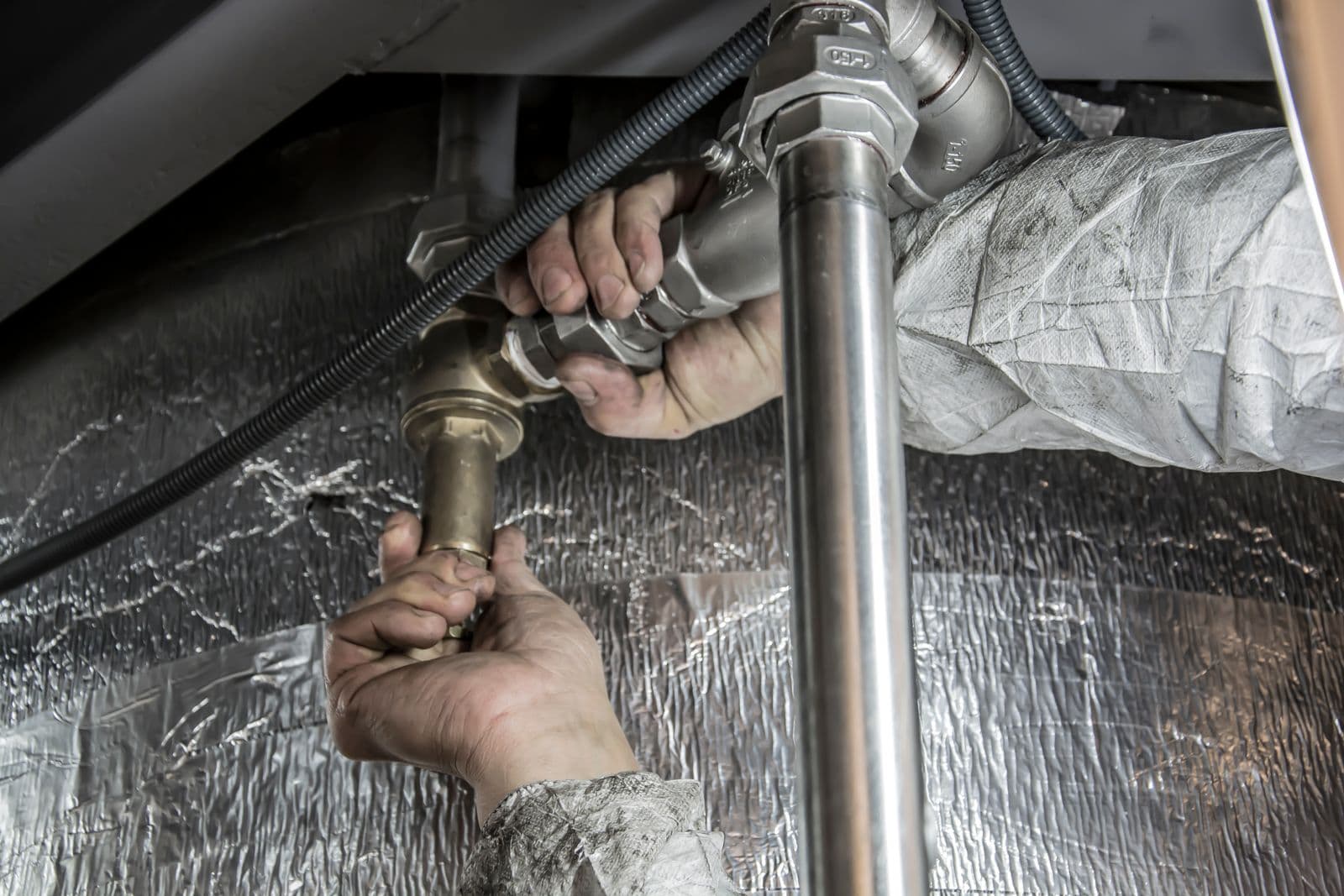
Treatment equipment is plumbing. Most of the job is the connection, the drain and the code detail behind it.
Lynchburg water, answered plainly
Where does Lynchburg's water come from?+
Mainly from the 138-acre Pedlar Reservoir in Amherst County, in the George Washington and Jefferson National Forests. The water flows just over 21 miles by gravity to the College Hill and Abert filtration plants. At certain times the City also draws water from the James River.
Does Lynchburg use chlorine or chloramine?+
The 2026 report lists the disinfectant as chlorine (as Cl2), averaging 1.31 ppm with a range of 0.19 to 1.97 against a maximum residual level of 4. That is a free chlorine system, unlike Newport News and Portsmouth, whose reports describe a chloramine residual.
Is Lynchburg water hard?+
The report does not print a hardness figure, so we do not quote one. What it does print is sodium at 5.8 ppm, which is very low. A tap test gives the hardness reading a softener decision needs.
Is there PFAS in Lynchburg water?+
The 2026 Water Quality Report's tables do not list PFAS results, and this page does not guess at one. If PFAS is your concern, a certified lab test at your tap is the direct answer.
What about lead?+
In 2024 the 90th-percentile lead result was 2 ppb, with no sample above the 15 ppb action level. After the City completed its first water service line inventory, additional samples in 2025 returned a 90th percentile of 1.5 ppb. The inventory itself shows what is known about the service line at your address.
Where do these figures come from?+
Lynchburg Water Resources' Water Quality Report 2026, covering 2025 monitoring, and the City's Drinking Water Quality Report page. Third-party water-quality aggregators are not the source used here. A later report supersedes these figures.
Related resources
Home water purification and treatment
The national service page behind this one.
Learn more →Richmond water quality
The James River as an everyday source, downstream.
Learn more →Newport News water quality
A coastal reservoir system with a chloramine residual — the contrast.
Learn more →Home battery backup in Roanoke, VA
Western Virginia outage history, for the house that also needs backup.
Learn more →Where a water softener can discharge
Indirect-waste rules for treatment drain lines.
Learn more →All home services
Water, battery, HVAC and solar under one licensed contractor of record.
Learn more →Get a free test at your tap
A licensed technician tests at your kitchen tap and tells you which of the findings above applies to your house — chlorine taste, byproducts, hardness or none of them. No charge, no obligation, and coverage confirmed at your address first.
Get a free test