Lawrence, Massachusetts
Lawrence Water Quality
The Merrimack River, treated with carbon filters, UV and free chlorine. The 2025 report's everyday facts: sodium above the state guideline, PFAS6 under the limit but not zero, and service lines still being identified.
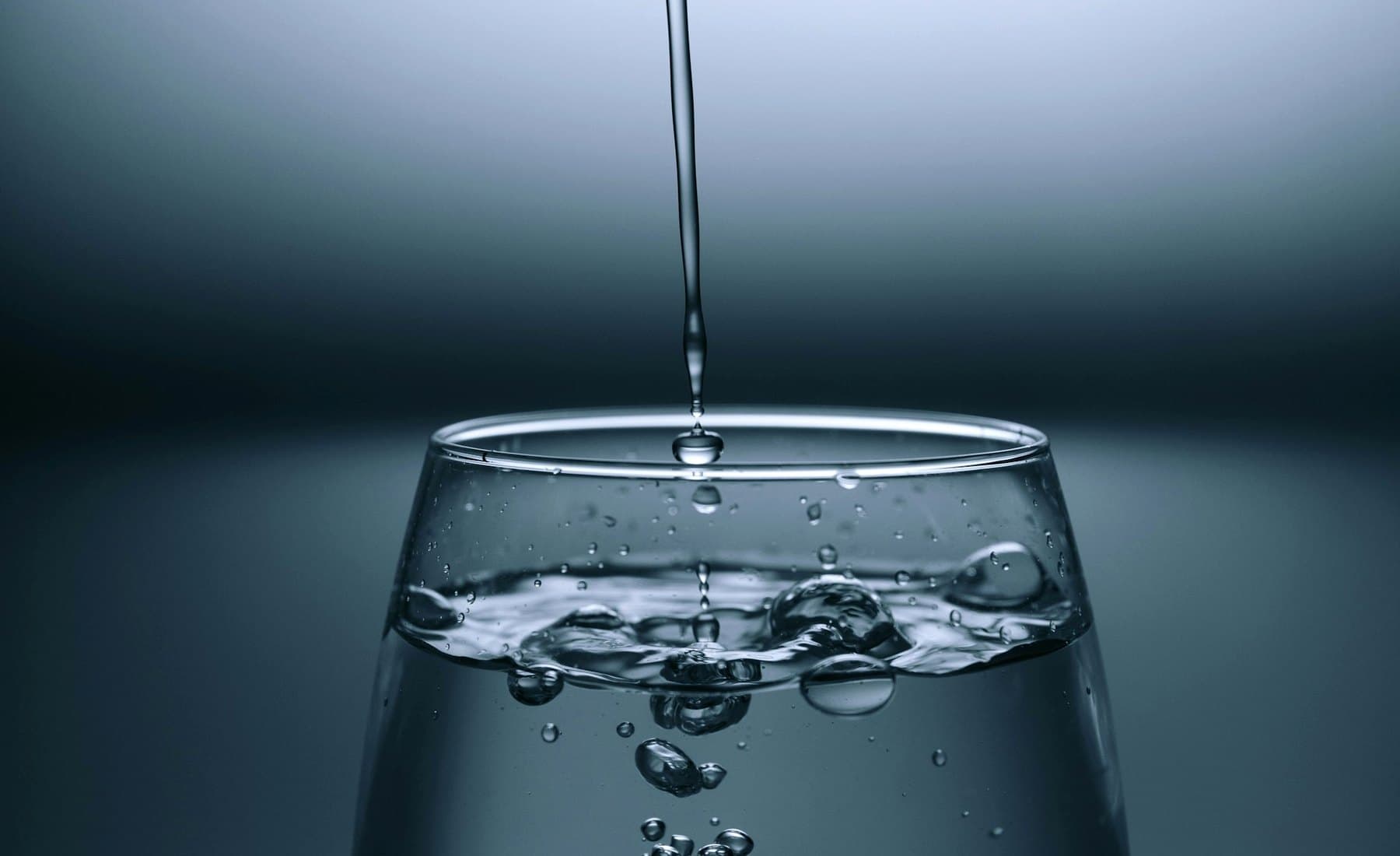
Sodium 27 ppm in the 2025 report — above MassDEP's 20 ppm guideline.
The short answer
Lawrence drinks the Merrimack River, treated at a 2007 plant with granular activated carbon filters, UV and free chlorine — not chloramine.
The 2025 report lists sodium at 27 ppm, above MassDEP's 20 ppm guideline, and PFAS6 between 2.27 and 7.79 ppt against the state's 20. Byproducts and lead are within limits, but 345 service lines are still of unknown material. If anything here justifies equipment, it is reverse osmosis at the kitchen tap — and a reason to think twice about a salt softener.
Get a free test
Tell us your Lawrence address. We confirm coverage first, then schedule a licensed technician to test at your tap — no charge, no obligation.
What filtration does — and does not
Softening, carbon and reverse osmosis solve different problems. Lawrence's report is a sodium and PFAS-margin story, not a hardness purchase order.
Where Lawrence water comes from
One river intake and a plant built to treat it — with neighbouring towns as a backstop that went unused in 2025.
One source: the Merrimack River
Lawrence draws its water from the Merrimack River (Source ID 3149000-01S). MassDEP's source water assessment assigned the supply a susceptibility ranking of high — a river collects whatever the land upstream sends it.
Neighbours on standby, not in use
Interconnections with Andover, Methuen and North Andover can supply Lawrence in emergencies or unusually high demand. The 2025 report says water from them was not required that year.
A 2007 plant with carbon and UV
The plant that opened in 2007 uses conventional treatment — coagulation, flocculation and settling, which removes about 90% of solids — then filters of granular activated carbon, then an ultraviolet reactor.
Free chlorine, not chloramine
After UV, sodium hypochlorite is added as free chlorine, and a free chlorine residual is maintained through the distribution system. That is a different chemistry from the monochloramine used by Boston and Cambridge.
What the 2025 Lawrence report actually says
Limits are fixed. The results next to them are from the City of Lawrence Annual Drinking Water Quality Report for Calendar Year 2025 — system-level figures, not a reading at your tap. A later report supersedes them.
Sodium — 27 ppm vs a 20 ppm guideline
The report lists sodium at 27 ppm and notes that MassDEP's Office of Research and Standards guideline is 20 ppm. It is not a regulated limit, but it matters for anyone on a sodium-restricted diet — and argues against adding a salt-based softener without a hardness reason.
PFAS6 — 2.27 to 7.79 ppt
The sum of the six regulated PFAS ranged from 2.27 to 7.79 ppt against the Massachusetts MCL of 20. PFOA was 2.27–3.68 ppt and PFOS non-detect to 2.07 ppt. Under the state limit, and under EPA's 4.0 ppt federal figures for each — but not zero.
Chlorine residual — 0.85 ppm
In the distribution system, the highest running annual average for chlorine is 0.85 ppm (individual results 0.03–1.54) against a maximum residual level of 4. The main 2025 table also lists chlorine dioxide up to 0.330 ppm against 0.8, and its byproduct chlorite up to 0.441 ppm against 1.
Byproducts — TTHM 41, HAA5 32 ppb
Highest running annual averages: total trihalomethanes 41 ppb (17–48) against 80, and haloacetic acids 32 ppb (9–43) against 60. Within limits. River water carries organic carbon, and byproducts form when disinfectant meets it.
Perchlorate — 0.220 ppb vs 2
Massachusetts sets its own perchlorate MCL of 2 ppb. Lawrence's result was 0.220 ppb, about a tenth of the state limit.
Lead — 0.000 at the 90th percentile
In 2025 sampling at 30 sites, the lead 90th percentile was 0.000 mg/L and no site was above the action level. The City counts 12,777 service lines: records suggest up to 57 lead lines may remain, and 345 are of unknown material.
Why Lawrence is not Lowell with a different ZIP
Lowell draws from the same river upstream, and its 2025 report put PFAS6 at 12.5 ppt; Lawrence's 2025 range topped out at 7.79. Lawrence's distinguishing number is sodium. To the east, Lynn runs its own ponds with chlorine dioxide, and Boston is MWRA water with monochloramine. Borrowing a neighbour's report for a Lawrence filter quote is how households buy the wrong stage.
Where these figures come from
Everything on this page traces to primary sources. Independent compilations of water quality data exist and are not used here.
- City of Lawrence — Annual Drinking Water Quality Report for Calendar Year 2025 (PDF) — source, treatment, regulated and distribution tables, sodium guideline, PFAS, lead and service line counts.
- City of Lawrence — Water & Sewer Department — current and earlier reports.
- EPA — PFAS National Primary Drinking Water Regulation — 4.0 ppt figures for PFOA and PFOS.
Matching treatment to the finding
Lawrence's report supports a reverse osmosis and PFAS-margin conversation at the kitchen tap — not a softener default.
Sodium: avoid adding more
With sodium already above the state guideline, a salt-based softener is a choice to make only on a measured hardness result. Reverse osmosis at the kitchen tap reduces sodium for drinking water.
PFAS: certified carbon or RO at the tap
Households who want margin below 7.79 ppt usually start at the drinking-water tap. Check NSF/ANSI 53 or 58 listings that name PFOA and PFOS reduction.
Taste: ordinary carbon handles free chlorine
Lawrence's residual is free chlorine, with a highest running annual average of 0.85 ppm. Standard activated carbon reduces chlorine taste well — no catalytic chloramine media needed.
Unknown service line: check before you filter
System lead results are very low, but 345 service lines are of unknown material. The City is confirming them; a tap test and a look at the line entering the house answer it for yours.
How the free test works
A licensed technician tests at your kitchen tap, walks the plumbing, and tells you which of the findings above applies to your house and which does not. There is no charge and no obligation.
Seamless Home is the licensed contractor of record on the work that follows. Installation is performed by vetted installing partners engaged as our subcontractors, and the workmanship obligation stays with us. Coverage is confirmed per service area rather than promised as blanket availability.
An RO unit needs a legal drain connection — where a water softener is allowed to discharge sets out the indirect-waste rule that applies to treatment drain lines.
What a water treatment job with us covers
Installation and replacement of whole-home and point-of-use treatment, specified against what your water actually contains.
Sediment filtration
Installation of the first stage that protects everything downstream of it, sized to the service line and the household draw.
Softening
Installation of ion-exchange softening where hardness is the problem, including the drain connection the plumbing code treats as indirect waste.
Carbon filtration
Installation of carbon stages for taste, odour and disinfection by-products, specified from your utility's own water quality report.
Reverse osmosis
Point-of-use installation at the kitchen sink where the target is dissolved solids rather than whole-home flow.
Disinfection
Installation of UV or equivalent treatment where the supply is a private well or is otherwise not continuously disinfected.
System replacement
Replacing equipment that has reached the end of its service life, including the discharge and air gap details an inspector looks at.
This is installation and replacement work, specified from a published water quality report or a test of your supply — not from a sales chart. Coverage is confirmed per service area rather than promised as blanket availability.
What the work actually looks like
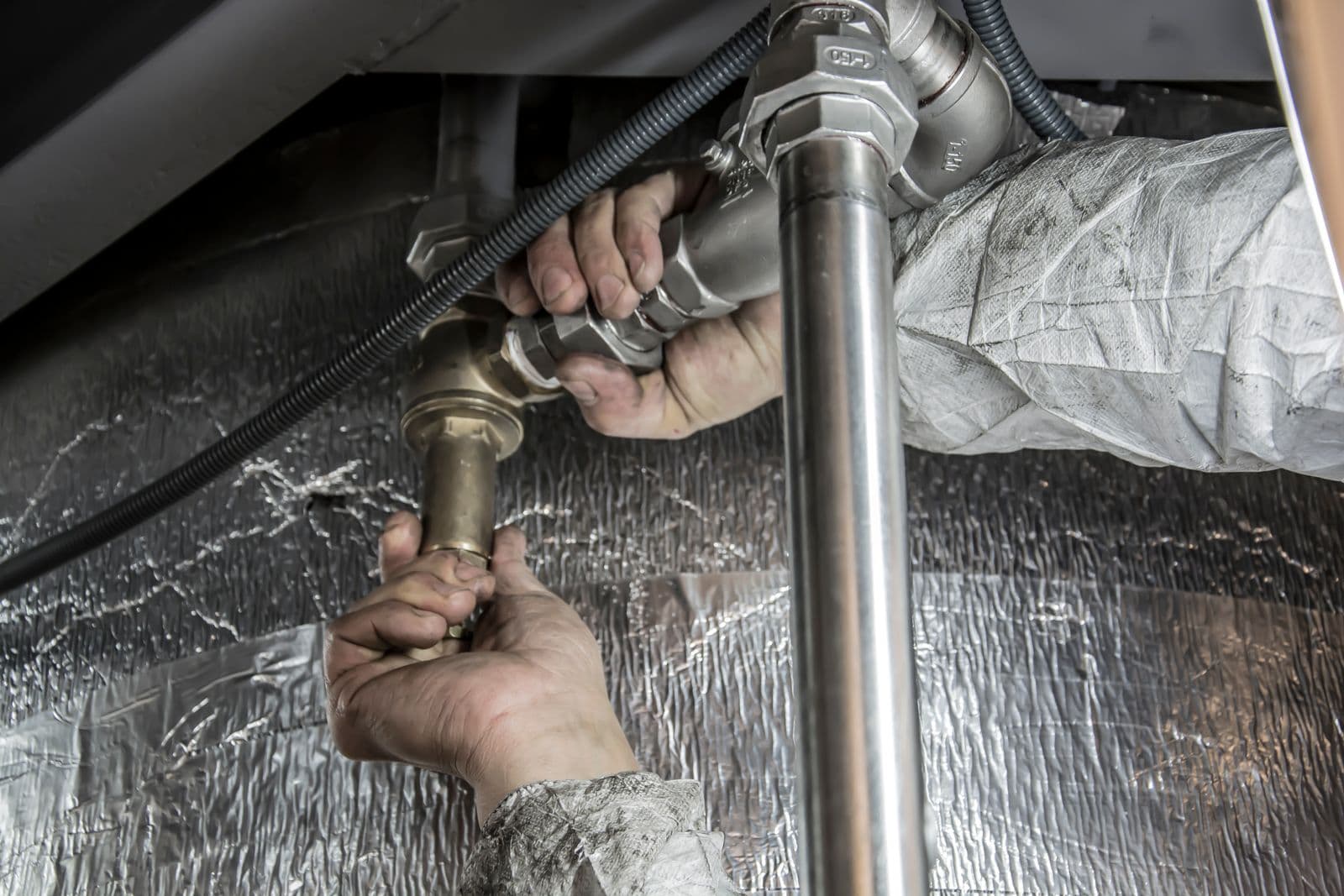
Treatment equipment is plumbing. Most of the job is the connection, the drain and the code detail behind it.

Lawrence water, answered plainly
Where does Lawrence's water come from?+
From the Merrimack River, treated at the City's water treatment plant, which opened in 2007. Lawrence also has interconnections with Andover, Methuen and North Andover for emergencies or high demand, but the 2025 report says they were not needed that year.
Is Lawrence water high in sodium?+
The 2025 report lists sodium at 27 ppm. MassDEP's Office of Research and Standards has a guideline of 20 ppm for sodium. That is guidance rather than an enforceable limit, but people on sodium-restricted diets may want to discuss it with their doctor — and it is a reason not to add a salt-based softener without a hardness reason.
Is there PFAS in Lawrence water?+
At low levels. The 2025 report lists the PFAS6 sum at 2.27 to 7.79 ppt against the Massachusetts limit of 20, with PFOA at 2.27 to 3.68 ppt and PFOS from non-detect to 2.07 ppt. The City also voluntarily tested twelve additional PFAS compounds.
Does Lawrence use chloramine?+
No. The report describes UV disinfection followed by sodium hypochlorite as free chlorine, with a free chlorine residual maintained throughout the system. The highest 2025 running annual average in the distribution system was 0.85 ppm.
Does my house have a lead service line?+
Possibly, if it is one of the lines the City has not yet confirmed. Of 12,777 service lines, records indicate up to 57 lead lines may remain and 345 are of unknown material. The City says it is confirming those and replacing any found to be lead; 126 have been replaced since 2017.
Where do these figures come from?+
The City of Lawrence Water & Sewer Department's Annual Drinking Water Quality Report for Calendar Year 2025. Third-party water-quality aggregators are not the source used here. A later report supersedes these figures.
Related resources
Home water purification and treatment
The national service page behind this one.
Learn more →Lowell water quality
The Merrimack upstream — PFAS6 at 12.5 ppt.
Learn more →Lynn water quality
Its own ponds and chlorine dioxide — off MWRA like Lawrence.
Learn more →Boston water quality
MWRA supply with monochloramine — the contrast.
Learn more →Where a water softener can discharge
Indirect-waste rules for treatment drain lines.
Learn more →All home services
Water, battery, HVAC and solar under one licensed contractor of record.
Learn more →Get a free test at your tap
A licensed technician tests at your kitchen tap and tells you which of the findings above applies to your house — sodium, PFAS margin, chlorine taste or none of them. No charge, no obligation, and coverage confirmed at your address first.
Get a free test