Surprise, Arizona
Surprise Water Quality
EPCOR's Agua Fria district blends CAP Colorado River water, Agua Fria river water from Lake Pleasant, and West Valley groundwater. The 2025 report's swing is hardness from 2 to 17 grains — and arsenic that stays under the limit with a removal plant on the system.

Hardness runs 2–17 grains in the 2025 Agua Fria report. That is not one Surprise number — it is a seasonal blend.
The short answer
Many Surprise addresses sit on EPCOR's Agua Fria system (PWS ID AZ0407695), not a city-owned plant. The 2025 report blends CAP Colorado River water, Agua Fria river water from Lake Pleasant, and West Salt River Valley wells.
The number households notice first is hardness from 2 to 17 grains. Arsenic reaches 7.3 ppb on the high end of the range against a 10 ppb MCL, with a dedicated removal facility on the system. Initial 2025 PFAS monitoring at the treatment facility was non-detect below 2 ppt for the regulated set. Confirm your utility on the bill before buying equipment for a different CCR.
Get a free test
Tell us your Surprise address. We confirm coverage and which utility serves the meter first, then schedule a licensed technician to test at your tap — no charge, no obligation.
What filtration does — and does not
Softening, carbon and reverse osmosis solve different problems. Surprise's report is mostly a hardness-and-arsenic story, not a PFAS purchase order.
Where Agua Fria water comes from
A private West Valley district, not a city plant. CAP, Lake Pleasant and WSRV wells share the year — which is why hardness moves.
White Tanks — CAP Colorado River water
EPCOR's report says CAP water is delivered from Lake Havasu via the CAP Canal and the Beardsley Canal to the White Tanks Water Treatment Facility, which supplies treated surface water to the Agua Fria district. That is the renewable surface-water path for much of the West Valley blend.
Agua Fria River at Lake Pleasant
Agua Fria river water captured behind Waddell Dam at Lake Pleasant is listed alongside CAP as a surface source. Seasonal shifts between surface water and groundwater are why the report warns that hardness and taste can change through the year.
West Salt River Valley groundwater
Groundwater from the WSRV Sub-Basin, with ADEQ source-water assessments on fifteen wells. Depth to water is described as roughly 150 to more than 500 feet. When wells carry more of the blend, hardness and dissolved solids tend to move with them.
Lead at the tap — ND at the 90th percentile
EPCOR monitored lead and copper at customer taps in 2024 (120 samples). Lead's 90th percentile was not detected, with no samples above the 15 ppb action level. The utility still cannot control every fixture inside a house.
What the 2025 Agua Fria report actually says
Limits are fixed. The results next to them are from EPCOR's 2025 Agua Fria Water Quality Report — system-level figures, not a reading at your tap. A later report supersedes them.
Hardness — 2 to 17 grains, by season and source
The 2025 unregulated table lists hardness at 2–17 grains per gallon, with calcium 7–71 ppm, magnesium 3–33 ppm and total dissolved solids 182–692 ppm. The report's own FAQ says hardness and taste can shift when the blend moves between surface water and groundwater. That range is the everyday Surprise complaint, not a health MCL.
Arsenic — compliant, with a removal plant on the system
Arsenic is listed at an amount detected of 7.31 ppb with a range of not-detected to 7.3 ppb against an MCL of 10. The report states EPCOR's groundwater arsenic removal facility continues to produce water below federal and state standards, and repeats EPA's note that the water meets the standard but contains low levels.
Disinfection byproducts — compliance vs a high single sample
Total trihalomethanes show a compliance figure of 53.6 ppb against an 80 ppb MCL, with a sample range of not-detected to 99.3 ppb. Haloacetic acids show 14.3 ppb (ND–26.7) against 60. Compliance for these groups is based on locational running averages, which is why a single high sample and a passing compliance figure can both appear.
PFAS — initial 2025 monitor non-detect below 2 ppt
Initial monitoring for PFAS in water leaving the treatment facility was completed in 2025. Results were non-detect at less than 2 ppt for the regulated set the report lists: PFOS, PFOA, PFNA, PFHxS, HFPO-DA (GenX) and PFBS. EPA's 4.0 ppt MCLs for PFOA and PFOS still have a later compliance date.
Nitrate and fluoride
Nitrate is listed at 3.67 ppm (ND–3.67) against an MCL of 10. Fluoride is listed at 1.61 ppm (ND–1.61) against 4.0. Neither is a Surprise exceedance story; both are reasons a household with an infant or a fluoride question still tests its own tap.
Chlorine residual
Chlorine residual averaged about 0.84 ppm (0.77–0.95) against an MRDL of 4.0. Free chlorine, not chloramine, is the residual described in the district's FAQ language about letting a glass sit overnight.
Why Surprise is not Peoria with a different ZIP
West Valley cities share rivers and do not share water reports. Peoria publishes a municipal CCR; Phoenix is a separate municipal system again. Glendale's own CCR is not this page. Surprise addresses discussed here are read through EPCOR's Agua Fria tables — hardness that can swing from soft-ish to very hard, arsenic managed with a removal facility, and a 2025 PFAS initial monitor that came back non-detect below 2 ppt.
Across the East Valley, Gilbert and Chandler share a plant story of their own. Borrowing any of those numbers for a Surprise softener quote is how households buy the wrong stage.
Where these figures come from
Everything on this page traces to primary sources. Independent compilations of water quality data exist and are not used here.
- EPCOR — 2025 Agua Fria Water Quality Report — PWS ID AZ0407695; hardness, arsenic, TTHM/HAA5, PFAS initial monitoring, lead and copper.
- City of Surprise — Drinking Water Quality Reports — city landing page for residents looking up drinking-water reports.
- EPA — PFAS National Primary Drinking Water Regulation — 4.0 ppt MCLs for PFOA and PFOS.
Matching treatment to the finding
Surprise's report supports a softener conversation and an arsenic test — not a one-filter cure for the whole CCR.
Hardness: softener sized to the swing, not a single number
A softener addresses calcium and magnesium. In Surprise the report's range runs from slightly hard into very hard, so a setting based on one lab slip can be wrong six months later. A test at your tap, repeated if the taste changes with the season, is the design input.
Arsenic: RO at the drinking tap when the well blend is high
Reverse osmosis certified for arsenic reduction is the household tool when a tap sits near the upper end of the system's range. The utility's removal facility is a system answer; it is not a reading at every kitchen sink.
PFAS: no purchase forced by this report's initial monitor
Non-detect below 2 ppt for the regulated PFAS set is not a reason to buy a PFAS filter on speculation. If a household still wants a margin, NSF/ANSI 53 or 58 listings that name PFOA and PFOS reduction are the check — not the box art.
Test first — West Valley blends move
CAP, Lake Pleasant and WSRV wells do not deliver one fixed water. A free test measures hardness, dissolved solids and chlorine where you live, and tells you which line of the Agua Fria report is worth acting on.
How the free test works
A licensed technician tests at your kitchen tap, walks the plumbing, and tells you which of the findings above applies to your house and which does not. There is no charge and no obligation.
Seamless Home is the licensed contractor of record on the work that follows. Installation is performed by vetted installing partners engaged as our subcontractors, and the workmanship obligation stays with us. Coverage is confirmed per service area rather than promised as blanket availability.
A softener or RO unit needs a legal drain connection — where a water softener is allowed to discharge sets out the indirect-waste rule that decides where it goes.
What a water treatment job with us covers
Installation and replacement of whole-home and point-of-use treatment, specified against what your water actually contains.
Sediment filtration
Installation of the first stage that protects everything downstream of it, sized to the service line and the household draw.
Softening
Installation of ion-exchange softening where hardness is the problem, including the drain connection the plumbing code treats as indirect waste.
Carbon filtration
Installation of carbon stages for taste, odour and disinfection by-products, specified from your utility's own water quality report.
Reverse osmosis
Point-of-use installation at the kitchen sink where the target is dissolved solids rather than whole-home flow.
Disinfection
Installation of UV or equivalent treatment where the supply is a private well or is otherwise not continuously disinfected.
System replacement
Replacing equipment that has reached the end of its service life, including the discharge and air gap details an inspector looks at.
This is installation and replacement work, specified from a published water quality report or a test of your supply — not from a sales chart. Coverage is confirmed per service area rather than promised as blanket availability.
What the work actually looks like
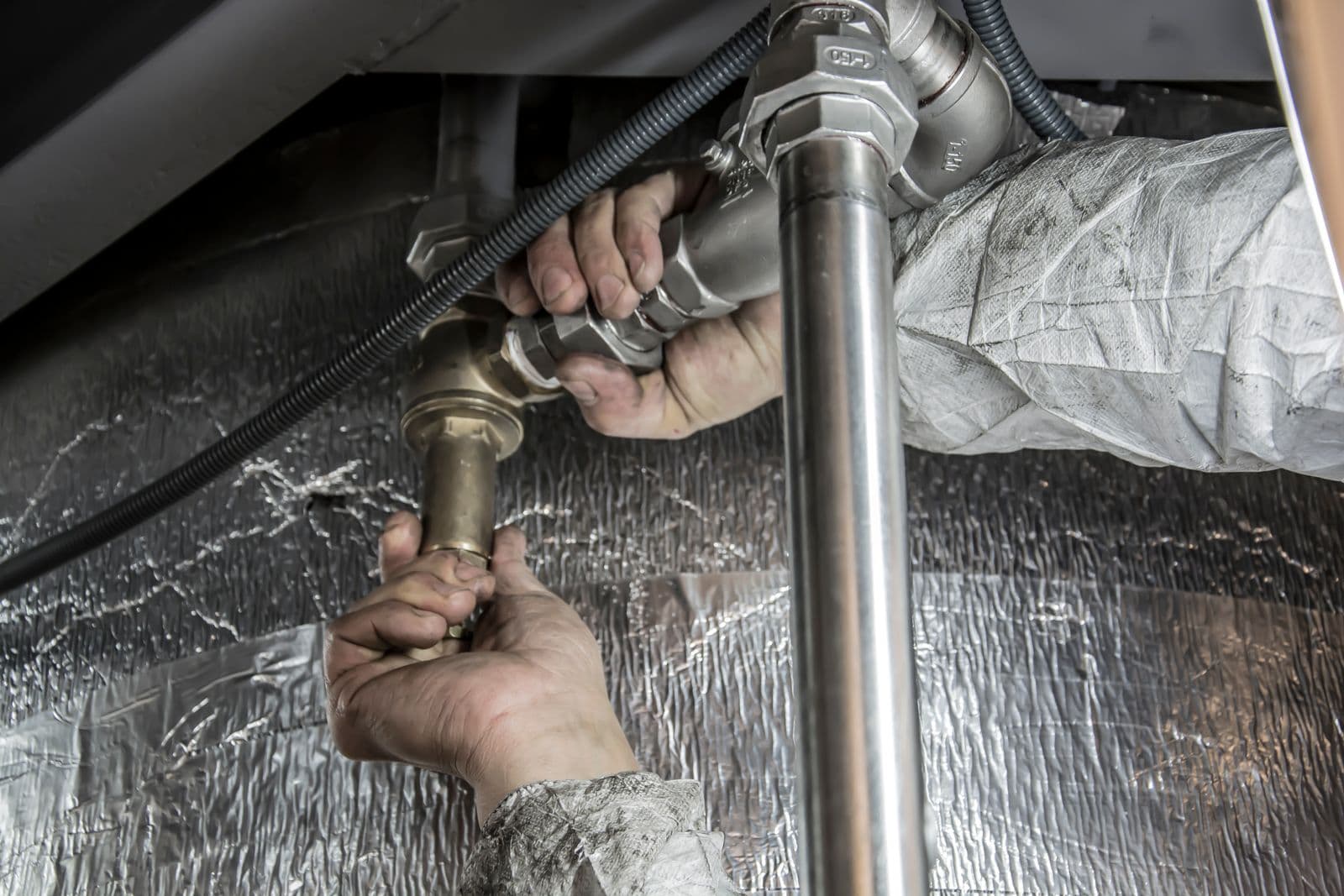
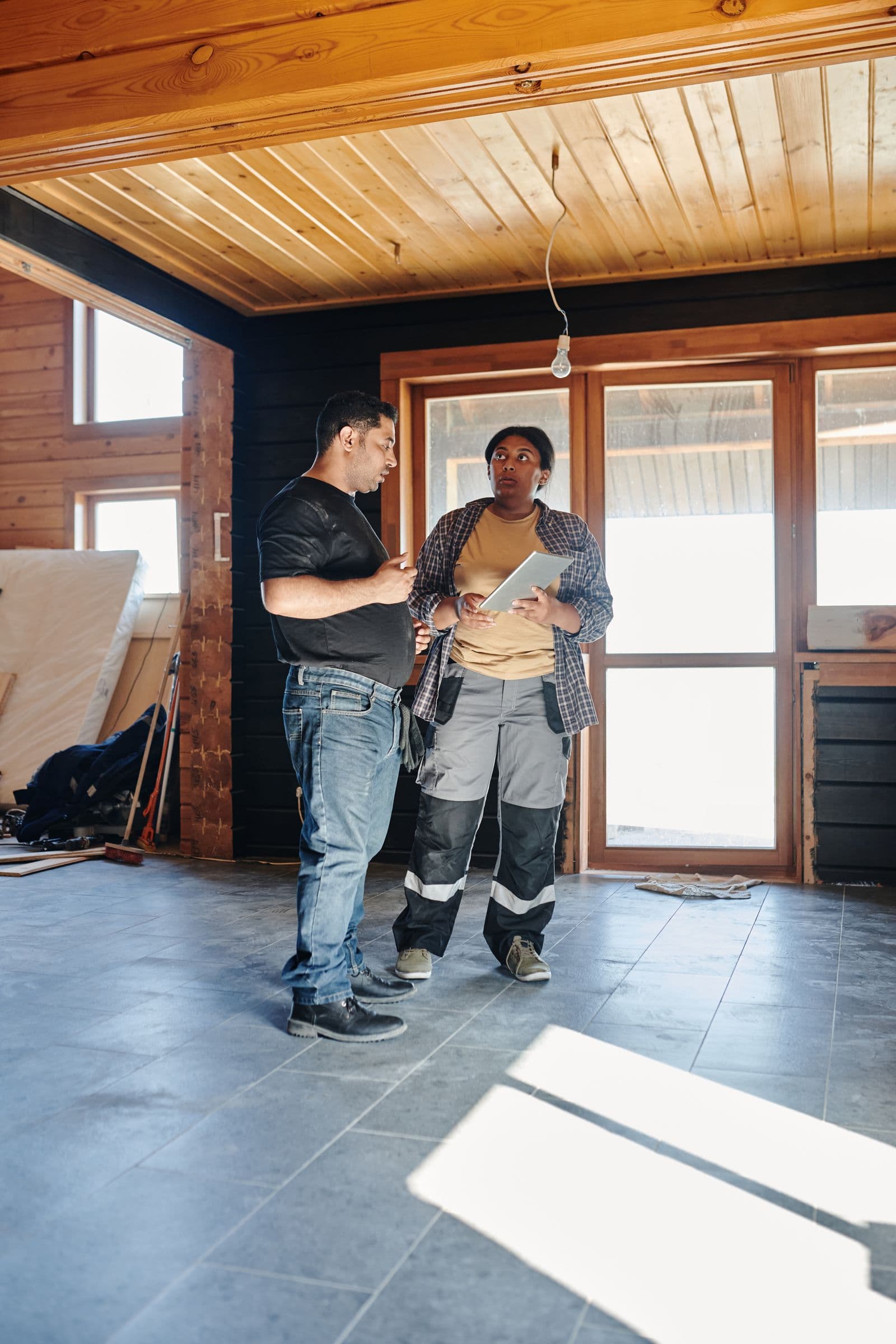
Treatment equipment is plumbing. Most of the job is the connection, the drain and the code detail behind it.

Surprise water, answered plainly
Who provides Surprise drinking water?+
Many Surprise addresses are on EPCOR's Agua Fria water system, PWS ID AZ0407695 — a private utility district that also reaches parts of other West Valley cities, not a City of Surprise municipal plant. Confirm the utility name on your bill before treating a citywide average as your tap. This page cites EPCOR's 2025 Agua Fria Water Quality Report.
How hard is Surprise water?+
The 2025 Agua Fria report lists hardness from 2 to 17 grains per gallon, with total dissolved solids from 182 to 692 ppm. The report notes that hardness and taste can change seasonally as the blend shifts between surface water and groundwater. That is why a single citywide hardness claim is a poor guide to one house.
Is there arsenic in Surprise water?+
The 2025 report lists arsenic at an amount detected of 7.31 ppb with a range of not-detected to 7.3 ppb, against an MCL of 10. EPCOR states its groundwater arsenic removal facility continues to keep finished water below the standard. Compliance and a low-level presence are both true at once.
Is there PFAS in Surprise water?+
EPCOR's 2025 initial monitoring of water leaving the treatment facility reported non-detect results below 2 ppt for PFOS, PFOA, PFNA, PFHxS, HFPO-DA and PFBS. That is the district's published initial monitor, not a guarantee for every future sample, and EPA's enforceable PFOA/PFOS MCLs of 4.0 ppt still have a later compliance date.
Why does the TTHM range go above 80 if the system is in compliance?+
The report shows a TTHM compliance figure of 53.6 ppb and a sample range up to 99.3 ppb. For disinfection byproducts, compliance is judged on locational running annual averages, not on every individual sample. A high single result is still a reason to know what your own tap shows.
Is Surprise the same water as Peoria or Glendale?+
No. Peoria publishes its own municipal CCR. Glendale is a separate city utility. Surprise addresses on this page are discussed under EPCOR's Agua Fria district report. Same West Valley rivers do not mean the same utility, PWS ID or table of results.
Where do these figures come from?+
EPCOR's 2025 Agua Fria Water Quality Report (PWS ID AZ0407695) and EPA's published PFAS drinking-water rule status. Independent water-quality aggregators are not the source used here. A later report supersedes these figures.
Related resources
Home water purification and treatment
The national service page behind this one.
Learn more →Peoria water quality
Neighbouring West Valley municipal CCR — different utility from Agua Fria.
Learn more →Phoenix water quality
City of Phoenix system figures for the valley core.
Learn more →Gilbert water quality
East Valley contrast — PFAS at two wellheads taken offline.
Learn more →Where a water softener can discharge
Indirect-waste rules for treatment drain lines.
Learn more →All home services
Water, battery, HVAC and solar under one licensed contractor of record.
Learn more →Get a free test at your tap
A licensed technician tests at your kitchen tap and tells you which of the findings above applies to your house — hardness swing, arsenic, disinfection byproducts or none of them. No charge, no obligation, and coverage confirmed at your address first.
Get a free test