Charleston, West Virginia
Home Battery Backup in Charleston, WV
Charleston is Appalachian Power territory. The 2012 derecho left most of West Virginia in the dark for days, and since 2026 new solar customers are credited 12.4 cents for exports instead of one-for-one — which makes storing your own solar worth more.
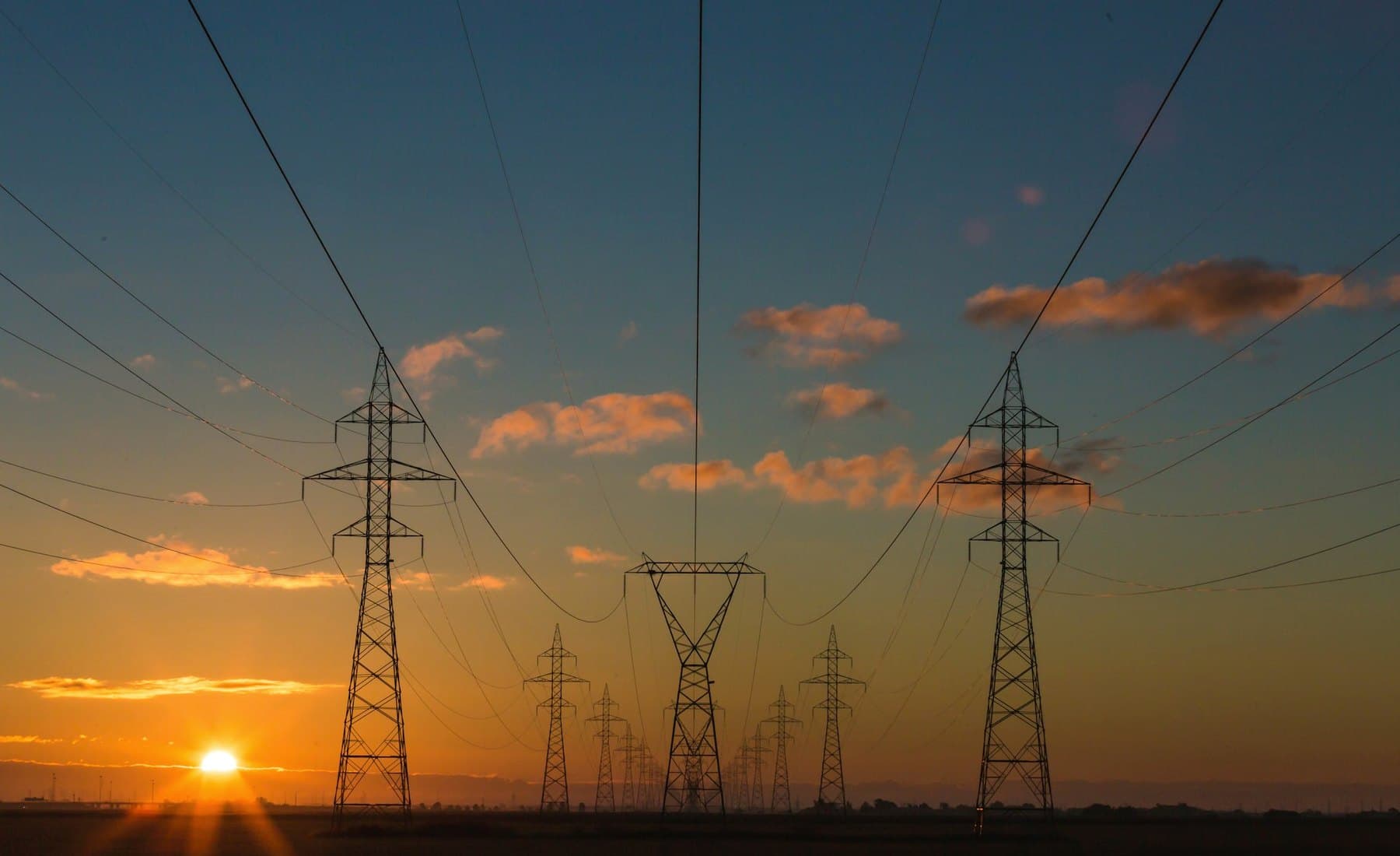
2012 derecho: 63% of West Virginia customers out; ~51% restored after four days · New APCo solar customers: exports credited ~12.4¢/kWh, instantaneous netting.
The short answer
Charleston homes are served by Appalachian Power, part of AEP. After the June 29, 2012 derecho, 63% of West Virginia's electric customers were without power — the highest share of any state — and only about half of those who lost power were back after four days. The U.S. Department of Energy named Appalachian Power the hardest-hit utility, with four more storms during restoration.
For solar, the West Virginia PSC ended one-for-one net metering for new Appalachian Power customers. Under net billing from March 2026, exports are credited at about 12.4 cents per kWh and netted instantaneously, so solar stored in a battery and used at home is worth more than solar sent to the grid.
Get a Free Estimate
Tell us your Charleston address, whether you have solar and what must stay on in an outage. We confirm coverage before anyone sizes a battery.
Appalachian Power outages and West Virginia solar rules
From the U.S. Department of Energy's derecho review, the West Virginia PSC decision as reported, and the NC Clean Energy Technology Center.
The 2012 derecho
On June 29, 2012, peak gusts of 80 to 100 mph left about 4.2 million customers without power across 11 states and D.C. West Virginia had the largest share out, 63%, and about 51% of its affected customers were restored after four days, against more than 80% in Maryland and Virginia.
Appalachian Power, hardest hit
DOE's review lists Appalachian Power with more than 90 damaged substations, 500 poles and a peak of 5,100 personnel, and notes four additional storms hit it during restoration. DOE notes that topography, tree removal and the later storms all slowed restoration.
Net billing for new solar
In August 2025 the West Virginia PSC ended one-for-one net metering for new Appalachian Power and Wheeling Power solar customers. Under net billing from March 2026, exports are credited at about 12.4 cents per kWh and netted instantaneously. Earlier enrollees are grandfathered.
Where a battery fits in Charleston
Summer wind storms, winter weather and outages that can run for days.
Store solar instead of exporting it
With instantaneous netting, every kWh sent out earns the export credit rather than offsetting a later kWh. A battery that soaks up midday solar and runs the house in the evening keeps more of that value at home.
Grandfathered systems can add storage
The NC Clean Energy Technology Center reports that grandfathered customers can add energy storage, or up to 10% more capacity, without losing their status. Confirm with Appalachian Power in writing before the work is scheduled.
Multi-day outages need recharge
When outages run for days, as in 2012, a battery alone runs out. Pairing it with solar, and limiting it to essential circuits, is what stretches it.
Well pumps and furnaces
A home on a private well needs power for the well pump, and a gas furnace needs it for the blower. Put those, refrigeration and medical equipment on the backed-up panel first.
Charleston next to its neighbors
Over the line in Virginia, Roanoke and Lynchburg are also Appalachian Power territory, under Virginia's rules rather than West Virginia's. Down the Ohio River, Louisville is served by LG&E.
For the water side of the same house, see Charleston water quality, from West Virginia American Water's Kanawha Valley system. To size the backup circuits, see how many watts a well pump uses.
Where these figures come from
- U.S. Department of Energy — A Review of Power Outages and Restoration Following the June 2012 Derecho (August 2012) — state outage shares, restoration rates and Appalachian Power damage figures.
- West Virginia Public Broadcasting — PSC: For Now, No Change In Appalachian Power's Rates (August 29, 2025) — the end of one-for-one credits and the 12.4-cent export credit.
- NC Clean Energy Technology Center — 50 States of Solar, Q3 2025 (PDF) — net billing start date, instantaneous netting and grandfathering terms.
What a home battery job with us covers
Installation of storage and the backup circuits behind it, with the siting and utility paperwork handled.
Battery installation
Wall or floor-mounted storage installed to the listing and to the residential code sections that govern where it may go.
Backup and critical load panel
Deciding and wiring which circuits stay live, and which must never be on backup — the choice that defines what an outage feels like.
Integration with existing PV solar
Connecting storage to an array that is already on the roof, including whether the existing inverter supports it.
Transfer switch and disconnection
The equipment that separates the house from the grid during an outage, which is what makes backup legal as well as possible.
Siting to code
Location, clearances, separation and impact protection assessed against the adopted code before anything is mounted.
Permit, inspection and utility approval
The electrical permit, the inspection, and the utility's own approval step where storage touches the service.
This is installation work. No runtime, capacity or incentive figure is quoted before your loads and your utility are confirmed. Coverage is confirmed per service area rather than promised as blanket availability.
What the work actually looks like
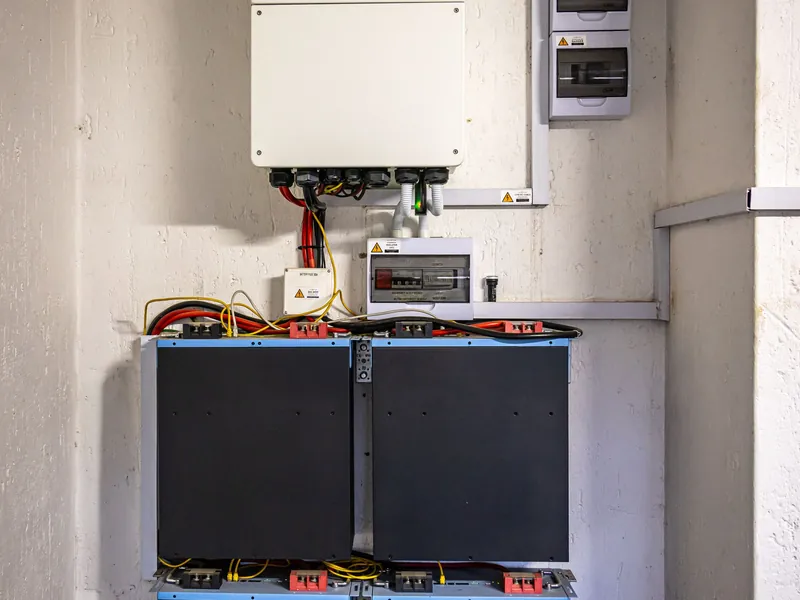
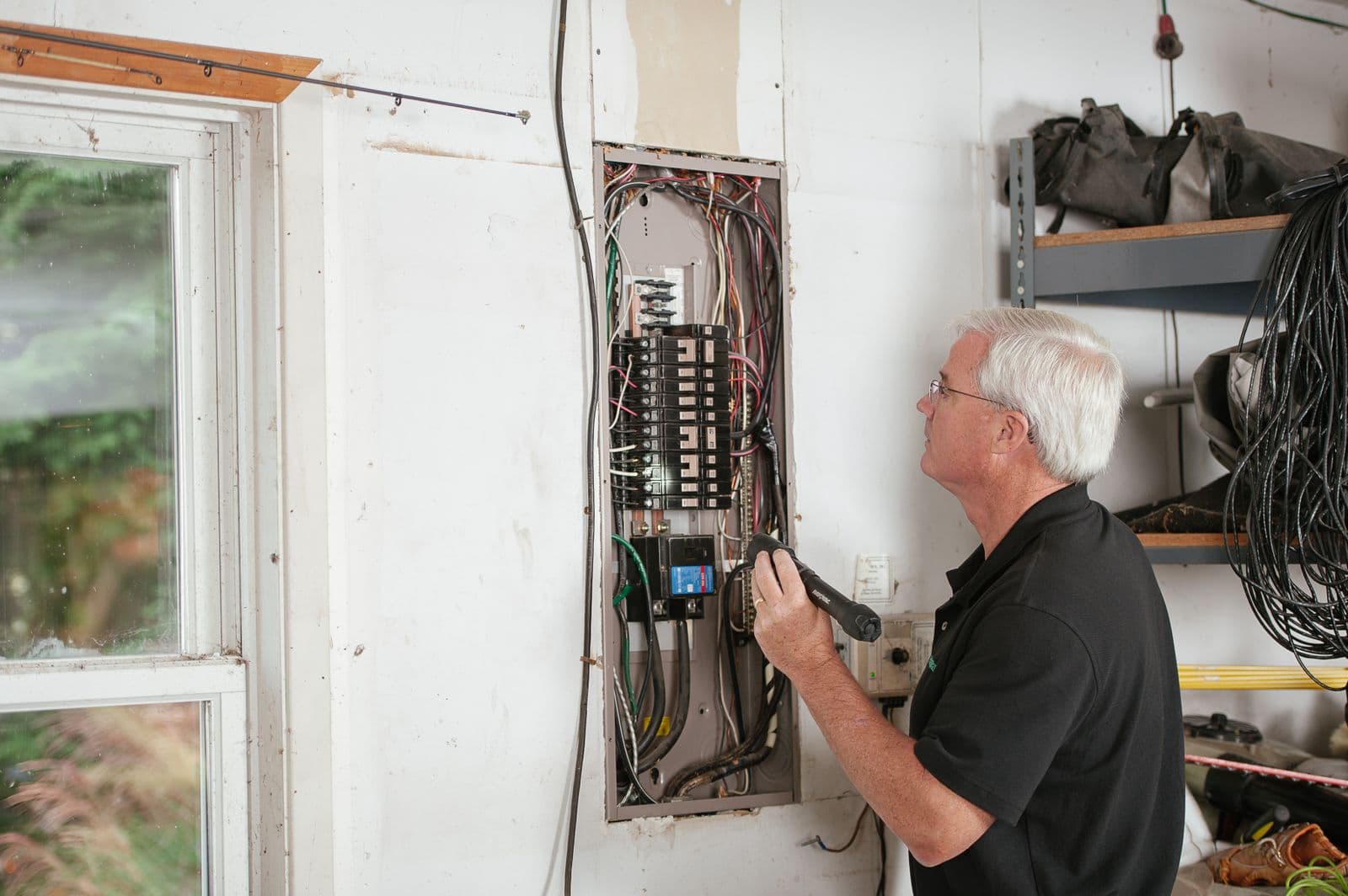
A battery job is an electrical job. The panel, the circuits and the disconnection are most of it.

Battery backup in Charleston, answered plainly
Who is the electric utility in Charleston, WV?+
Appalachian Power, an AEP company, regulated by the Public Service Commission of West Virginia.
How bad was the 2012 derecho in West Virginia?+
The U.S. Department of Energy reports that 63% of West Virginia's electric customers lost power, the highest share of any state, and only about 51% of affected customers were restored after four days. Appalachian Power was the hardest-hit utility.
Does Appalachian Power still offer net metering in West Virginia?+
Not one-for-one for new customers. The PSC's August 2025 decision moved new Appalachian Power and Wheeling Power solar customers to net billing from March 2026, with exports credited at about 12.4 cents per kWh. Earlier enrollees are grandfathered.
Does a battery make more sense under net billing?+
Usually it changes the math in the battery's favor. With instantaneous netting, solar you store and use at home avoids a retail purchase, while solar you export earns only the export credit.
Can I add a battery to a grandfathered solar system?+
The NC Clean Energy Technology Center reports that grandfathered customers can add energy storage without losing their status. Get Appalachian Power's confirmation in writing before installation.
Who installs it, and who is responsible afterwards?+
Seamless Home is the licensed contractor of record on the work it runs. Installation is performed by vetted installing partners engaged as our subcontractors, so the permit, the inspection and any correction notice carry one name. Coverage is confirmed per service area rather than promised as blanket availability.
Related resources
Home battery backup
The national service page behind this one.
Learn more →Home battery backup in Roanoke, VA
Appalachian Power under Virginia rules.
Learn more →Home battery backup in Lynchburg, VA
APCo's 2026 rate case.
Learn more →Charleston, WV water quality
West Virginia American Water's Kanawha Valley report.
Learn more →Critical load panel planner
Pick the circuits a battery should carry.
Learn more →Get a free estimate for Charleston
Tell us your address, whether you have solar on net metering or net billing, and which circuits — well pump, furnace, refrigerator — must stay on in a storm. We confirm coverage first — no charge to talk, no obligation.
Get a Free Estimate