Charlottesville, Virginia
Home Battery Backup in Charlottesville
Most of Charlottesville is Dominion territory, and Dominion's net metering changes on May 1, 2027. Under the new NEM 2.0 terms, adding a battery to an existing solar system moves it onto the new rules.
Dominion NEM 2.0 from May 1, 2027 · 5.829¢/kWh for year-end excess · $1/mo · battery additions included.
The short answer
Most Charlottesville homes are on Dominion Energy Virginia. In April 2026 the SCC approved Dominion's NEM 2.0, which applies to net-metering applications approved on and after May 1, 2027: a $1 monthly charge and 5.829¢ per kWh for net excess solar left at the end of the year.
The battery detail: under the NEM 2.0 terms, an existing net-metering customer who files to add capacity, including battery storage, has to move to NEM 2.0. If you have solar and want backup, the timing of that paperwork is worth checking with Dominion first.
Get a Free Estimate
Tell us your Charlottesville address, whether you already have solar and what must stay on in an outage. We confirm your utility and net-metering status before anyone sizes a system.
Why Charlottesville's timing matters
Same Dominion bill as the rest of the state, but a net-metering deadline that touches battery additions.
Dominion for most of the city
The Charlottesville Regional Chamber lists Dominion Virginia Power as the electric provider for most of the city. Parts of surrounding Albemarle County are served by Central Virginia Electric Cooperative instead, so the address decides the rules.
NEM 2.0 starts May 1, 2027
In an April 30, 2026 final order, the SCC approved Dominion's NEM 2.0. Its terms, accepted for filing July 30, 2026, apply to net-metering applications Dominion approves on and after May 1, 2027.
Adding a battery triggers it
Under the NEM 2.0 terms, a customer on today's net metering who submits a new notification form to add capacity, including the addition of battery storage, must move to NEM 2.0.
What NEM 2.0 changes, and what it doesn't
From the SCC's April 30, 2026 final order and Dominion's accepted NEM 2.0 terms.
5.829¢ for year-end excess
Under NEM 2.0, net excess generation left at the end of the annual net metering period earns an export credit of 5.829¢ per kWh. The SCC built that from Dominion's 4.829¢ avoided cost plus 1¢ for avoided renewable-credit purchases.
A $1 monthly program charge
NEM 2.0 adds a $1.00 per month administrative charge. The SCC denied Dominion's proposed application fee and kept the 6% cap on total net-metered capacity.
Today's customers can stay put
Existing net-metering customers can stay on the legacy terms or switch permanently. Low-income customers can choose whichever tariff is more favorable to them.
Backup is the part that doesn't change
None of this changes what happens in an outage: grid-tied solar shuts off without storage and a transfer switch. Size a battery to the circuits that must stay on.
Charlottesville next to Harrisonburg, Lynchburg and Suffolk
Over the Blue Ridge, Harrisonburg runs its own city-owned utility, where Dominion's net metering doesn't apply. Lynchburg is Appalachian Power territory. For what Dominion customers already pay more in 2026, see Suffolk. For the water side of this city, see Charlottesville water quality.
Where these figures come from
Everything on this page traces to the Virginia SCC record and local sources.
- Virginia SCC — Final Order, Case No. PUR-2025-00079 (April 30, 2026, PDF) — the 5.829¢ compensation rate, the $1 charge, the denied application fee, the 6% cap and the choice for existing customers.
- Virginia SCC — Dominion NEM 2.0 Terms and Conditions, accepted for filing July 30, 2026 (PDF) — the May 1, 2027 effective date and the battery-storage provision.
- Central Virginia Electric Cooperative — Service territory map — for Albemarle County addresses outside Dominion territory.
What a home battery job with us covers
Installation of storage and the backup circuits behind it, with the siting and utility paperwork handled.
Battery installation
Wall or floor-mounted storage installed to the listing and to the residential code sections that govern where it may go.
Backup and critical load panel
Deciding and wiring which circuits stay live, and which must never be on backup — the choice that defines what an outage feels like.
Integration with existing PV solar
Connecting storage to an array that is already on the roof, including whether the existing inverter supports it.
Transfer switch and disconnection
The equipment that separates the house from the grid during an outage, which is what makes backup legal as well as possible.
Siting to code
Location, clearances, separation and impact protection assessed against the adopted code before anything is mounted.
Permit, inspection and utility approval
The electrical permit, the inspection, and the utility's own approval step where storage touches the service.
This is installation work. No runtime, capacity or incentive figure is quoted before your loads and your utility are confirmed. Coverage is confirmed per service area rather than promised as blanket availability.
What the work actually looks like
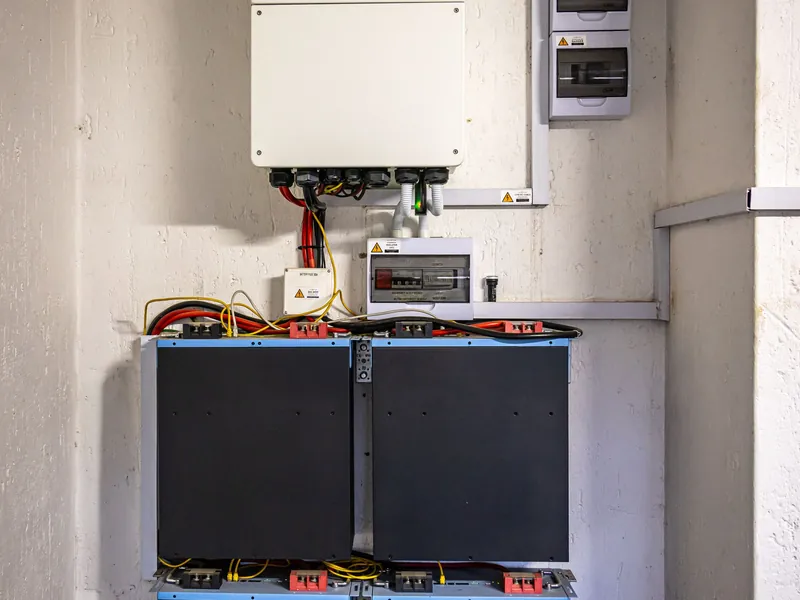
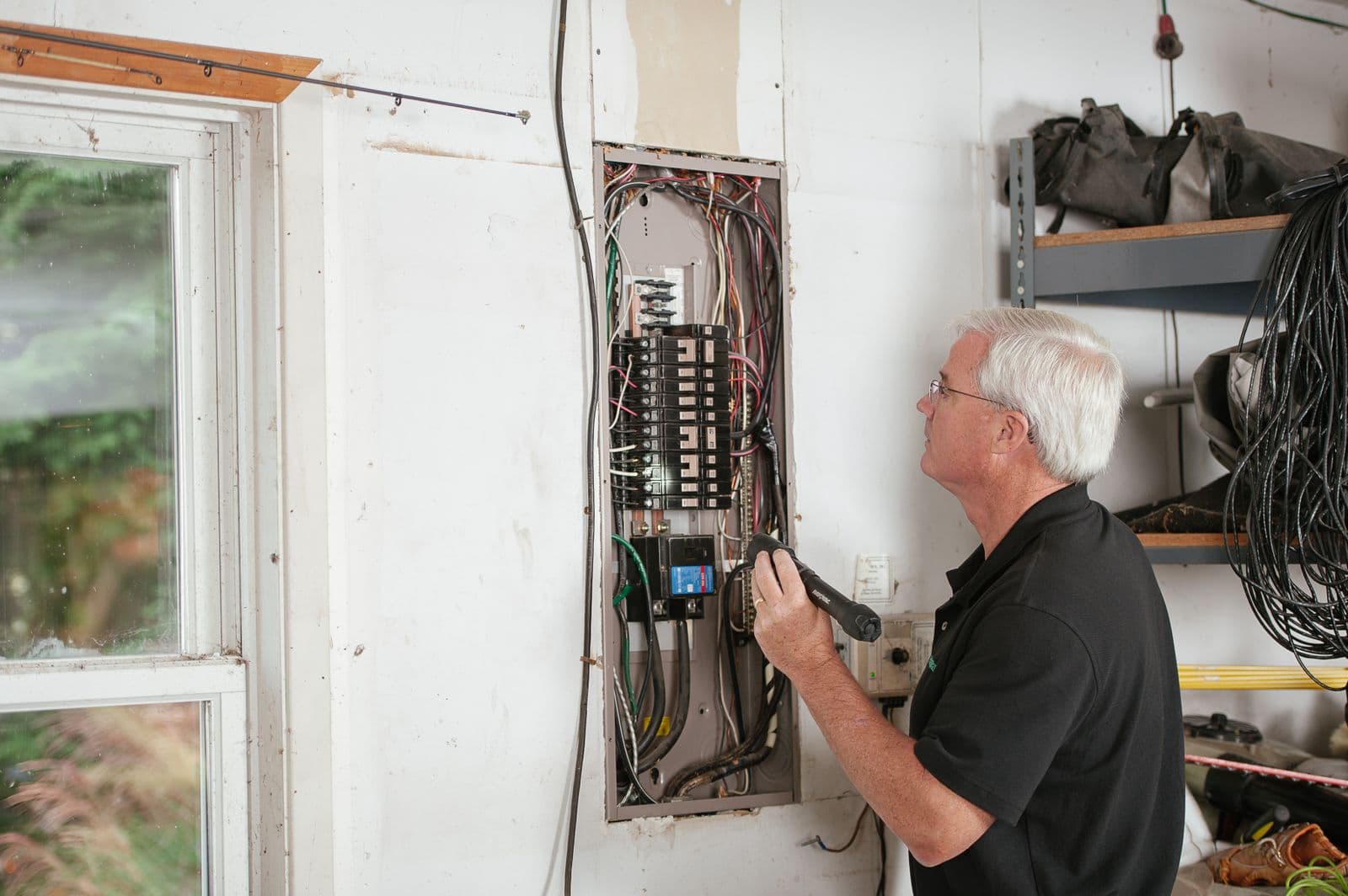
A battery job is an electrical job. The panel, the circuits and the disconnection are most of it.

Charlottesville battery backup, answered plainly
Who is the electric utility in Charlottesville?+
Dominion Energy Virginia serves most of the city, according to the Charlottesville Regional Chamber. Parts of Albemarle County are served by Central Virginia Electric Cooperative, whose rules differ.
What is Dominion's NEM 2.0?+
A successor net metering tariff the SCC approved on April 30, 2026. For applications approved on and after May 1, 2027, it adds a $1.00 monthly administrative charge and pays 5.829¢ per kWh for net excess generation at the end of the annual net metering period.
Does adding a battery to my existing solar change my net metering?+
Under Dominion's NEM 2.0 terms, effective May 1, 2027, a legacy customer who submits a new notification form to add capacity, including battery storage, is required to take NEM 2.0 service. Ask Dominion how the timing of your application applies before you add equipment.
Can I stay on Dominion's current net metering?+
Yes, if you're already interconnected. The SCC's order says existing customers can stay on the current tariff or switch to NEM 2.0 permanently at their discretion.
Did Dominion's base rates change too?+
Yes. The SCC's 2025 biennial review raised base rates from January 2026, with another step in 2027. Our Suffolk page walks through the approved amounts.
Who installs it, and who is responsible afterwards?+
Seamless Home is the licensed contractor of record on the work it runs. Installation is performed by vetted installing partners engaged as our subcontractors. Coverage is confirmed per service area rather than promised as blanket availability.
Related resources
Home battery backup
The national service page behind this one.
Learn more →Harrisonburg battery backup
A city-owned utility with its own net metering rules.
Learn more →Lynchburg battery backup
Appalachian Power territory.
Learn more →Suffolk battery backup
What Dominion's 2026 base and fuel increases add to a bill.
Learn more →Charlottesville water quality
Soft Rivanna surface water with free chlorine.
Learn more →All home services
Water, battery, HVAC and solar under one licensed contractor of record.
Learn more →Get a free battery estimate
Tell us your Charlottesville address and what must stay on in an outage. We confirm your utility and net-metering status, check siting on your lot and size to a critical load panel — no obligation.
Get a Free Estimate