Sacramento, California
Sacramento Water Quality
Sacramento drinks mostly treated river water, with wells supplying the rest. The 2025 report shows every standard met, no lead service lines — and hardness that swings with your source.
~80% American + Sacramento rivers · hardness 83 mg/L avg, wells up to 154 · TTHM 63 µg/L (limit 80) · no lead service lines (2024 inventory).
The short answer
About 80 percent of the City of Sacramento's water comes from the American and Sacramento rivers and about 20 percent from groundwater wells. The 2025 report states all standards were met, and the city's inventory found no lead service lines.
The numbers to read are trihalomethanes at 63 µg/L against 80, and hardness: 83 mg/L on average, but anywhere from 15 to 154 mg/L from wells.
Get a free test
Tell us your Sacramento address. We confirm coverage first, then schedule a licensed technician to test at your tap — no charge, no obligation.
What the 2025 Sacramento report shows
System-level results from the City of Sacramento's 2025 Consumer Confidence Report. A later report supersedes them.
Hardness depends on your source
System-wide hardness averages 83 mg/L (4.9 grains per gallon). American River water from Fairbairn averages 34 mg/L and Sacramento River water 63, while city wells range from 15 to 154 mg/L — up to 9 grains per gallon.
Byproducts: the closest number to a limit
Total trihalomethanes averaged 63 µg/L across the system against an 80 µg/L limit; haloacetic acids averaged 29 against 60. Both meet standards, but trihalomethanes sit closest to their limit.
No lead service lines
The city's 2024 service line inventory found no lead or galvanized service lines requiring replacement. In the latest tap sampling (2023), the lead 90th percentile was not detected and none of 56 samples exceeded the action level.
Hexavalent chromium from wells
Hexavalent chromium averaged 3.50 µg/L system-wide and ranged up to 7.0 µg/L in groundwater, against California's 10 µg/L limit. The river plants did not detect it at the reporting level.
Chlorine disinfection
Chlorine averaged 0.8 mg/L (0.2 to 1.4) against a 4.0 limit. That residual is what most people notice as taste or smell.
Sodium and minerals
Sodium averaged 26 mg/L, with wells ranging from 18 to 74, and total dissolved solids averaged 205 mg/L. These are unregulated or secondary measures, not health violations.
Where the water comes from
Two rivers, two treatment plants and a set of city wells.
American and Sacramento rivers (about 80%)
Most of the city's water is river water, treated at the E.A. Fairbairn Water Treatment Plant on the American River and the Sacramento River Water Treatment Plant.
Groundwater wells (about 20%)
The rest comes from city wells. Well water is noticeably harder and carries more sodium and naturally occurring hexavalent chromium than the river plants' water, so where you live changes what is in your tap.
Matching treatment to the finding
Hardness, byproducts and chlorine taste drive most Sacramento decisions.
Test hardness before buying a softener
A home on American River water may see about 2 grains per gallon; one on well water can see up to 9. A tap test tells you which you have before you size, or skip, a softener.
Reverse osmosis for byproducts and chromium
Point-of-use reverse osmosis reduces disinfection byproducts and is commonly certified for hexavalent chromium. It suits drinking and cooking water at the kitchen tap.
Carbon for chlorine taste
Activated carbon, at the tap or for the whole house, addresses chlorine taste and odor and reduces trihalomethanes.
Lead comes from the house
With no lead service lines in the city's inventory, lead at a Sacramento tap would trace to fixtures or solder inside the home. A tap test tells you whether it applies.
Sacramento next to its neighbors
South in the Central Valley, Fresno leans more heavily on groundwater, so its report reads differently. On the coast, San Diego depends largely on imported water.
For backup power in the same house, see home battery backup in Sacramento, where SMUD sets the rates.
Where these figures come from
Figures trace to the City of Sacramento 2025 Consumer Confidence Report, published June 1, 2026 by the Department of Utilities. Some constituents are monitored less than once a year, so a few results are from 2023 or 2024.
How the free test works
A licensed technician tests at your kitchen tap, walks the plumbing, and tells you which of the findings above applies to your house and which does not. There is no charge and no obligation.
Seamless Home is the licensed contractor of record on the work that follows. Installation is performed by vetted installing partners engaged as our subcontractors, and the workmanship obligation stays with us. Coverage is confirmed per service area rather than promised as blanket availability.
What a water treatment job with us covers
Installation and replacement of whole-home and point-of-use treatment, specified against what your water actually contains.
Sediment filtration
Installation of the first stage that protects everything downstream of it, sized to the service line and the household draw.
Softening
Installation of ion-exchange softening where hardness is the problem, including the drain connection the plumbing code treats as indirect waste.
Carbon filtration
Installation of carbon stages for taste, odour and disinfection by-products, specified from your utility's own water quality report.
Reverse osmosis
Point-of-use installation at the kitchen sink where the target is dissolved solids rather than whole-home flow.
Disinfection
Installation of UV or equivalent treatment where the supply is a private well or is otherwise not continuously disinfected.
System replacement
Replacing equipment that has reached the end of its service life, including the discharge and air gap details an inspector looks at.
This is installation and replacement work, specified from a published water quality report or a test of your supply — not from a sales chart. Coverage is confirmed per service area rather than promised as blanket availability.
What the work actually looks like
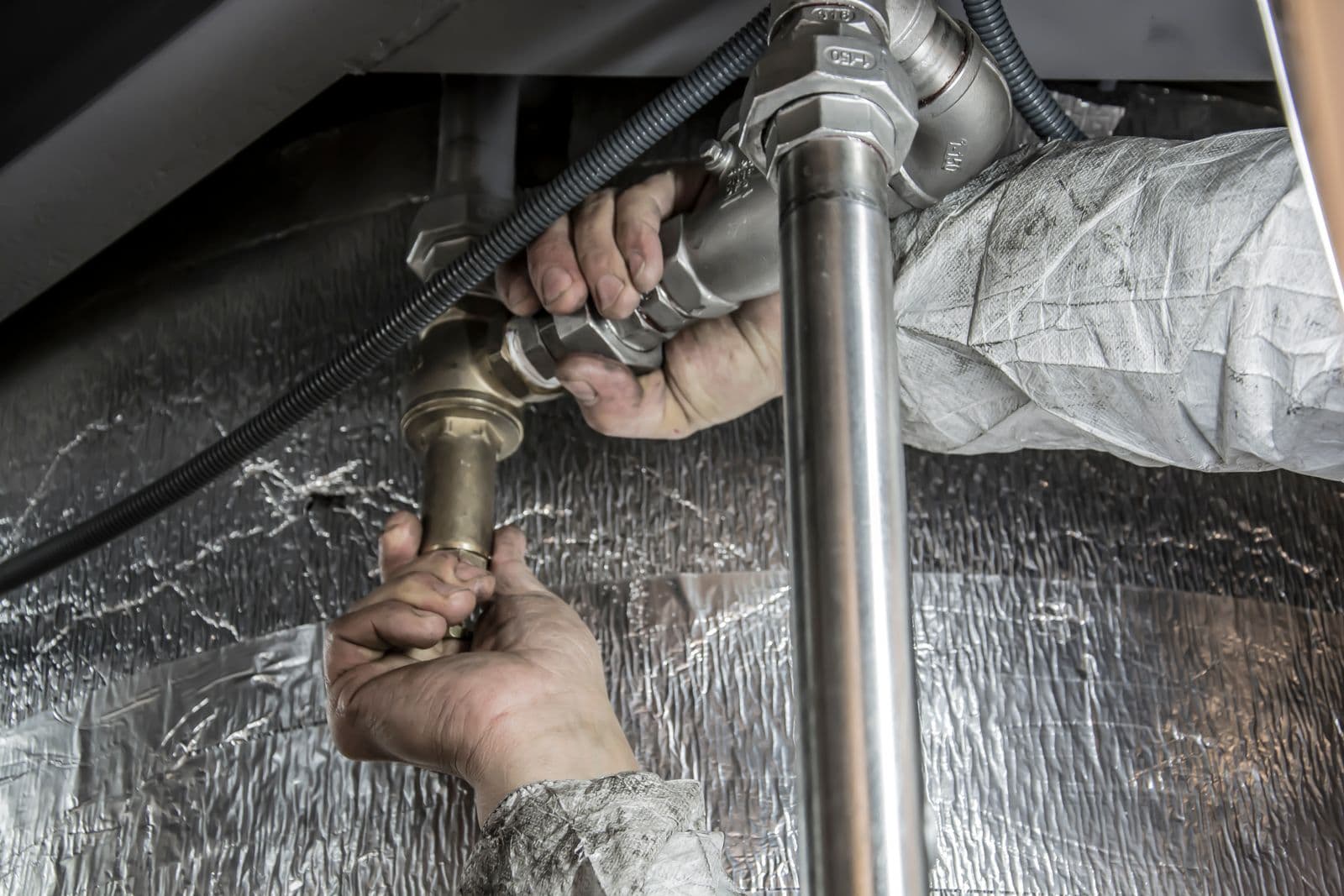
Treatment equipment is plumbing. Most of the job is the connection, the drain and the code detail behind it.


Sacramento water, answered plainly
Where does Sacramento get its water?+
About 80 percent comes from the American and Sacramento rivers, treated at the E.A. Fairbairn and Sacramento River water treatment plants, and about 20 percent from city groundwater wells.
Is Sacramento tap water safe to drink?+
The City of Sacramento's 2025 report states its water meets or exceeds all federal and state drinking water standards. Trihalomethanes averaged 63 µg/L against an 80 µg/L limit.
Is Sacramento water hard?+
It depends on your source. The system average is 83 mg/L (4.9 grains per gallon), but American River water averages 34 mg/L and city wells range from 15 to 154 mg/L.
Does Sacramento have lead pipes?+
The city's 2024 service line inventory found no lead or galvanized service lines requiring replacement. Lead inside a home can still come from fixtures or solder.
Is there hexavalent chromium in Sacramento water?+
Yes, at low levels from groundwater. It averaged 3.50 µg/L system-wide and reached 7.0 µg/L in wells, below California's 10 µg/L limit.
Does this apply to every Sacramento-area home?+
No. These figures are for City of Sacramento water customers. If your water bill comes from a different provider, read that provider's annual report.
Where do these figures come from?+
From the City of Sacramento 2025 Consumer Confidence Report, published June 1, 2026, covering 2025 results and earlier monitoring where noted.
Related resources
Home water purification and treatment
The national service page behind this one.
Learn more →Fresno water quality
Central Valley groundwater to the south.
Learn more →San Diego water quality
Imported water on the coast.
Learn more →Sacramento battery backup
SMUD rates and winter storm outages.
Learn more →All home services
Water, battery, HVAC and solar under one licensed contractor of record.
Learn more →Get a free test at your tap
A licensed technician tests at your kitchen tap and tells you which Sacramento findings apply to your house — hardness, byproducts, chlorine taste or lead from fixtures. No charge, no obligation, and coverage confirmed at your address first.
Get a free test