Ann Arbor, Michigan
Ann Arbor, MI Water Quality
Huron River water plus wells, monochloramine, City softening and a clean lead inventory. Here is what the 2025 Water Quality Report shows.
Huron River + wells · monochloramine avg 2.5 ppm · hardness 7.4 gpg · lead 90th pct 2 ppb · 0 known LSL.
The short answer
Ann Arbor drinks mostly Huron River water, blended with groundwater wells and treated with ozone, ultraviolet light, softening, granular activated carbon and monochloramine.
The 2025 report lists chloramines averaging 2.5 ppm, hardness averaging 7.4 grains, lead at 2 ppb at the 90th percentile under Michigan's 12 ppb action level, zero known lead service lines, and regulated PFAS not detected in compliance samples.
Get a free test
Tell us your Ann Arbor address. We confirm coverage first, then schedule a licensed technician to test at your tap — no charge, no obligation.
What filtration does — and does not
Carbon, catalytic carbon and reverse osmosis solve different problems. Ann Arbor's report points at chloramine first.
Where Ann Arbor water comes from
One river, supplemental wells, and a plant that softens and filters with GAC.
Huron River surface water
Ann Arbor's primary source. The City runs an active source-water protection program for the Huron River watershed, including the Bluebelt land-protection effort.
Groundwater wells
Supplemental wells blend with treated river water. The mix shifts with demand and river conditions.
Ozone, UV, softening and GAC
The plant uses ozone, ultraviolet light and monochloramine for disinfection, softens the water, and runs granular activated carbon filters used for PFAS removal.
What the 2025 Ann Arbor report actually says
Limits are fixed. Results are system figures from the City of Ann Arbor 2025 Water Quality Report, not a reading at your tap.
Monochloramine averaging 2.5 ppm
Chloramines averaged 2.5 ppm in 2025 (range 0.9–3.4) against a 4 ppm MRDL. Ann Arbor finishes with monochloramine, not free chlorine.
Lead 2 ppb at the 90th percentile
2023 lead-and-copper tap results (reported in the 2025 CCR): lead 2 ppb at the 90th percentile (ND–22; 1 of 61 sites over), under Michigan's 12 ppb action level. Copper was 100 ppb at the 90th percentile.
No known lead service lines
The City reports zero lead service lines. In 2025 it replaced 77 private lines previously connected via lead goosenecks, exceeding Michigan's annual replacement requirement.
Hardness averaging 7.4 grains
Average hardness was 126 ppm as CaCO3 (7.4 gpg), with a range of 74–180 ppm (4.3–10.5 gpg). The plant softens; some homes still add a softener for preference.
Disinfection byproducts under limits
Haloacetic acids' highest locational running annual average was 12 ppb (limit 60). Total trihalomethanes were reported with a sample range of 2.6–9.2 ppb (limit 80).
Regulated PFAS not detected
Compliance samples for PFOA, PFOS, PFHxS, HFPO-DA, PFNA, PFBS and PFHxA were not detected. The City posts additional PFAS monitoring at a2gov.org/PFAS.
Ann Arbor next to Detroit
Detroit draws from the Detroit River / Lake Huron corridor through a much larger regional system. Lansing and Grand Rapids sit on different utilities for power; for water, Detroit is the closest published Seamless city page in the same state.
Ann Arbor's Huron River primary source, plant-side softening, GAC for PFAS and a published zero lead-service-line inventory are the local differentiators — along with monochloramine averaging 2.5 ppm.
Where these figures come from
Everything on this page traces to the City of Ann Arbor 2025 Water Quality Report.
Matching treatment to the finding
Ann Arbor finishes with monochloramine and already softens at the plant; catalytic carbon and a tap hardness test are the usual next steps at home.
Catalytic carbon for chloramine taste
Ann Arbor uses monochloramine. Catalytic carbon is the usual fit for chloramine taste and smell; standard carbon is slower on chloramine.
Softener if scale still bothers you
At an average 7.4 grains — and up to 10.5 in the reported range — some homes add a softener after the City's own softening step. Confirm with a tap hardness test.
PFAS-certified drinking water filter
Regulated PFAS were not detected in the compliance samples. If you still want a drinking-water stage, choose a filter certified for the compounds you care about.
Free City lead test
Ann Arbor offers one free lead-and-copper test per household. Request a kit at a2gov.org/leadsample or email leadandcopper@a2gov.org.
How the free test works
A licensed technician tests at your kitchen tap, walks the plumbing, and tells you which of the findings above applies to your house and which does not. There is no charge and no obligation.
Seamless Home is the licensed contractor of record on the work that follows. Installation is performed by vetted installing partners engaged as our subcontractors, and the workmanship obligation stays with us. Coverage is confirmed per service area rather than promised as blanket availability.
What a water treatment job with us covers
Installation and replacement of whole-home and point-of-use treatment, specified against what your water actually contains.
Sediment filtration
Installation of the first stage that protects everything downstream of it, sized to the service line and the household draw.
Softening
Installation of ion-exchange softening where hardness is the problem, including the drain connection the plumbing code treats as indirect waste.
Carbon filtration
Installation of carbon stages for taste, odour and disinfection by-products, specified from your utility's own water quality report.
Reverse osmosis
Point-of-use installation at the kitchen sink where the target is dissolved solids rather than whole-home flow.
Disinfection
Installation of UV or equivalent treatment where the supply is a private well or is otherwise not continuously disinfected.
System replacement
Replacing equipment that has reached the end of its service life, including the discharge and air gap details an inspector looks at.
This is installation and replacement work, specified from a published water quality report or a test of your supply — not from a sales chart. Coverage is confirmed per service area rather than promised as blanket availability.
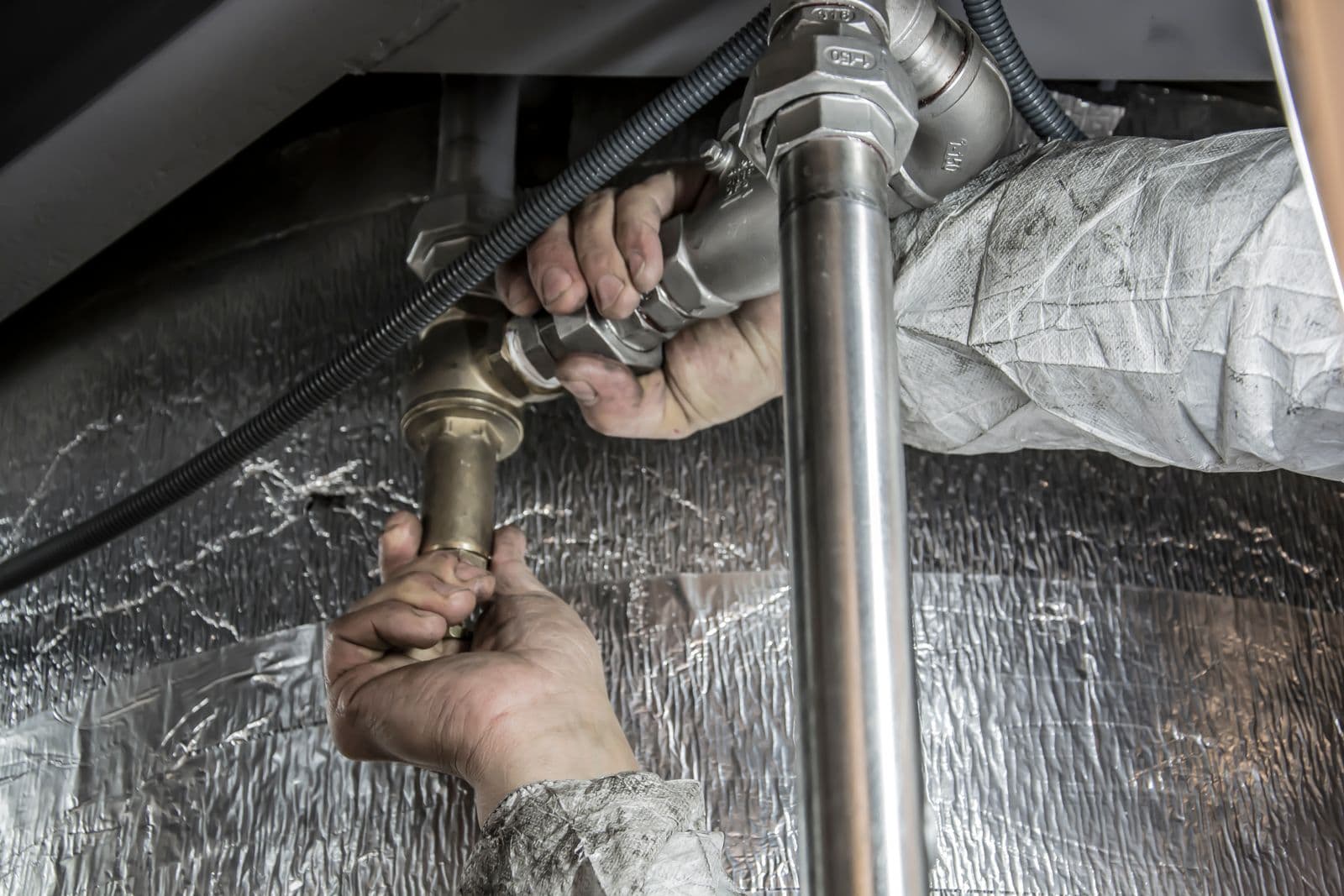
What the work actually looks like
Treatment equipment is plumbing. Most of the job is the connection, the drain and the code detail behind it.

Ann Arbor water, answered plainly
Where does Ann Arbor get its water?+
From the Huron River (primary) and supplemental groundwater wells. The City's Water Treatment Plant treats and delivers the blend.
Does Ann Arbor use chlorine or chloramine?+
Monochloramine. Chloramines averaged 2.5 ppm in 2025 (0.9–3.4 ppm) against a 4 ppm MRDL. The plant also uses ozone and ultraviolet light.
Is Ann Arbor water hard?+
Average hardness was 126 ppm as CaCO3 (7.4 grains per gallon), ranging 74–180 ppm (4.3–10.5 gpg) in the 2025 report. The plant softens; some homes still choose a softener.
Does Ann Arbor have lead service lines?+
The City reports zero lead service lines. In 2025 it replaced 77 private lines previously connected via lead goosenecks. Older household plumbing can still add lead at the tap.
What about PFAS?+
Compliance samples for the regulated PFAS compounds were not detected. Ann Arbor uses GAC filters for PFAS removal and posts additional monitoring at a2gov.org/PFAS.
Where do these figures come from?+
From the City of Ann Arbor 2025 Water Quality Report (www.AnnArborWater.org). Third-party aggregators are not used.
Related resources
Home water purification and treatment
The national service page behind this one.
Learn more →Detroit water quality
Detroit River / Lake Huron corridor system.
Learn more →Home battery backup in Grand Rapids, MI
Consumers Energy summer peak and outage credits.
Learn more →Lansing battery backup
BWL outages, rates and home battery backup.
Learn more →All home services
Water, battery, HVAC and solar under one licensed contractor of record.
Learn more →Get a free test at your tap
A licensed technician tests at your kitchen tap and tells you which findings apply to your house — chloramine, hardness or your own plumbing. No charge, no obligation, and coverage confirmed at your address first.
Get a free test