Detroit, Michigan
Detroit, MI Water Quality
Detroit River water, Michigan's stricter lead rule and tens of thousands of lead lines still in the ground. Here is what DWSD's 2025 report shows.
Lead 90th pct 8 ppb (Michigan AL 12) · ~75,000 lead lines · 15,722 replaced since 2018 · hardness avg 107 ppm.
The short answer
Detroit's water is Detroit River water treated by the Great Lakes Water Authority. Treated water met every limit in DWSD's 2025 report, and DWSD says it leaves the plants without lead.
The issue is the pipe to your house. DWSD estimated about 75,000 lead service lines in 2025, plus 48,000 of unknown material. The 90th-percentile lead result was 8 ppb, under Michigan's 12 ppb action level, with one home over it. If your home was built before 1945, find out what your service line is made of.
Get a free test
Tell us your Detroit address. We confirm coverage first, then schedule a licensed technician to test at your tap — no charge, no obligation.
What filtration does — and does not
Carbon, lead-certified filters and reverse osmosis solve different problems. In Detroit, the service line comes first.
Where Detroit water comes from
Detroit River intakes, GLWA treatment plants and DWSD's city mains.
Detroit River intakes
Detroit customers are served by four GLWA plants that treat water from intakes on the Detroit River, according to the 2025 report.
GLWA treats, DWSD delivers
The Great Lakes Water Authority treats the water. DWSD delivers it through more than 2,700 miles of mains in the city.
Corrosion inhibitor
The water contains a corrosion inhibitor to reduce lead leaching. GLWA increased the dose in October 2024.
What the 2025 Detroit report actually says
Limits are fixed. Results are system figures from DWSD's 2025 Water Quality Report, not a reading at your tap.
Lead 8 ppb at the 90th percentile
Sampled at 50 homes with lead service lines in summer 2025. Michigan's action level dropped from 15 to 12 ppb in 2025; one site was over it, and results ranged from 0 to 21 ppb.
About 75,000 lead lines
DWSD estimated 75,000 lead service lines of 311,000 in 2025, plus about 48,000 of unknown material. It has replaced 15,722 since 2018, 4,004 of them in 2025.
Homes built before 1945
Detroit stopped allowing lead service lines in 1945. The report says pre-1945 homes are the most likely to still have one.
Trihalomethanes 51.8 ppb
The highest running annual average was 51.8 ppb against an 80 ppb limit, with samples from 7.9 to 82.0 ppb. Haloacetic acids were 20.3 ppb (limit 60).
PFOA 2 ng/L
PFOA was detected at up to 2 ng/L, under the 4 ng/L limit. Bromate, from ozonation at Waterworks Park, averaged 0.9 ppb (limit 10).
Moderately hard water
Total hardness ranged from 96 to 142 ppm and averaged 107 ppm in the report's mineral analysis.
Michigan's lead rule is stricter
Michigan cut its lead action level from 15 to 12 ppb starting in 2025, and its revised rule samples both the first and fifth liter from the tap. Pennsylvania cities such as Pittsburgh still report against 15 ppb.
If power outages are also on your list, see our page on home battery backup in Detroit.
Where these figures come from
Everything on this page traces to the Detroit Water and Sewerage Department.
- DWSD — 2025 Water Quality Report (PDF) — sources, lead and copper, service line counts, the 2025 tables and mineral analysis.
- DWSD — Water quality reports — current and past reports.
Matching treatment to the finding
Detroit's report points at lead from service lines and home plumbing. Hardness is moderate.
Know your service line first
In a pre-1945 home, the line from the main may be lead. Line material decides whether a lead filter is a priority.
Lead-certified filter at the sink
A point-of-use filter certified for lead reduction covers drinking and cooking water while a lead line is still in place.
Carbon for chlorine taste
A whole-house carbon filter handles disinfectant taste and smell at every tap. It isn't a substitute for a lead-certified filter.
Softening is optional
At about 107 ppm, Detroit water is moderately hard. A softener is a comfort choice for scale, not a health fix.
How the free test works
A licensed technician tests at your kitchen tap, walks the plumbing, and tells you which of the findings above applies to your house and which does not. There is no charge and no obligation.
Seamless Home is the licensed contractor of record on the work that follows. Installation is performed by vetted installing partners engaged as our subcontractors, and the workmanship obligation stays with us. Coverage is confirmed per service area rather than promised as blanket availability.
What a water treatment job with us covers
Installation and replacement of whole-home and point-of-use treatment, specified against what your water actually contains.
Sediment filtration
Installation of the first stage that protects everything downstream of it, sized to the service line and the household draw.
Softening
Installation of ion-exchange softening where hardness is the problem, including the drain connection the plumbing code treats as indirect waste.
Carbon filtration
Installation of carbon stages for taste, odour and disinfection by-products, specified from your utility's own water quality report.
Reverse osmosis
Point-of-use installation at the kitchen sink where the target is dissolved solids rather than whole-home flow.
Disinfection
Installation of UV or equivalent treatment where the supply is a private well or is otherwise not continuously disinfected.
System replacement
Replacing equipment that has reached the end of its service life, including the discharge and air gap details an inspector looks at.
This is installation and replacement work, specified from a published water quality report or a test of your supply — not from a sales chart. Coverage is confirmed per service area rather than promised as blanket availability.
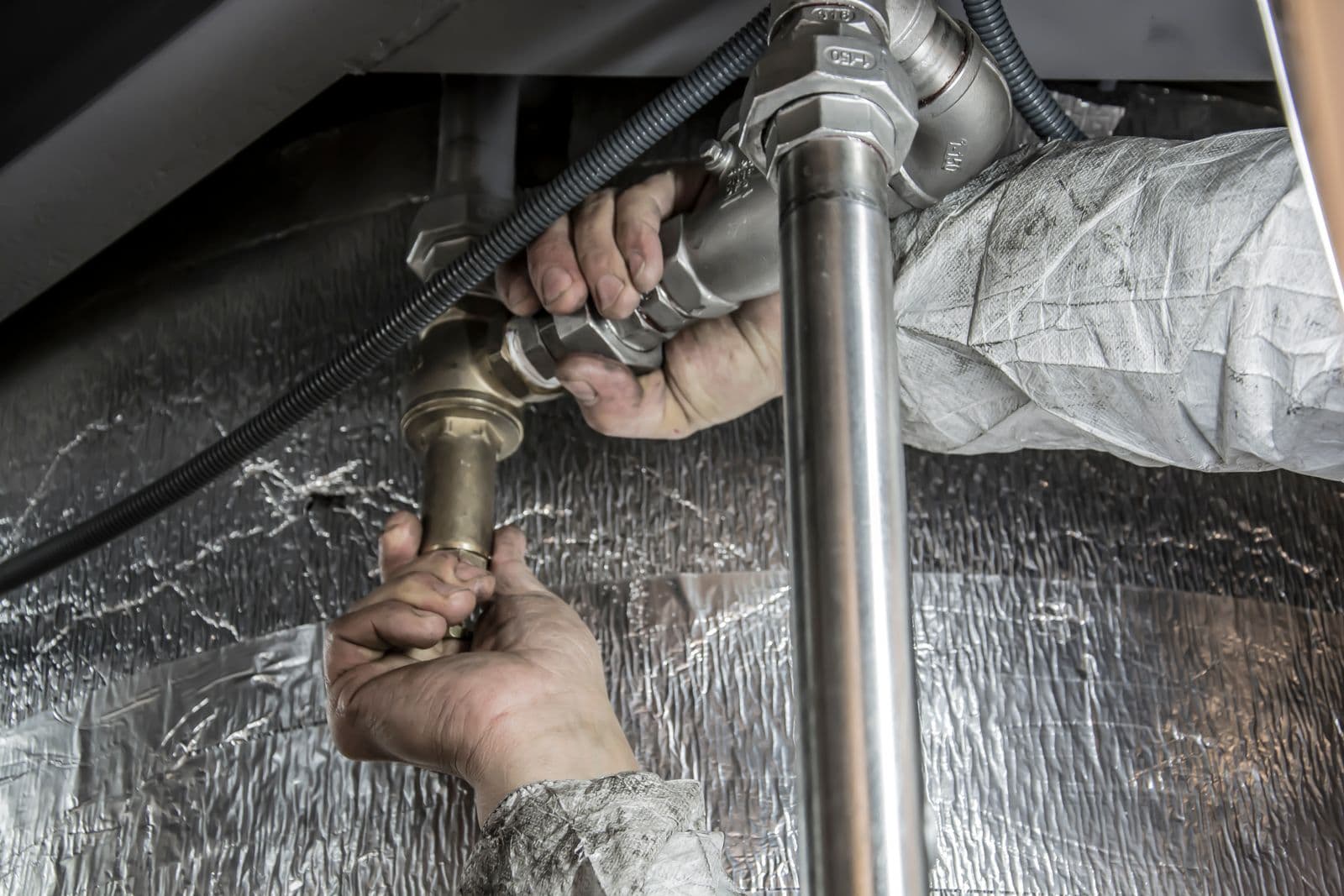
What the work actually looks like
Treatment equipment is plumbing. Most of the job is the connection, the drain and the code detail behind it.


Detroit water, answered plainly
Where does Detroit get its water?+
The Great Lakes Water Authority treats it and DWSD delivers it. Detroit customers are served by four plants that draw from intakes on the Detroit River.
Is there lead in Detroit water?+
DWSD says the water leaving the plants doesn't contain lead; it can pick up lead from service lines, solder and fixtures. In 2025 the 90th-percentile result at 50 lead-line homes was 8 ppb, under Michigan's 12 ppb action level.
How do I know if my home has a lead service line?+
Age is the first clue. Detroit stopped allowing lead service lines in 1945, so pre-1945 homes are the most likely to have one unless it has been replaced with copper. DWSD's inventory and replacement program can confirm a specific address.
Why does Michigan sample the fifth liter?+
Michigan's revised Lead and Copper Rule collects the first and fifth liter. The first represents household plumbing; the fifth is more likely to represent water from the service line.
When will Detroit's lead lines be replaced?+
DWSD had replaced 15,722 lead service lines since 2018, including 4,004 in 2025. Under EPA's Lead and Copper Rule Improvements, every lead service line must be replaced by December 31, 2037.
Is Detroit water hard?+
Moderately. The report's mineral analysis shows total hardness from 96 to 142 ppm, averaging 107 ppm.
Where do these figures come from?+
From DWSD's 2025 Water Quality Report. Third-party aggregators are not used.
Related resources
Home water purification and treatment
The national service page behind this one.
Learn more →Home battery backup in Detroit
DTE outages, credits and backup sizing.
Learn more →Pittsburgh water quality
Allegheny River water and lead at a 20-year low.
Learn more →All home services
Water, battery, HVAC and solar under one licensed contractor of record.
Learn more →Get a free test at your tap
A licensed technician tests at your kitchen tap and tells you which findings apply to your house — lead, hardness or your own plumbing. No charge, no obligation, and coverage confirmed at your address first.
Get a free test