Grand Rapids, Michigan
Home Battery Backup in Grand Rapids
Consumers Energy prices summer weekday afternoons higher and pays a credit when an outage runs long. A battery handles both.
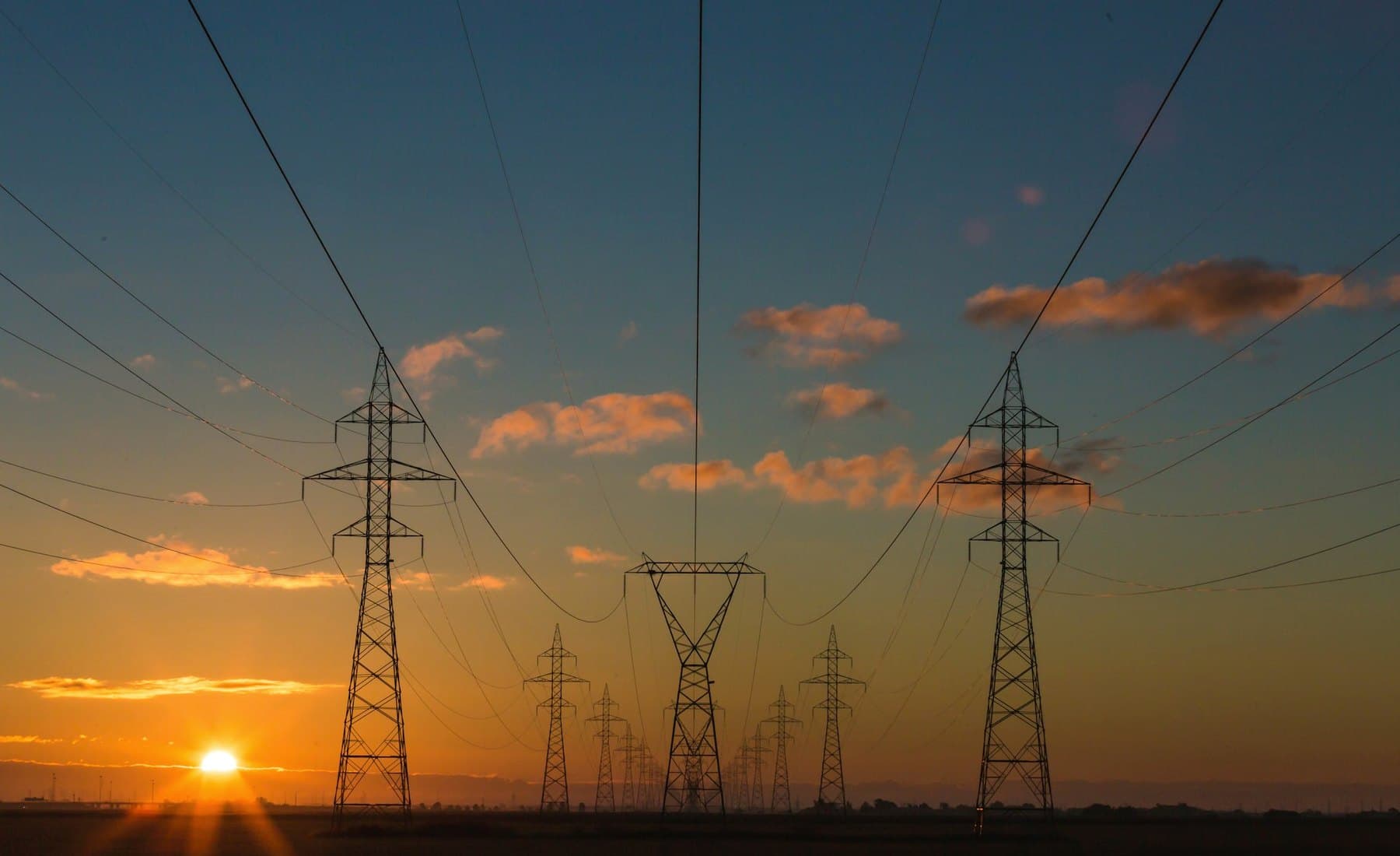
Summer peak 24.5¢/kWh, weekdays 2–7 p.m. · outage credit after 16 hours · solar credited at the power supply rate.
The short answer
Grand Rapids is served by Consumers Energy. Its standard Summer Rate charges $0.245 per kWh on weekdays from 2 to 7 p.m. from June through September, against $0.197 at other summer hours and a flat $0.176 the rest of the year.
A battery can carry part of the house through that peak and keep chosen circuits on in an outage. Michigan's automatic outage credit, raised to $44 in September 2026, pays after the fact, but it doesn't keep a sump pump running.
Get a Free Estimate
Tell us your Grand Rapids address, whether you have solar and what must stay on in an outage. We confirm coverage before anyone sizes a battery.
Consumers Energy rates and outage credits
From Consumers' Summer Rate and Outage Credit pages.
A five-hour summer peak
Consumers' standard Summer Rate charges $0.245 per kWh on weekdays from 2 to 7 p.m., June 1 to September 30, against $0.197 at other summer hours.
Flat the rest of the year
From October through May the same rate is a flat $0.176 per kWh. These figures exclude the PSCR, system access charge, surcharges and taxes.
Outage credits after 16 hours
A credit applies after 16 hours in normal conditions, 48 hours in gray-sky conditions and 96 hours when 10% or more of customers are out, plus each further day.
Where a battery fits in Grand Rapids
The summer peak, outage credits, solar credits and backup circuits.
Credits are not backup
Michigan regulators raised the outage credit to $44 in September 2026. It pays after the fact; it doesn't keep the sump pump or furnace blower running.
Cover the 2–7 p.m. window
A battery charged at lower-priced hours can carry part of the house through the summer weekday peak. How much depends on capacity and what you run.
Solar under Distributed Generation
Consumers credits power you send to the grid at the power supply rate, including transmission, not the full retail rate. Systems are capped at 110% of your past 12 months of use.
Choose the circuits that matter
Sump pump, furnace blower and controls, refrigeration, internet, lights and medical devices. A critical load panel decides what the battery carries in an outage.
Summer 2026, and Grand Rapids next to Detroit
Severe thunderstorms ahead of the July 4 weekend in 2026 left long outages across Michigan and triggered a state investigation, MLive reported. Michigan utility customers received more than $11.6 million in outage credits in 2025, nine times the 2022 total.
In Detroit, DTE is the utility, and its Rider 18 solar tariff doesn't permit battery export. Grand Rapids homes are on Consumers Energy, whose Summer Rate sets a fixed afternoon peak. The outage credit rules come from the same Michigan regulator.
Where these figures come from
Rates, credits and solar rules trace to Consumers Energy; the 2026 credit change and storm context to MLive.
- Consumers Energy — Summer Rate — peak hours, season and per-kWh prices.
- Consumers Energy — Outage Credit — triggers, the frequent-outage rule and how credits post.
- Consumers Energy — Distributed Generation — outflow credits, the 110% sizing cap and the application fee.
- MLive — outage credits increase to $44 (September 12, 2026) — the MPSC adjustment, 2025 credit totals and the July 2026 storms.
What a home battery job with us covers
Installation of storage and the backup circuits behind it, with the siting and utility paperwork handled.
Battery installation
Wall or floor-mounted storage installed to the listing and to the residential code sections that govern where it may go.
Backup and critical load panel
Deciding and wiring which circuits stay live, and which must never be on backup — the choice that defines what an outage feels like.
Integration with existing PV solar
Connecting storage to an array that is already on the roof, including whether the existing inverter supports it.
Transfer switch and disconnection
The equipment that separates the house from the grid during an outage, which is what makes backup legal as well as possible.
Siting to code
Location, clearances, separation and impact protection assessed against the adopted code before anything is mounted.
Permit, inspection and utility approval
The electrical permit, the inspection, and the utility's own approval step where storage touches the service.
This is installation work. No runtime, capacity or incentive figure is quoted before your loads and your utility are confirmed. Coverage is confirmed per service area rather than promised as blanket availability.
What the work actually looks like
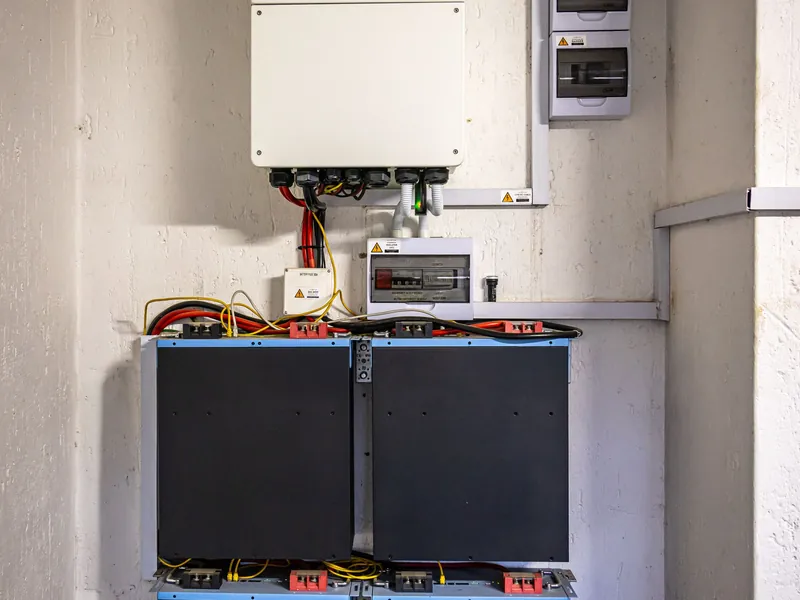
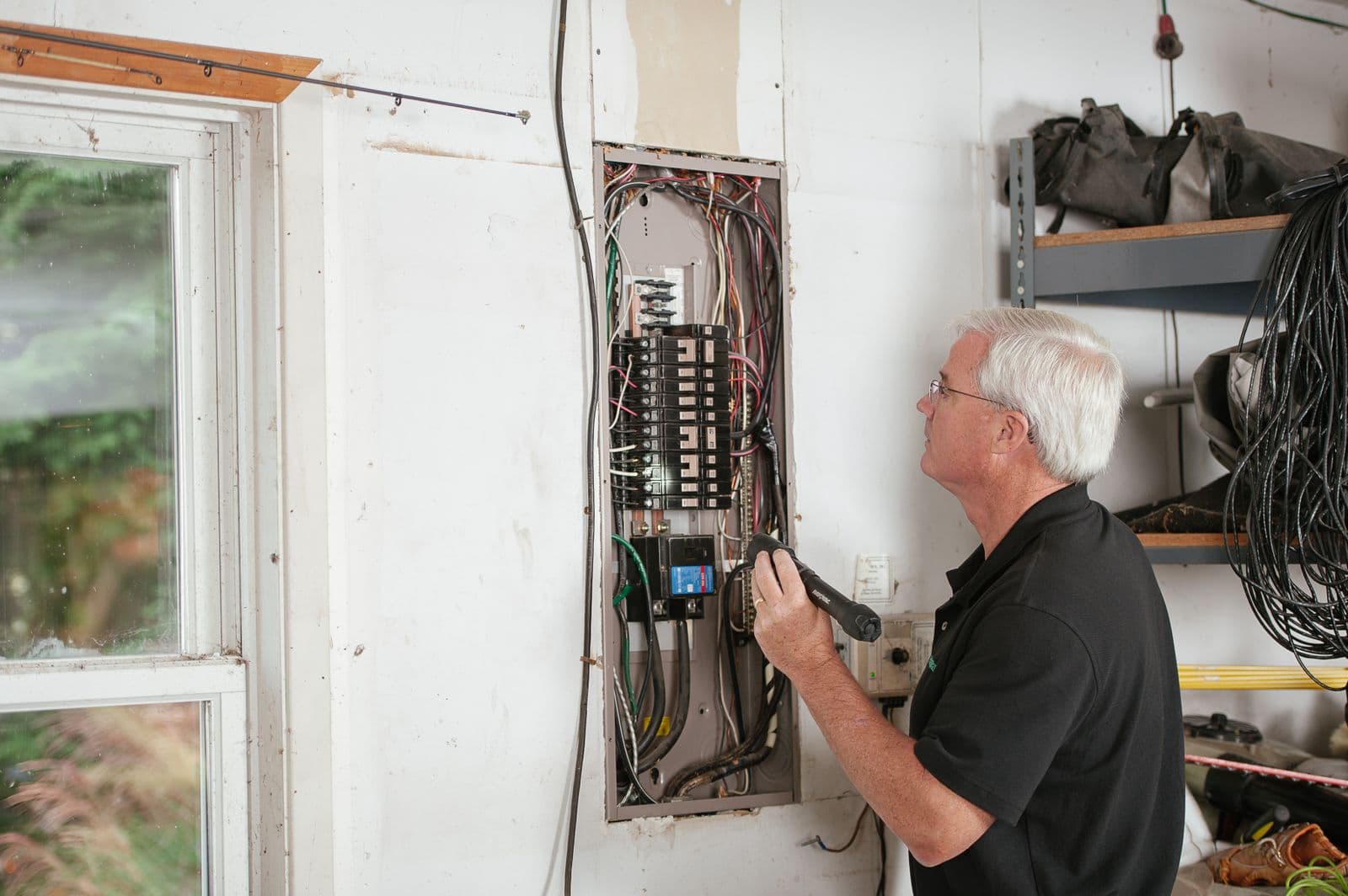
A battery job is an electrical job. The panel, the circuits and the disconnection are most of it.

Battery backup in Grand Rapids, answered plainly
Who is the electric utility in Grand Rapids?+
Consumers Energy serves Grand Rapids. It restores outages, pays the MPSC-required outage credits and runs the Distributed Generation program for solar customers.
What is the Consumers Energy Summer Rate?+
It is Consumers' standard residential rate. From June 1 to September 30 it charges $0.245 per kWh on weekdays from 2 to 7 p.m. and $0.197 at other times. From October to May it is a flat $0.176 per kWh. Those figures exclude the PSCR, system access charge, surcharges and taxes.
How much does Consumers Energy pay for a long outage?+
Consumers' outage credit page listed $42 when we checked on October 28, 2026. The Michigan Public Service Commission raised the statewide credit to $44 on September 10, 2026, as reported by MLive. Additional credits apply for each further 24 hours.
When does an outage qualify for a credit?+
After 16 hours when fewer than 1% of customers are out, 48 hours in gray-sky conditions, and 96 hours in catastrophic conditions when 10% or more are out. Six or more outages longer than five minutes in 12 months also qualify. Credits post within 90 days; after that, Consumers says to call 800-477-5050.
Does Consumers Energy still offer net metering?+
No. Distributed Generation replaced net metering on January 1, 2021. Power you send to the grid is credited at the power supply rate including transmission, and since February 27, 2024 those credits can apply to all electric charges on the bill.
How long will a battery run my house?+
It depends on capacity and which circuits you put on it, so we don't quote a runtime before seeing the panel.
Who installs it, and who is responsible afterwards?+
Seamless Home is the licensed contractor of record on the work it runs. Installation is performed by vetted installing partners engaged as our subcontractors, so the permit, the inspection and any correction notice carry one name. Coverage is confirmed per service area rather than promised as blanket availability.
Related resources
Home battery backup
The national service page behind this one.
Learn more →Home battery backup in Detroit, MI
DTE outage credits and Rider 18 battery rules.
Learn more →Detroit water quality
Lead service lines and Michigan's stricter lead rule.
Learn more →All home services
Water, battery, HVAC and solar under one licensed contractor of record.
Learn more →Get a free battery estimate
We confirm your Grand Rapids address is in coverage, check your panel and solar setup, and size backup circuits before anyone promises bill savings. No obligation.
Get a Free Estimate