Milwaukee, Wisconsin
Milwaukee Water Quality
Milwaukee treats Lake Michigan water with ozone and filtration. The 2025 report shows PFAS below EPA reporting limits; lead risk comes mainly from service lines and plumbing.

Lake Michigan · ozone + biological filtration · orthophosphate since 1996 · UCMR 5 PFAS below reporting limits · no Crypto in 2025.
The short answer
Milwaukee's tap water comes from Lake Michigan and is treated with ozone, biologically active filtration and chloramine. In EPA's UCMR 5 testing, all 29 PFAS were below EPA reporting limits, and no Cryptosporidium or Giardia was found in 2025.
The lead question is mainly about your service line and plumbing. Orthophosphate has been added since 1996 to limit lead release; in the 2023 round, two homes with lead lines tested above the 15 ppb action level.
Get a free test
Tell us your Milwaukee address. We confirm coverage first, then schedule a licensed technician to test at your tap — no charge, no obligation.
What filtration does — and does not
Lead from older service lines is the usual reason Milwaukee homeowners add point-of-use treatment.
Where Milwaukee water comes from
Source and treatment as described in the Milwaukee Water Works 2025 Annual Water Quality Report.
Lake Michigan
Milwaukee Water Works draws all of its water from Lake Michigan and serves about 923,000 people in Milwaukee and 16 suburban communities.
Ozone first, then filtration
Lake water is disinfected with ozone, coagulated with alum, settled, and run through biologically active filters of 24 inches of anthracite over 12 inches of sand.
Chloramine in the pipes
After chlorine and fluoride are added and the water rests in a clearwell, orthophosphate is added for corrosion control and chloramine keeps it disinfected through the mains.
What the 2025 data actually says
Limits are fixed. Results are system figures from the utility report, not a reading at your tap.
Lead risk sits in service lines and plumbing
The report says lead in drinking water comes primarily from service lines and home plumbing. In the 2023 round, all sampled homes had lead service lines and two were above the 15 ppb action level.
Orthophosphate since the 1990s
Orthophosphate began in 1996 and was fully in place by the end of 1997. It forms a coating inside pipes that limits lead release. Wisconsin DNR determined in 2022 that no changes were needed.
PFAS below EPA reporting limits
Under EPA's fifth unregulated contaminant round (UCMR 5), Milwaukee tested 29 PFAS and lithium. Every result was below EPA's minimum reporting levels.
No Cryptosporidium or Giardia
Neither was detected in 2025 monitoring. The highest turbidity reading in 2025 was 0.24 NTU.
Fluoride at 0.7 mg/L
Fluoride is added at a level not to exceed 0.7 mg/L, following public health recommendations, as the report puts it.
Over 500 substances tested
The utility says it tests for more than 500 substances, well beyond what regulations require. The report tables list the ones that were detected.
Milwaukee next to Detroit and Flint
Where these figures come from
Everything on this page traces to the Milwaukee Water Works 2025 Annual Water Quality Report.
- Milwaukee Water Works — 2025 Annual Water Quality Report (PDF)
- Milwaukee Water Works — service line lookup by address at milwaukee.gov/CheckAddress, referenced in the report.
Matching treatment to the finding
Lead from service lines and plumbing drives most Milwaukee treatment decisions.
A lead-rated filter if you have a lead line
The report advises a filter certified to NSF/ANSI Standard 53 for lead in homes with lead service lines or lead plumbing. Point-of-use is the usual fit.
Check your service line first
Milwaukee lists service-line material by address at milwaukee.gov/CheckAddress. That one lookup decides whether lead is the issue at your house.
Carbon rated for chloramine
If you notice a disinfectant taste, look for carbon media rated for chloramine. Standard chlorine filters are not always effective against it.
Test before you buy
Your plumbing and service line decide what reaches your tap. A tap test tells you which of these findings applies to your house.
How the free test works
A licensed technician tests at your kitchen tap, walks the plumbing, and tells you which of the findings above applies to your house and which does not. There is no charge and no obligation.
Seamless Home is the licensed contractor of record on the work that follows. Installation is performed by vetted installing partners engaged as our subcontractors, and the workmanship obligation stays with us. Coverage is confirmed per service area rather than promised as blanket availability.
What a water treatment job with us covers
Installation and replacement of whole-home and point-of-use treatment, specified against what your water actually contains.
Sediment filtration
Installation of the first stage that protects everything downstream of it, sized to the service line and the household draw.
Softening
Installation of ion-exchange softening where hardness is the problem, including the drain connection the plumbing code treats as indirect waste.
Carbon filtration
Installation of carbon stages for taste, odour and disinfection by-products, specified from your utility's own water quality report.
Reverse osmosis
Point-of-use installation at the kitchen sink where the target is dissolved solids rather than whole-home flow.
Disinfection
Installation of UV or equivalent treatment where the supply is a private well or is otherwise not continuously disinfected.
System replacement
Replacing equipment that has reached the end of its service life, including the discharge and air gap details an inspector looks at.
This is installation and replacement work, specified from a published water quality report or a test of your supply — not from a sales chart. Coverage is confirmed per service area rather than promised as blanket availability.
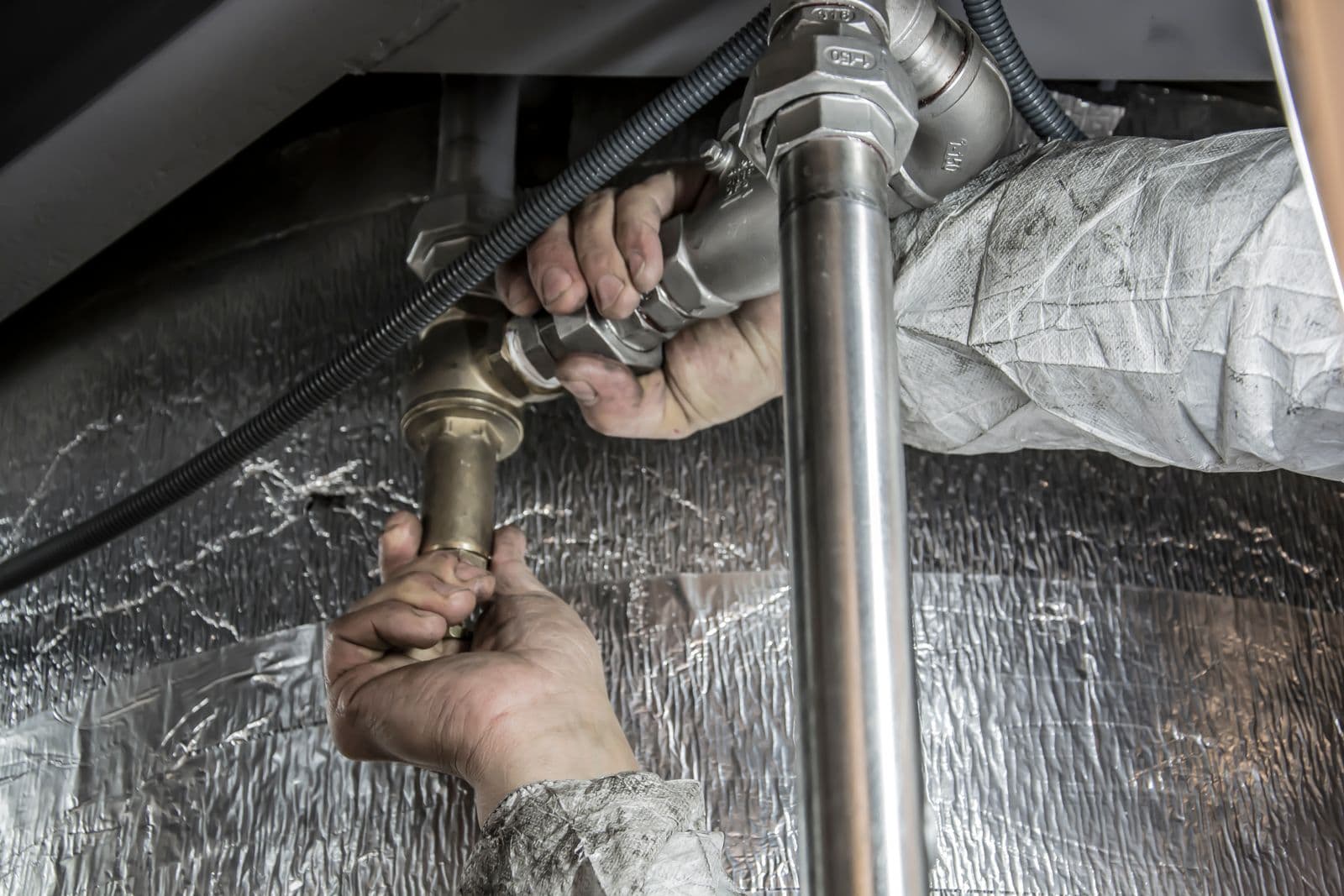
What the work actually looks like
Treatment equipment is plumbing. Most of the job is the connection, the drain and the code detail behind it.


Milwaukee water, answered plainly
Where does Milwaukee get its water?+
From Lake Michigan. Milwaukee Water Works treats the lake water with ozone, coagulation, sedimentation, biologically active filtration, chlorine and chloramine, and serves about 923,000 people in Milwaukee and 16 suburban communities.
Is there lead in Milwaukee water?+
The report says lead in drinking water comes primarily from service lines and home plumbing. In the 2023 monitoring round, which sampled homes with lead service lines, two homes were above the 15 ppb action level. Look up your address at milwaukee.gov/CheckAddress.
What does the report recommend for homes with lead lines?+
Use a filter certified to NSF/ANSI Standard 53 for lead, flush the tap for three minutes if the water has been unused for six or more hours, and use filtered water for children under six and for people who are pregnant or breastfeeding.
Is there PFAS in Milwaukee tap water?+
In EPA's UCMR 5 testing, all 29 PFAS and lithium were below EPA's minimum reporting levels.
Why does Milwaukee add orthophosphate?+
To control corrosion. Orthophosphate builds a protective coating inside pipes that reduces how much lead dissolves from lead service lines. It has been in place since 1996–1997.
Where do these figures come from?+
From the Milwaukee Water Works 2025 Annual Water Quality Report. Third-party aggregators are not used.
Related resources
Home water purification and treatment
The national service page behind this one.
Learn more →Detroit water quality
Detroit River water and the city's lead service lines.
Learn more →Flint water quality
Lake Huron water via GLWA and remaining lead lines.
Learn more →Home battery backup in Milwaukee
We Energies outages, flooded basements and time-of-use rates.
Learn more →All home services
Water, battery, HVAC and solar under one licensed contractor of record.
Learn more →Get a free test at your tap
A licensed technician tests at your kitchen tap and tells you which findings apply to your house — lead from the service line or plumbing, or chloramine taste. No charge, no obligation, and coverage confirmed at your address first.
Get a free test