Lincoln, Nebraska
Lincoln Water Quality
Lincoln drinks treated groundwater from wells along the Platte River near Ashland. The 2025 report shows no violations, naturally occurring arsenic below its limit and hard water at 11.2 grains per gallon.
Platte River wells near Ashland · arsenic 7.1–7.7 ppb (limit 10) · hardness 192 ppm / 11.2 gpg · lead 90th 3.40 ppb, 1 of 55 over AL · chloramine avg 2.44 ppm.
The short answer
Lincoln's tap water is groundwater from wells along the Platte River near Ashland, treated by Lincoln Water System. The 2025 report lists no drinking water violations. Naturally occurring arsenic measured 7.1 to 7.7 ppb against a 10 ppb limit.
The water is hard — 192 ppm, or 11.2 grains per gallon — and disinfected with chloramine, which averaged 2.44 ppm. Lead at the tap had a 90th percentile of 3.40 ppb, with 1 of 55 homes above the action level.
Get a free test
Tell us your Lincoln address. We confirm coverage first, then schedule a licensed technician to test at your tap — no charge, no obligation.
What the 2025 Lincoln report shows
System-level results from Lincoln Water System's Annual Drinking Water Quality Report for 2025. A later report supersedes them.
Arsenic: 7.1 to 7.7 ppb
Arsenic occurs naturally in the aquifer. 2025 sampling found 7.1 to 7.7 ppb, with a highest result of 7.6 ppb in the plant table, below the 10 ppb limit. It is the number Lincoln households ask about most.
Hard water: 192 ppm
Total hardness averaged 192 ppm, or 11.2 grains per gallon (180 to 236 ppm). Calcium averaged 53 ppm and alkalinity 164 ppm. That is hard enough to leave scale on fixtures and in water heaters.
Lead: 3.40 ppb at the 90th percentile
Tap sampling in 2025 put the lead 90th percentile at 3.40 ppb, with 1 of 55 homes above the 15 ppb action level and results from not detected to 27.6 ppb. Copper's 90th percentile was 0.84 ppm, with no homes above 1.3.
Chloramine and byproducts
Chloramine averaged 2.44 ppm (0.02 to 3.77) against a 4 ppm limit. Total trihalomethanes peaked at a 32.4 ppb locational average against 80, haloacetic acids 19.8 ppb against 60, and bromate from ozonation 0.57 ppb against 10.
Nitrate, radioactivity and minerals
Nitrate plus nitrite reached 0.91 ppm against 10. Gross alpha measured up to 11.0 pCi/L against 15 and combined radium 2.0 pCi/L against 5. Sodium averaged 29 ppm, sulfate 69 ppm and total dissolved solids 329 ppm.
No violations in 2025
Lincoln Water System reports no drinking water violations for 2025. Iron was not detected after treatment and manganese averaged 1.9 ppb, well under its 50 ppb guideline.
Where the water comes from
One wellfield, two kinds of wells.
Platte River wellfield near Ashland
All of Lincoln's supply comes from wells along the Platte River near Ashland, more than 20 miles from the city. In 2025 the wells pumped more than 13.7 billion gallons for about 304,000 residents.
Two kinds of groundwater
About half the supply is groundwater and about half is groundwater under the direct influence of surface water from the Platte. Vertical wells feed aeration and sand filtration; horizontal wells feed an ozone process.
Matching treatment to the finding
Hardness and arsenic drive most Lincoln decisions.
Reverse osmosis for arsenic
Arsenic is below the limit, but if you want less of it, point-of-use reverse osmosis certified for arsenic reduction is the usual choice for drinking and cooking water. Arsenic form matters, so confirm the system's certification.
A softener for 11 grains
At 192 ppm, scale on fixtures, glass and the water heater is common. A whole-house softener is a reasonable option here; test first to confirm the number at your tap.
Catalytic carbon for chloramine
Chloramine is harder for ordinary carbon to remove than free chlorine. Catalytic carbon at the tap or for the whole house addresses disinfectant taste and odor.
Lead: check the service line first
Use the city's service line map before buying a filter. If the line is lead or lead-contaminated galvanized, Lead Safe Lincoln replaces it at no cost to the property owner.
Lincoln next to its neighbors
Fifty miles east, Omaha draws on the Missouri and Platte rivers through Metropolitan Utilities District. Lincoln's own plan for a second source, Water 2.0, is a wellfield and treatment plant near the Missouri River. Further along I-80, Des Moines watches nitrate in river water.
If you are also weighing backup power for a hard-water house, see home battery backup in Omaha and how many watts a water heater uses.
Where these figures come from
Everything on this page traces to the Lincoln Water System 2025 Annual Drinking Water Quality Report, published by Lincoln Transportation and Utilities and covering January 1 through December 31, 2025.
- Lincoln Water System — 2025 Annual Drinking Water Quality Report (PDF)
- City of Lincoln — Drinking Water Quality — treatment overview and past reports.
How the free test works
A licensed technician tests at your kitchen tap, walks the plumbing, and tells you which of the findings above applies to your house and which does not. There is no charge and no obligation.
Seamless Home is the licensed contractor of record on the work that follows. Installation is performed by vetted installing partners engaged as our subcontractors, and the workmanship obligation stays with us. Coverage is confirmed per service area rather than promised as blanket availability.
What a water treatment job with us covers
Installation and replacement of whole-home and point-of-use treatment, specified against what your water actually contains.
Sediment filtration
Installation of the first stage that protects everything downstream of it, sized to the service line and the household draw.
Softening
Installation of ion-exchange softening where hardness is the problem, including the drain connection the plumbing code treats as indirect waste.
Carbon filtration
Installation of carbon stages for taste, odour and disinfection by-products, specified from your utility's own water quality report.
Reverse osmosis
Point-of-use installation at the kitchen sink where the target is dissolved solids rather than whole-home flow.
Disinfection
Installation of UV or equivalent treatment where the supply is a private well or is otherwise not continuously disinfected.
System replacement
Replacing equipment that has reached the end of its service life, including the discharge and air gap details an inspector looks at.
This is installation and replacement work, specified from a published water quality report or a test of your supply — not from a sales chart. Coverage is confirmed per service area rather than promised as blanket availability.
What the work actually looks like
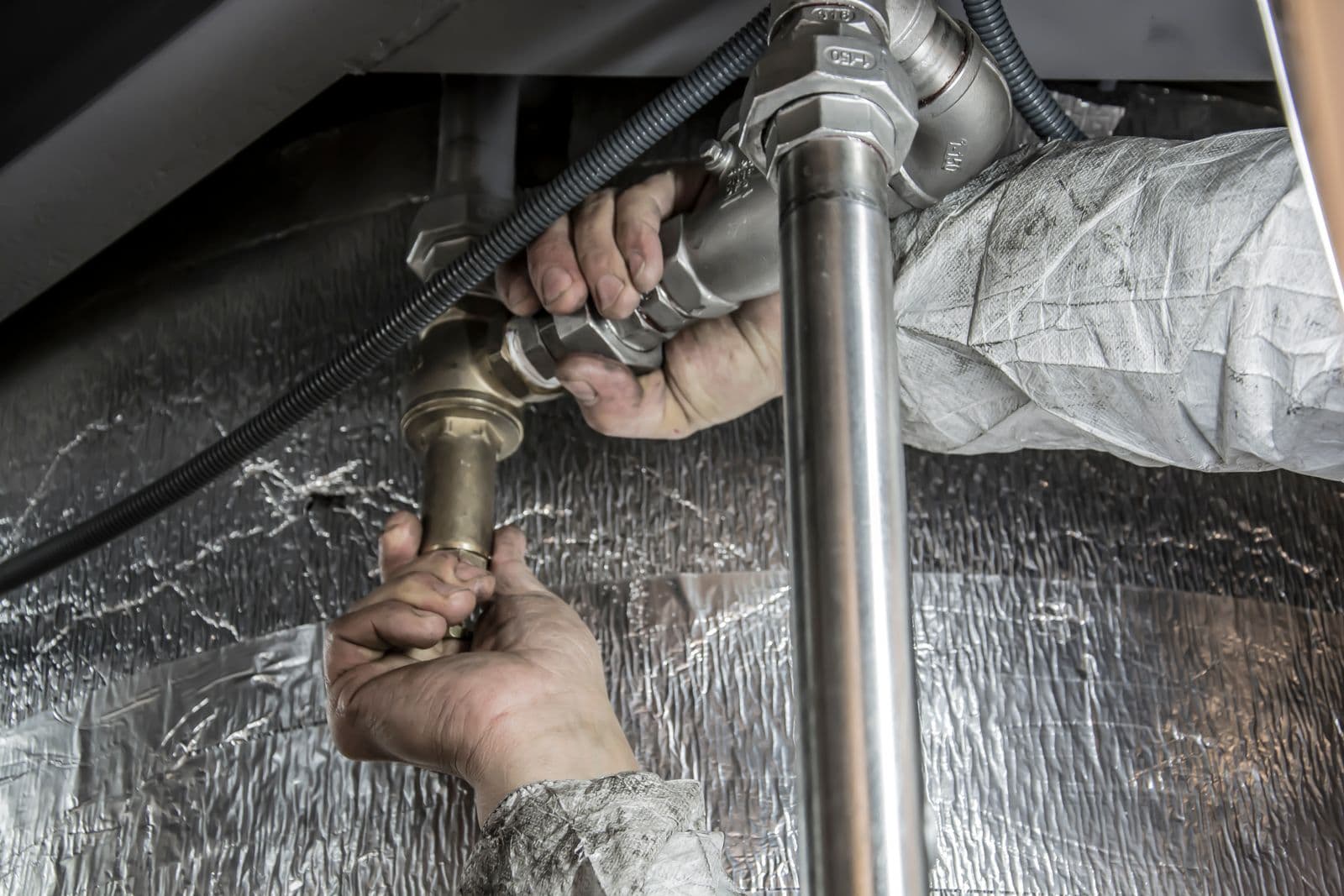
Treatment equipment is plumbing. Most of the job is the connection, the drain and the code detail behind it.


Lincoln water, answered plainly
Where does Lincoln, Nebraska get its water?+
From wells along the Platte River near Ashland. About half is groundwater and about half is groundwater under the direct influence of surface water. Lincoln Water System treats it at its water treatment plants before it travels more than 20 miles to the city.
Is Lincoln tap water safe to drink?+
Lincoln Water System's 2025 report lists no drinking water violations. Arsenic measured 7.1 to 7.7 ppb against a 10 ppb limit, and trihalomethanes peaked at a 32.4 ppb locational average against 80.
Is Lincoln water hard?+
Yes. The 2025 report lists total hardness averaging 192 ppm, or 11.2 grains per gallon, with a range of 180 to 236 ppm.
Is there arsenic in Lincoln water?+
Yes, from natural deposits. 2025 sampling found 7.1 to 7.7 ppb, below the federal limit of 10 ppb. Reverse osmosis certified for arsenic is the usual point-of-use option for households that want to reduce it further.
Does Lincoln have lead service lines?+
Some older homes do, mainly those built before 1950. The city's Lead Safe Lincoln program replaces lead and lead-contaminated galvanized service lines at no cost to owners, with more than 500 replaced since July 2024 and a goal of finishing by 2035. Lincoln Water System also offers one free lead test kit per address per year.
Where do these figures come from?+
From the Lincoln Water System 2025 Annual Drinking Water Quality Report, covering January 1 to December 31, 2025. Third-party aggregators are not used.
Related resources
Home water purification and treatment
The national service page behind this one.
Learn more →Omaha water quality
MUD's Missouri and Platte river supply.
Learn more →Des Moines water quality
River water and nitrate results.
Learn more →Kansas City, KS water quality
Another hard Missouri River supply.
Learn more →All home services
Water, battery, HVAC and solar under one licensed contractor of record.
Learn more →Get a free test at your tap
A licensed technician tests at your kitchen tap and tells you which Lincoln findings apply to your house — hardness, arsenic, chloramine or lead from fixtures. No charge, no obligation, and coverage confirmed at your address first.
Get a free test