Charlotte, North Carolina
Charlotte Water Quality
Charlotte drinks soft, treated lake water from Mountain Island Lake and Lake Norman. The 2025 report shows zero violations — and two numbers worth reading: trihalomethanes and one home's lead result.
Mountain Island Lake + Lake Norman · zero violations (2025) · TTHM 63.7 ppb (limit 80) · hardness 32 ppm, soft · 1 site above lead action level.
The short answer
Charlotte's tap water is treated lake water from Mountain Island Lake and Lake Norman on the Catawba River. Charlotte Water reported zero violations in 2025, and the water is soft at about 32 ppm hardness.
The numbers to read are trihalomethanes at 63.7 ppb against 80, and lead: the 90th percentile was not detected, but one sampled home measured 44 ppb, above the 15 ppb action level.
Get a free test
Tell us your Charlotte address. We confirm coverage first, then schedule a licensed technician to test at your tap — no charge, no obligation.
What the 2025 Charlotte report shows
System-level results from Charlotte Water's 2025 Annual Drinking Water Quality Report. A later report supersedes them.
Zero violations in 2025
Charlotte Water's report states it received no drinking water violations during 2025.
Byproducts: the closest number to a limit
Total trihalomethanes were reported at 63.7 ppb, with results from 17.2 to 77.4, against an 80 ppb limit. Haloacetic acids were 22.9 ppb against 60. Trihalomethanes are the figure to watch.
Lead: one home above the action level
In 2025 tap sampling, the lead 90th percentile was not detected, but one sampled site measured 44 ppb, above the 15 ppb action level. Lead at the tap traces to service lines and home plumbing, which is why results vary by house.
Soft water
Total hardness averaged 32 ppm (27 to 35), roughly 1.9 grains per gallon. Sodium averaged 3.6 ppm and total dissolved solids 59 ppm.
Chlorine disinfection
Chlorine averaged 1.04 ppm (0.47 to 1.60) against a 4 ppm limit. That residual is what most people notice as taste or smell.
PFAS in federal monitoring
In 2023–2024 federal monitoring, the report lists two PFAS: PFPeA averaging 0.67 ppt (up to 3.4) and PFBA averaging 0.75 ppt (up to 9.7). PFOA and PFOS are not among the detections it lists.
Where the water comes from
Two Catawba River lakes and three treatment plants.
Mountain Island Lake and Lake Norman
Both lakes are on the Catawba River, which supplies water to more than 1.5 million people in the region. Charlotte Water treats it at three plants — Franklin, Dukes and Vest — averaging about 125 million gallons a day.
Source ratings
North Carolina's source water assessment (September 9, 2020) rated Mountain Island Lake and the Catawba River moderate and Lake Norman higher susceptibility to potential contaminant sources. The report notes that describes contamination potential, not poor water quality.
Matching treatment to the finding
Chlorine taste, byproducts and household lead drive most Charlotte decisions — not hardness.
You likely don't need a softener
At about 1.9 grains per gallon, Charlotte's water is soft. Test at your tap before anyone sells you a softener.
Carbon for chlorine and byproducts
Activated carbon, at the tap or for the whole house, addresses chlorine taste and odor and reduces trihalomethanes.
Lead: test your own tap
The system's 90th percentile was not detected, but one home reached 44 ppb. If your home is older or you don't know your service line material, check Charlotte Water's inventory and test at the tap; filters certified for lead reduction are an option.
Reverse osmosis for drinking water
Point-of-use reverse osmosis reduces byproducts, lead and PFAS at the kitchen tap, for households that want the broadest drinking-water reduction.
Charlotte next to its neighbors
Up I-85, Greensboro also drinks treated lake water but reports PFOS in federal monitoring, and Raleigh draws from Falls Lake and Lake Benson. South across the state line, Columbia, SC treats lake and river water too.
For backup power in the same house, see home battery backup in Charlotte.
Where these figures come from
Figures trace to Charlotte Water's 2025 Annual Drinking Water Quality Report (water system 01-60-010). The grains-per-gallon figure is our conversion of the published 32 ppm.
How the free test works
A licensed technician tests at your kitchen tap, walks the plumbing, and tells you which of the findings above applies to your house and which does not. There is no charge and no obligation.
Seamless Home is the licensed contractor of record on the work that follows. Installation is performed by vetted installing partners engaged as our subcontractors, and the workmanship obligation stays with us. Coverage is confirmed per service area rather than promised as blanket availability.
What a water treatment job with us covers
Installation and replacement of whole-home and point-of-use treatment, specified against what your water actually contains.
Sediment filtration
Installation of the first stage that protects everything downstream of it, sized to the service line and the household draw.
Softening
Installation of ion-exchange softening where hardness is the problem, including the drain connection the plumbing code treats as indirect waste.
Carbon filtration
Installation of carbon stages for taste, odour and disinfection by-products, specified from your utility's own water quality report.
Reverse osmosis
Point-of-use installation at the kitchen sink where the target is dissolved solids rather than whole-home flow.
Disinfection
Installation of UV or equivalent treatment where the supply is a private well or is otherwise not continuously disinfected.
System replacement
Replacing equipment that has reached the end of its service life, including the discharge and air gap details an inspector looks at.
This is installation and replacement work, specified from a published water quality report or a test of your supply — not from a sales chart. Coverage is confirmed per service area rather than promised as blanket availability.
What the work actually looks like
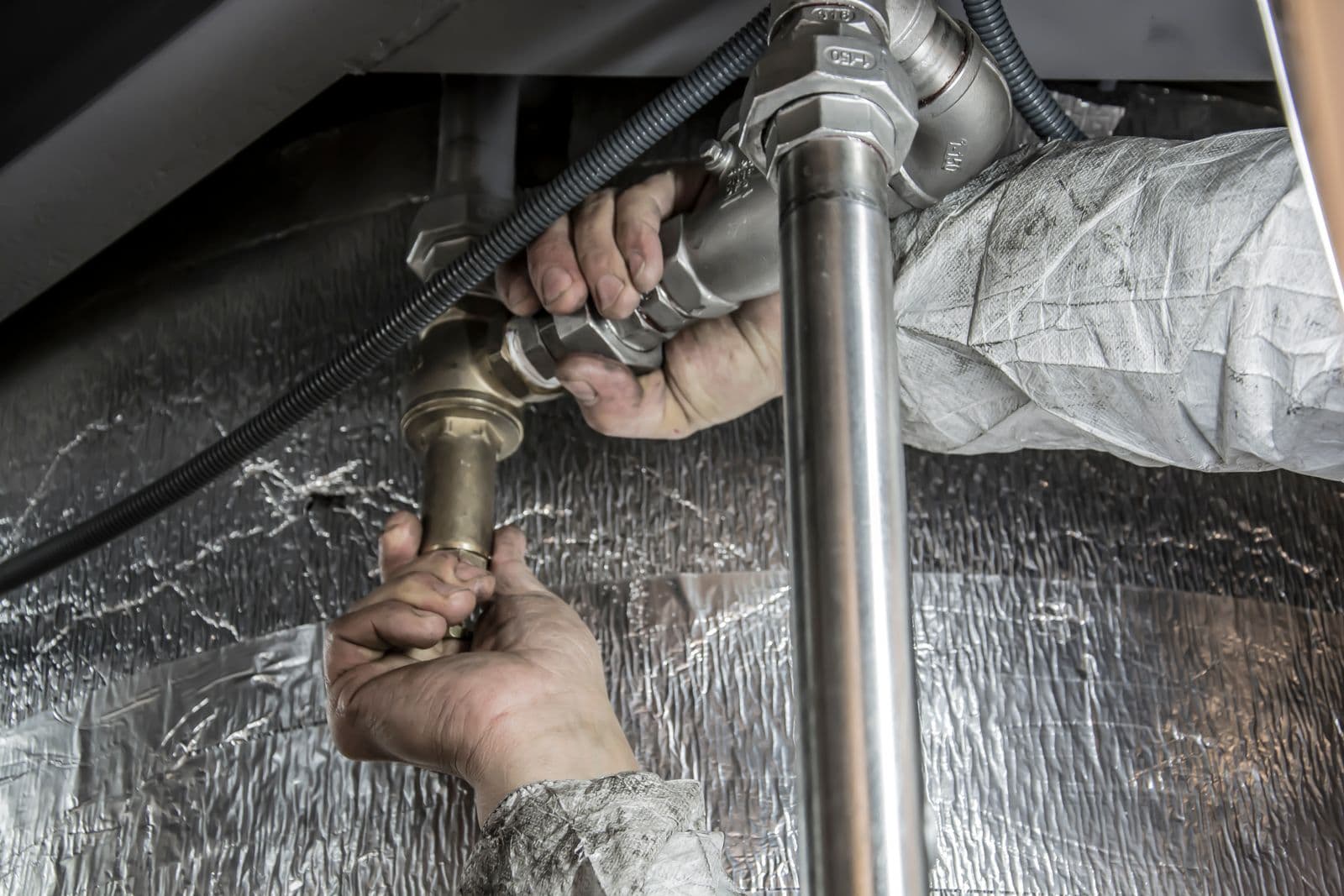
Treatment equipment is plumbing. Most of the job is the connection, the drain and the code detail behind it.


Charlotte water, answered plainly
Where does Charlotte get its water?+
From Mountain Island Lake and Lake Norman on the Catawba River, treated at the Franklin, Dukes and Vest water treatment plants.
Is Charlotte tap water safe to drink?+
Charlotte Water reported zero drinking water violations in 2025. Trihalomethanes were reported at 63.7 ppb against an 80 ppb limit and haloacetic acids at 22.9 ppb against 60.
Is Charlotte water hard or soft?+
Soft. Total hardness averaged 32 ppm in 2025, with a range of 27 to 35 ppm, roughly 1.9 grains per gallon.
Is there lead in Charlotte water?+
The 2025 lead 90th percentile was not detected, but one sampled home measured 44 ppb, above the 15 ppb action level. Lead comes from service lines and home plumbing; Charlotte Water publishes its service line inventory at charlottewaterlead.org.
Does Charlotte water have PFAS?+
The 2025 report lists two PFAS from 2023–2024 federal monitoring: PFPeA (average 0.67 ppt) and PFBA (average 0.75 ppt). PFOA and PFOS are not among the listed detections.
Where do these figures come from?+
From Charlotte Water's 2025 Annual Drinking Water Quality Report (water system 01-60-010). The grains-per-gallon figure is our conversion of the published ppm.
Related resources
Home water purification and treatment
The national service page behind this one.
Learn more →Greensboro water quality
Three Guilford County lakes up I-85.
Learn more →Raleigh water quality
Falls Lake and Lake Benson.
Learn more →Charlotte battery backup
Duke Energy outages and solar rules.
Learn more →All home services
Water, battery, HVAC and solar under one licensed contractor of record.
Learn more →Get a free test at your tap
A licensed technician tests at your kitchen tap and tells you which Charlotte findings apply to your house — byproducts, chlorine taste or lead from plumbing. No charge, no obligation, and coverage confirmed at your address first.
Get a free test