Columbia, South Carolina
Columbia Water Quality
Columbia drinks Broad River and Lake Murray water. The 2025 report shows soft water around 36 ppm hardness, lead at 6 ppb (90th percentile), and PFAS in the low parts per trillion.
Broad River + Lake Murray · hardness avg 36 ppm · lead 90th 6 ppb · HAA5 LRAA 24 ppb · Canal PFOS ~7.6 ppt.
The short answer
Columbia's tap water comes from City of Columbia Water (PWS SC4010001), which treats the Broad River via the Columbia Canal and Lake Murray.
The 2025 report shows soft water — hardness averaging 36 ppm — and a lead 90th percentile of 6 ppb. Disinfection byproducts stayed well under federal MCLs; PFAS appear at low parts-per-trillion averages in the unregulated table.
Get a free test
Tell us your Columbia address. We confirm coverage first, then schedule a licensed technician to test at your tap — no charge, no obligation.
What the 2025 Columbia report shows
Figures below are system-level results from the City of Columbia's 2025 Water Quality Report. A later report supersedes them.
Soft water: about 2.1 grains per gallon
Secondary data in the 2025 report lists hardness (as CaCO₃) averaging 36.0 ppm (range 20.0–47.0). That is soft water — scale is rarely the first complaint Columbia homeowners bring up.
Lead 90th percentile at 6 ppb
Lead-and-copper sampling (2023 results in the 2025 report) found a lead 90th percentile of 6 ppb against a 15 ppb action level (range 0–25 ppb; 1 of 50 sites sampled exceeded the action level). Copper's 90th percentile was 0.17 ppm (0 of 50 sites above the copper action level).
Disinfection byproducts well under the limits
Haloacetic acids (HAA5) had a locational running annual average of 24 ppb against a 60 ppb MCL (individual results 0–31.8). Total trihalomethanes had an LRAA of 30 ppb against 80.
Nitrate low
Nitrate/nitrite (as nitrogen) peaked at 0.52 ppm against a 10 ppm MCL in 2025 sampling. No violation.
PFAS detected at ppt levels
Unregulated monitoring in the report lists PFOS at the Canal plant averaging 0.0076 ppb (7.6 ppt; range 6.2–8.6 ppt) and at the Lake plant averaging 0.0035 ppb (3.5 ppt). PFOA averaged 0.0058 ppb (5.8 ppt) at Canal and 0.0022 ppb (2.2 ppt) at Lake. U.S. EPA's national MCLs of 4.0 ppt for PFOA and PFOS take effect on a later compliance schedule; the report notes proposed federal rule changes homeowners should track.
Sodium averaged 7.3 ppm
Secondary sodium averaged 7.30 ppm (range 5.0–12.0) — low compared with many surface systems that soften or use sodium-based chemicals.
How the water is produced
Two surface sources feed separate treatment plants.
Broad River via the Columbia Canal
One of Columbia's two surface sources is the Broad River, drawn through the Columbia Canal and treated at the Canal plant.
Lake Murray
The second source is Lake Murray, treated at the Lake plant. Neighborhoods may see Canal water, Lake water, or a blend depending on system operations.
City of Columbia Water — PWS SC4010001
The City operates more than 2,750 miles of distribution pipeline. Regulated substances listed in the 2025 report were detected during calendar-year 2025 sampling unless a different year is noted in the table.
Where these figures come from
Everything on this page traces to the City of Columbia's 2025 Water Quality Report (public water system SC4010001).
Matching treatment to the finding
Soft water changes the softener conversation; PFAS and lead plumbing drive most Columbia decisions.
Softening is usually unnecessary
At about 36 ppm hardness, a softener is rarely justified for scale control. Taste or other concerns point elsewhere.
Carbon or RO if PFAS is the concern
Point-of-use reverse osmosis or carbon certified for the PFAS compounds you care about is the usual kitchen-tap answer when a homeowner wants to go below the system averages.
Lead reduction at the tap
Even with a 6 ppb system 90th percentile, older home plumbing can still contribute lead. Flushing after long stagnation and a certified lead-reduction filter are the first steps; Columbia publishes a service-line inventory viewer.
Test before you buy
The report is system-wide. A kitchen-tap test tells you which of these findings actually shows up at your address.
How the free test works
A licensed technician tests at your kitchen tap, walks the plumbing, and tells you which of the findings above applies to your house and which does not. There is no charge and no obligation.
Seamless Home is the licensed contractor of record on the work that follows. Installation is performed by vetted installing partners engaged as our subcontractors, and the workmanship obligation stays with us. Coverage is confirmed per service area rather than promised as blanket availability.
What a water treatment job with us covers
Installation and replacement of whole-home and point-of-use treatment, specified against what your water actually contains.
Sediment filtration
Installation of the first stage that protects everything downstream of it, sized to the service line and the household draw.
Softening
Installation of ion-exchange softening where hardness is the problem, including the drain connection the plumbing code treats as indirect waste.
Carbon filtration
Installation of carbon stages for taste, odour and disinfection by-products, specified from your utility's own water quality report.
Reverse osmosis
Point-of-use installation at the kitchen sink where the target is dissolved solids rather than whole-home flow.
Disinfection
Installation of UV or equivalent treatment where the supply is a private well or is otherwise not continuously disinfected.
System replacement
Replacing equipment that has reached the end of its service life, including the discharge and air gap details an inspector looks at.
This is installation and replacement work, specified from a published water quality report or a test of your supply — not from a sales chart. Coverage is confirmed per service area rather than promised as blanket availability.
What the work actually looks like
Treatment equipment is plumbing. Most of the job is the connection, the drain and the code detail behind it.
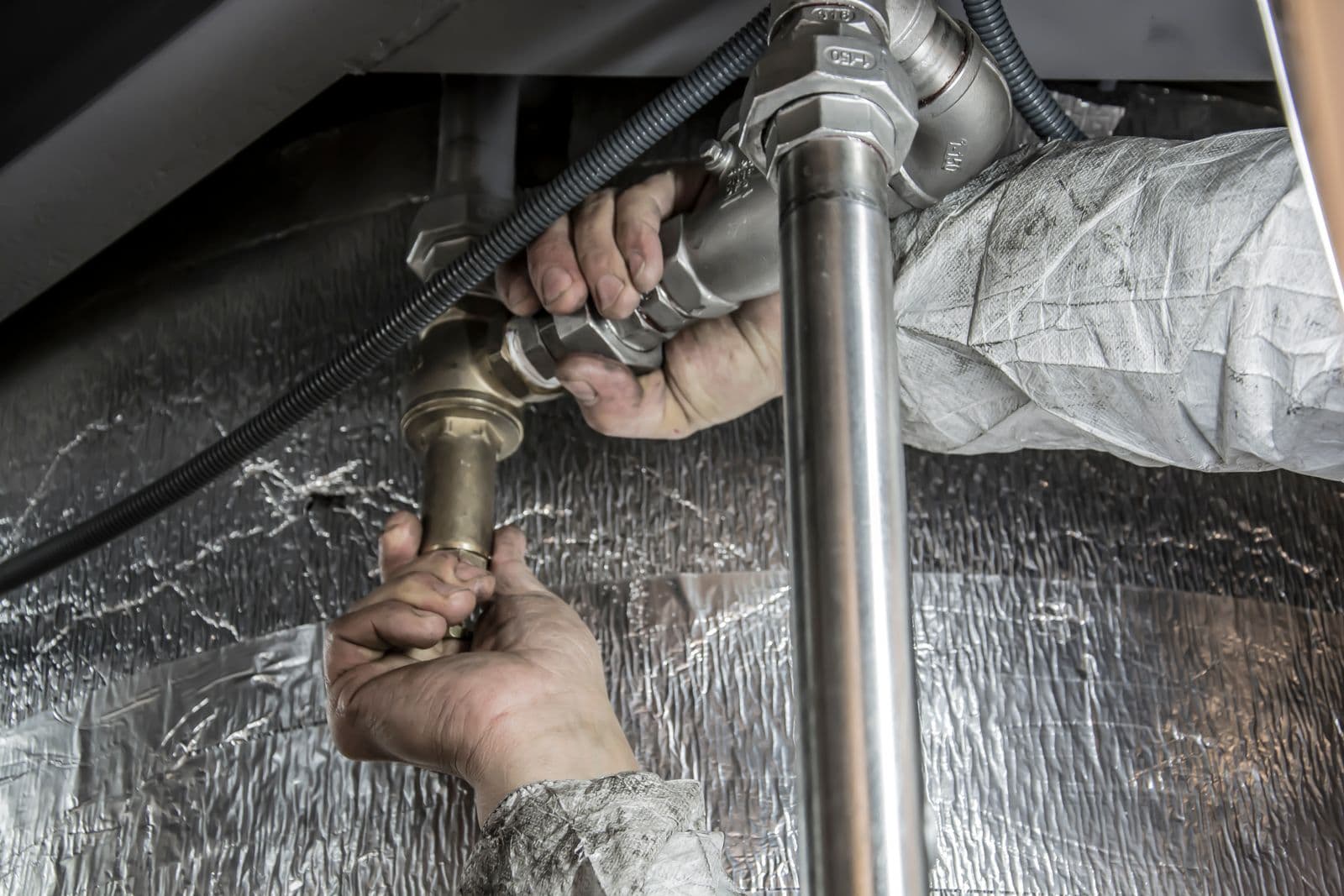


Columbia water, answered plainly
Where does Columbia get its water?+
From two surface sources: the Broad River via the Columbia Canal, and Lake Murray. The City treats each at separate plants.
Is Columbia tap water hard?+
No. The 2025 report lists average hardness of 36 ppm as CaCO₃ (about 2.1 grains per gallon), with a range of 20–47 ppm — soft water.
Is there lead in Columbia water?+
The lead 90th percentile in the report's 2023 sampling was 6 ppb against a 15 ppb action level. Lead can still come from plumbing inside a home; the City publishes a service-line inventory.
Does Columbia water have PFAS?+
Yes, at parts-per-trillion levels reported in the 2025 CCR's unregulated table. Canal-plant PFOS averaged about 7.6 ppt and PFOA about 5.8 ppt; Lake-plant averages were lower. Federal MCL compliance deadlines are separate from this report's sampling year.
Where do these figures come from?+
From the City of Columbia's 2025 Water Quality Report (PWS SC4010001) published at columbiascwater.net. Third-party aggregators are not used.
Related resources
Home water purification and treatment
The national service page behind this one.
Learn more →Greenville SC battery backup
Upstate South Carolina outage and rate context.
Learn more →Norfolk water quality
Hampton Roads water quality context.
Learn more →Richmond water quality
James River water north of the Carolinas.
Learn more →All home services
Water, battery, HVAC and solar under one licensed contractor of record.
Learn more →Get a free test at your tap
A licensed technician tests at your kitchen tap and tells you which Columbia Water findings apply to your house — PFAS, soft-water chemistry or lead from plumbing. No charge, no obligation, and coverage confirmed at your address first.
Get a free test