Allentown, Pennsylvania
Allentown, PA Water Quality
Two springs, two surface sources, free chlorine, and published PFAS results. Here is what LCA's 2025 Allentown Division report shows.
Crystal & Schantz springs · free chlorine · nitrate 4.96 ppm · PFOS 6.46 ppt · lead 90th pct 7 ppb.
The short answer
Allentown's water comes from Crystal Spring, Schantz Spring, the Little Lehigh Creek and the Lehigh River, treated by Lehigh County Authority.
The 2025 report lists no water-quality violations, free chlorine residual of 0.70–0.91 ppm, nitrate at 4.96 ppm, PFOS at 6.46 ppt and PFOA at 6.08 ppt under Pennsylvania limits, and lead at 7 ppb at the 90th percentile.
Get a free test
Tell us your Allentown address. We confirm coverage first, then schedule a licensed technician to test at your tap — no charge, no obligation.
What filtration does — and does not
Carbon, catalytic carbon and reverse osmosis solve different problems. Match the system to what Allentown's report actually shows.
Where Allentown water comes from
Two springs and two surface sources, treated at one LCA plant inside the city.
Crystal Spring and Schantz Spring
Two spring sources named in the 2025 Allentown Division report. Together with the surface sources they supply about 22.9 million gallons per day.
Little Lehigh Creek
One of two surface sources treated at LCA's full-scale filtration plant in Allentown.
Lehigh River
The second surface source. Chlorine is the primary disinfectant; fluoride is added.
What the 2025 Allentown report actually says
Limits are fixed. Results are system figures from LCA's Allentown Division 2025 report, not a reading at your tap.
Free chlorine 0.70–0.91 ppm
Chlorine residual in 2025 was 0.91 ppm at the high end of a 0.70–0.91 ppm range, under the 4 ppm MRDL.
Nitrate at 4.96 ppm
Nitrate measured 4.96 ppm (range 2.84–4.96) against a 10 ppm limit — higher than many city reports and relevant if you prepare infant formula.
PFOS 6.46 ppt and PFOA 6.08 ppt
PFOS was 6.46 ppt (ND–6.87) against Pennsylvania's 18 ppt MCL; PFOA was 6.08 ppt (2.29–6.08) against a 14 ppt MCL. Both passed.
Lead 7 ppb at the 90th percentile
2025 lead tap sampling: 90th percentile 7 ppb (ND–19), with 2 of 50 sites over the 15 ppb action level. Copper was 0.083 ppm at the 90th percentile.
Disinfection byproducts
TTHM running annual average 28.0 ppb (6.8–34.6, limit 80). Haloacetic acids averaged 23.4 ppb (ND–47.1, limit 60).
Tetrachloroethylene 2.9 ppb
Detected at 2.9 ppb against a 5 ppb limit. The report lists a pass and no water-quality violations in 2025.
Allentown next to Philadelphia and Pittsburgh
Philadelphia draws from the Delaware and Schuylkill rivers through a much larger PWD system. Pittsburgh is almost entirely Allegheny River water with an aggressive lead-line replacement program.
Allentown's mix of named springs plus two local surface sources, and its published PFOS/PFOA numbers under Pennsylvania MCLs, are the local differentiators — along with nitrate at 4.96 ppm.
Where these figures come from
Everything on this page traces to Lehigh County Authority's Allentown Division 2025 report.
Matching treatment to the finding
Allentown uses free chlorine; nitrate, PFAS and private plumbing are the usual reasons homeowners add under-sink treatment.
Carbon for chlorine taste
Allentown uses free chlorine. Standard activated carbon handles chlorine taste and smell.
RO if nitrate or VOCs are your concern
Nitrate at 4.96 ppm and the tetrachloroethylene detect are reasons some homeowners add under-sink RO for drinking water. Confirm with a tap test.
PFAS-certified drinking water filter
If PFOS or PFOA is your concern, choose a filter certified for those compounds. System averages are under Pennsylvania's MCLs.
Check LCA's lead inventory
LCA is identifying service-line materials. Use the lead-free map and call 610-437-7515 for a lead test if you are concerned.
How the free test works
A licensed technician tests at your kitchen tap, walks the plumbing, and tells you which of the findings above applies to your house and which does not. There is no charge and no obligation.
Seamless Home is the licensed contractor of record on the work that follows. Installation is performed by vetted installing partners engaged as our subcontractors, and the workmanship obligation stays with us. Coverage is confirmed per service area rather than promised as blanket availability.
What a water treatment job with us covers
Installation and replacement of whole-home and point-of-use treatment, specified against what your water actually contains.
Sediment filtration
Installation of the first stage that protects everything downstream of it, sized to the service line and the household draw.
Softening
Installation of ion-exchange softening where hardness is the problem, including the drain connection the plumbing code treats as indirect waste.
Carbon filtration
Installation of carbon stages for taste, odour and disinfection by-products, specified from your utility's own water quality report.
Reverse osmosis
Point-of-use installation at the kitchen sink where the target is dissolved solids rather than whole-home flow.
Disinfection
Installation of UV or equivalent treatment where the supply is a private well or is otherwise not continuously disinfected.
System replacement
Replacing equipment that has reached the end of its service life, including the discharge and air gap details an inspector looks at.
This is installation and replacement work, specified from a published water quality report or a test of your supply — not from a sales chart. Coverage is confirmed per service area rather than promised as blanket availability.
What the work actually looks like
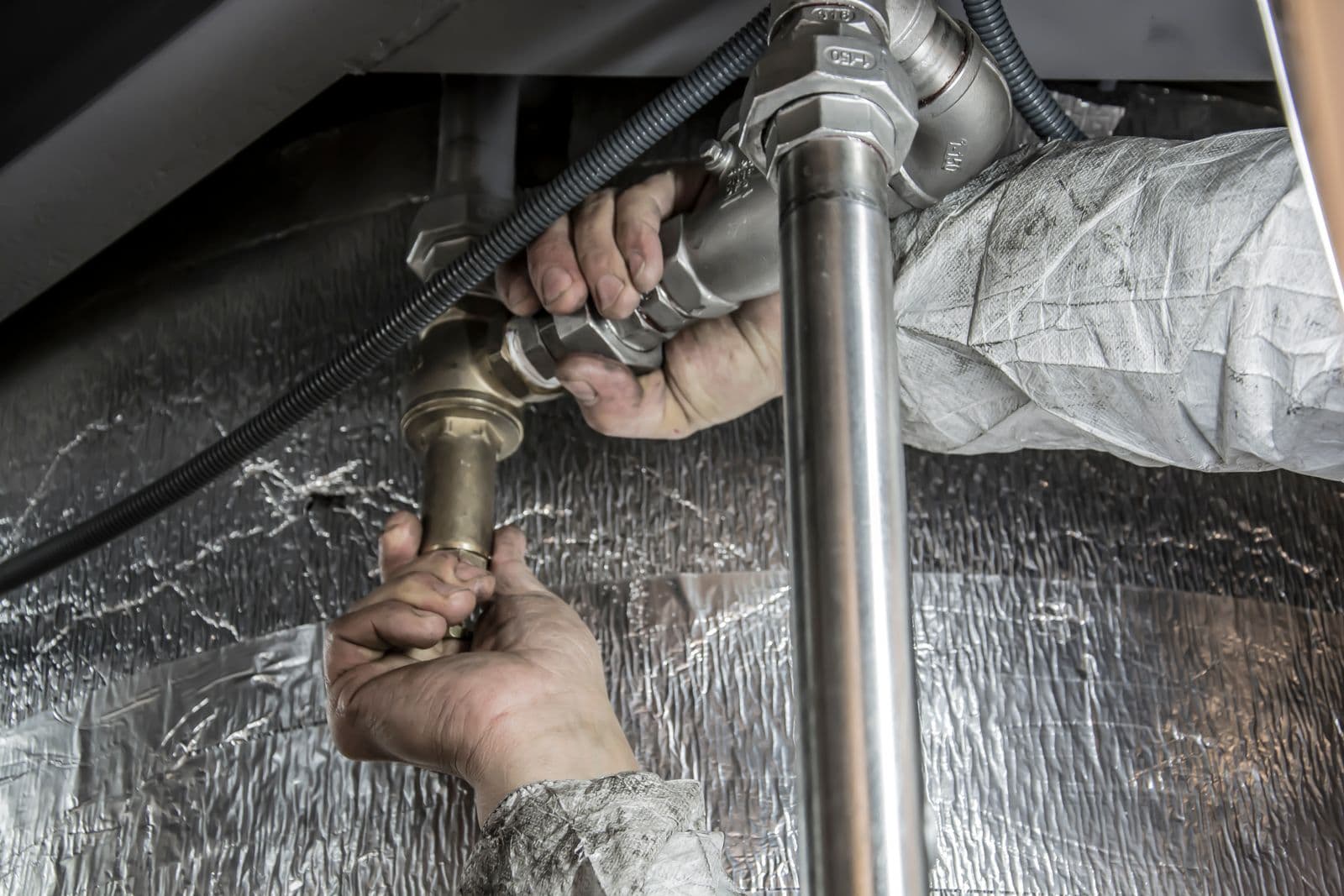
Treatment equipment is plumbing. Most of the job is the connection, the drain and the code detail behind it.


Allentown water, answered plainly
Who supplies Allentown's drinking water?+
Lehigh County Authority operates the Allentown Division (PWSID 3390024) for developed areas inside the city, serving about 33,668 residential and commercial properties plus wholesale customers.
Where does Allentown water come from?+
Crystal Spring, Schantz Spring, the Little Lehigh Creek and the Lehigh River — about 22.9 million gallons per day, treated at LCA's Allentown filtration plant.
Does Allentown use chlorine or chloramine?+
Chlorine. The 2025 report lists chlorine as the primary disinfectant, with residual 0.70–0.91 ppm.
Is nitrate high in Allentown water?+
Nitrate measured 4.96 ppm in 2025, under the 10 ppm federal limit. Ask your pediatrician if you prepare infant formula with tap water.
Were there any violations in 2025?+
LCA reports no water quality violations for the Allentown Division in 2025.
Where do these figures come from?+
From Lehigh County Authority's Allentown Division Annual Water Quality Report for 2025. Third-party aggregators are not used.
Related resources
Home water purification and treatment
The national service page behind this one.
Learn more →Philadelphia water quality
Delaware and Schuylkill rivers through PWD.
Learn more →Pittsburgh water quality
Allegheny River source and lead-line replacement.
Learn more →All home services
Water, battery, HVAC and solar under one licensed contractor of record.
Learn more →Get a free test at your tap
A licensed technician tests at your kitchen tap and tells you which findings apply to your house — chloramine, hardness or your own plumbing. No charge, no obligation, and coverage confirmed at your address first.
Get a free test