Williamsburg, Virginia
Home Battery Backup in Williamsburg
Williamsburg's new Design Review Guidelines allow no solar at all in AP-1, the district around the Colonial Williamsburg Historic Area. Backup there starts with a battery, not panels.
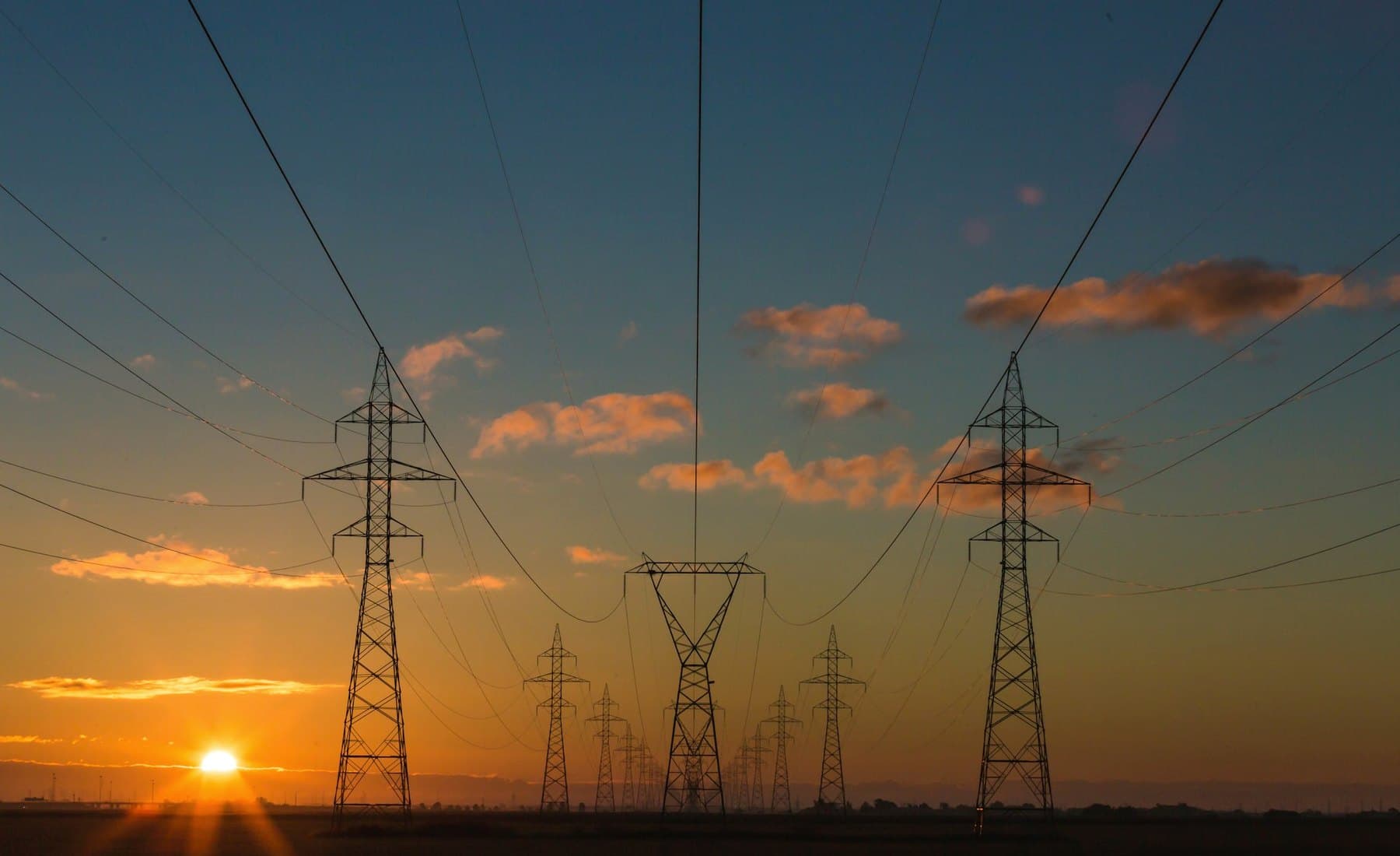
Guidelines adopted Oct 8, 2026 · no solar in AP-1 · equipment to side or rear yard, screened.
The short answer
Williamsburg is Dominion Energy territory. What sets it apart is the City's Design Review Guidelines, adopted by City Council on October 8, 2026: no solar facilities in AP-1, and only roof-mounted solar hidden from the Colonial Williamsburg Historic Area in AP-2 and AP-3.
The guidelines don't mention batteries. A grid-charged battery is the backup option that fits AP-1, and outdoor hardware should follow the mechanical-equipment rule: side or rear yard, screened. We confirm the review route with the Planning Department first.
Get a Free Estimate
Tell us your Williamsburg address and what must stay on in an outage. We check your district and confirm coverage before anyone sizes a battery.
What the design guidelines mean for backup power
From the City of Williamsburg's Design Review Guidelines, adopted October 8, 2026.
No solar at all in AP-1
The guidelines state plainly that no solar facilities are allowed in AP-1, which contains the Colonial Williamsburg Historic Area, Merchant's Square, the old William & Mary campus, Pollard Park and Chandler Court. Backup there means a battery without panels.
Roof-only, hidden solar in AP-2 and AP-3
In the surrounding preservation districts, solar must be on the roof, not visible from the Colonial Williamsburg Historic Area, no more than 12 inches above the roof surface and not visible above the roof line of the primary facade.
Equipment goes to the side or rear
Across the preservation districts, mechanical equipment should sit in a side or rear yard, screened with a fence (or, in AP-2 and AP-3, vegetation) stained or painted to match the house. We plan outdoor battery hardware with that in mind.
How we plan a battery in Williamsburg
Backup first, appearance always.
Battery-only backup
A battery can charge from the Dominion grid and carry chosen circuits in an outage, with no panels on the roof. That is the path that fits AP-1.
Choose the circuits that matter
Refrigeration, heating controls, internet, lights, sump pumps and medical devices. A critical load panel decides what the battery carries.
Indoor or screened outdoor siting
Where the equipment goes is a code question as well as a design one. We check the locations the residential code allows, then whether an outdoor spot can be screened as the guidelines describe.
Ask the city first
The guidelines don't mention batteries by name. We confirm with the Planning Department whether a proposed installation needs Architectural Review Board review before anything is ordered.
Williamsburg next to Newport News and Hampton
Our Newport News page covers Dominion's Off-Peak Plan, and Hampton covers the October 3, 2026 salt-contamination outage. Both apply on the Peninsula. In Williamsburg the extra question is appearance: where the equipment goes and who reviews it.
For indoor and outdoor locations the residential code allows, see the home battery siting checker.
Where these figures come from
Everything on this page traces to the City of Williamsburg.
- City of Williamsburg — Design Review Guidelines (adopted October 8, 2026, PDF) — AP-1, AP-2 and AP-3 solar rules and mechanical-equipment siting.
- City of Williamsburg — Design Review Guidelines page
- City of Williamsburg — Utilities — Dominion Energy as electric provider.
What a home battery job with us covers
Installation of storage and the backup circuits behind it, with the siting and utility paperwork handled.
Battery installation
Wall or floor-mounted storage installed to the listing and to the residential code sections that govern where it may go.
Backup and critical load panel
Deciding and wiring which circuits stay live, and which must never be on backup — the choice that defines what an outage feels like.
Integration with existing PV solar
Connecting storage to an array that is already on the roof, including whether the existing inverter supports it.
Transfer switch and disconnection
The equipment that separates the house from the grid during an outage, which is what makes backup legal as well as possible.
Siting to code
Location, clearances, separation and impact protection assessed against the adopted code before anything is mounted.
Permit, inspection and utility approval
The electrical permit, the inspection, and the utility's own approval step where storage touches the service.
This is installation work. No runtime, capacity or incentive figure is quoted before your loads and your utility are confirmed. Coverage is confirmed per service area rather than promised as blanket availability.
What the work actually looks like
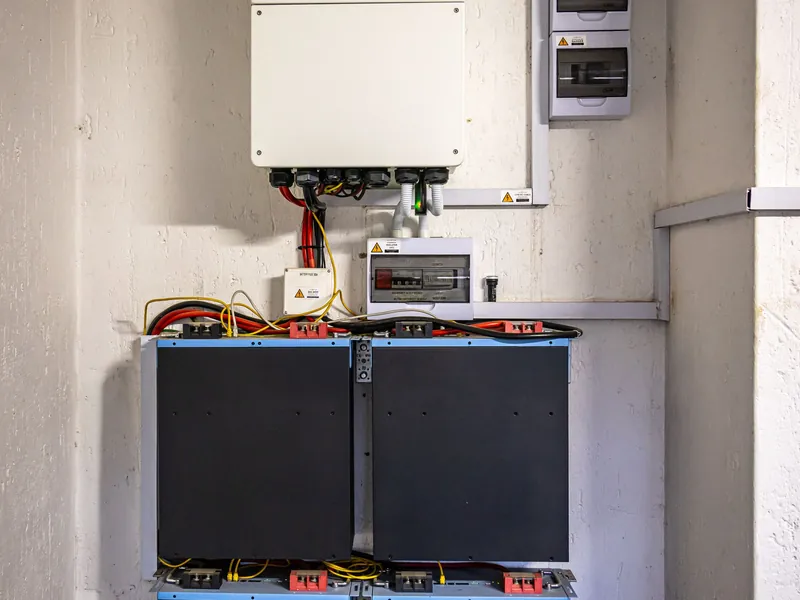
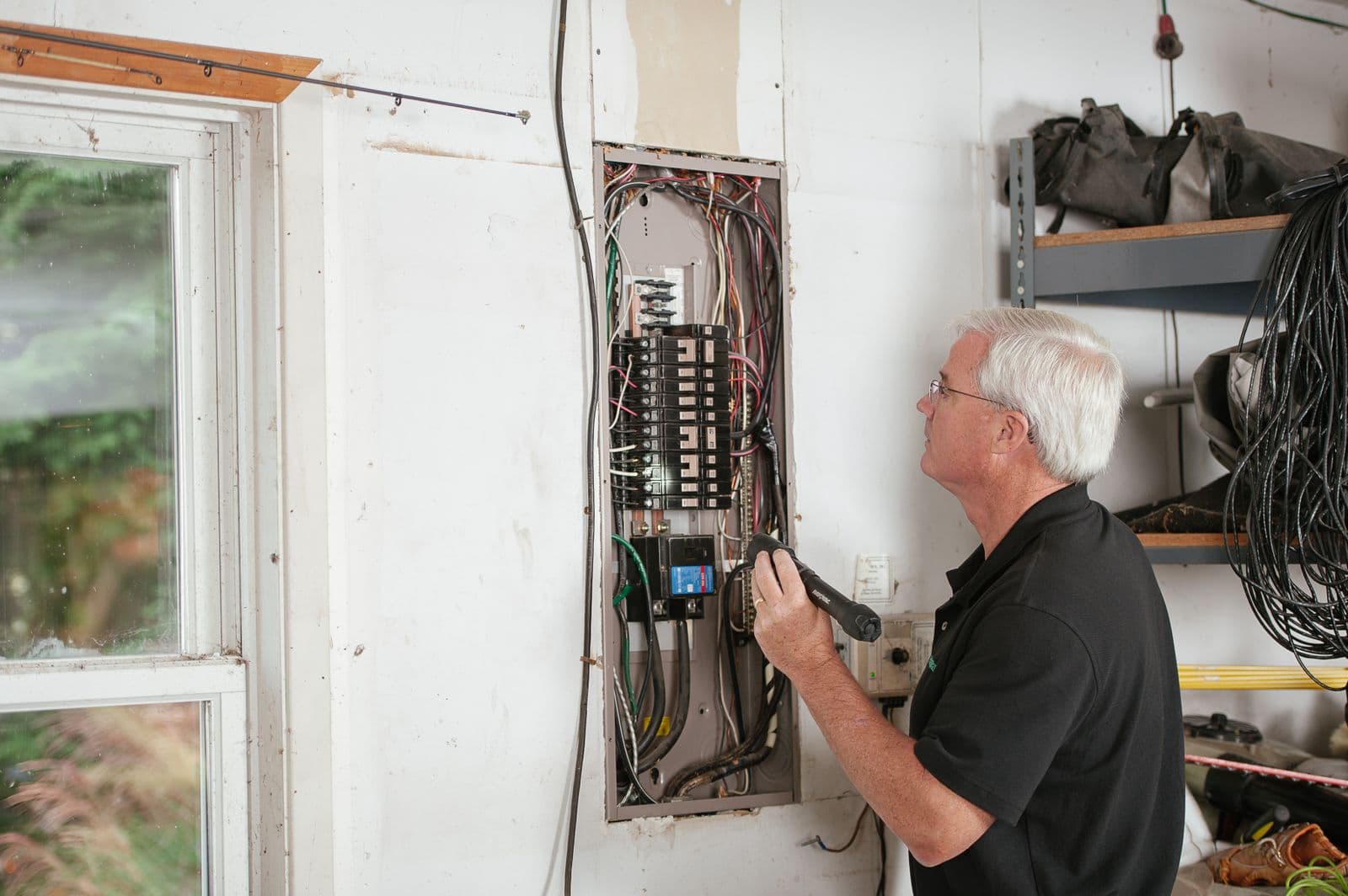
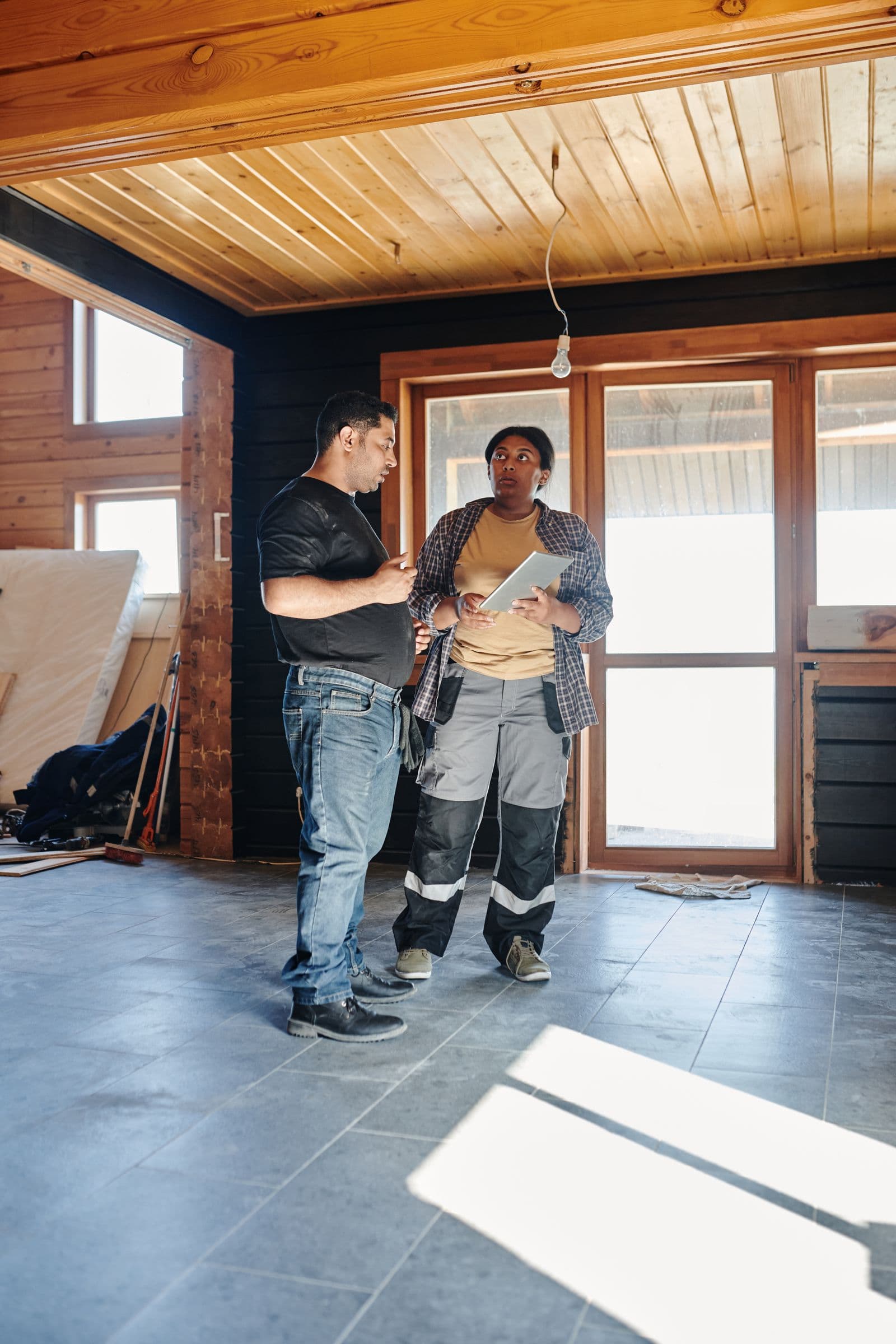
A battery job is an electrical job. The panel, the circuits and the disconnection are most of it.
Battery backup in Williamsburg, answered plainly
Who supplies electricity in Williamsburg?+
The City's utilities page lists Dominion Energy as the electric provider. Battery interconnection and any Dominion program enrollment go through Dominion.
Can I put solar panels on a house in Williamsburg's historic districts?+
Not in AP-1: the Design Review Guidelines adopted on October 8, 2026 say no solar facilities are allowed there. In AP-2 and AP-3, roof-mounted solar is allowed if it isn't visible from the Colonial Williamsburg Historic Area and meets height, color and placement guidance.
Can I have a home battery in AP-1?+
The guidelines restrict solar, not batteries, and don't mention batteries by name. A battery-only system that charges from the grid is the usual path. We treat any outdoor cabinet like mechanical equipment (side or rear yard, screened) and confirm the review route with the Planning Department first.
Which district is my house in?+
The City's Architectural Review Districts map shows the AP-1, AP-2 and AP-3 boundaries. We check your address against it, and with the Planning Department, before designing anything.
How long will a battery run my house?+
It depends on capacity and which circuits you put on it, so we don't quote a runtime before seeing the panel.
Who installs it, and who is responsible afterwards?+
Seamless Home is the licensed contractor of record on the work it runs. Installation is performed by vetted installing partners engaged as our subcontractors, so the permit, the inspection and any correction notice carry one name. Coverage is confirmed per service area rather than promised as blanket availability.
Related resources
Home battery backup
The national service page behind this one.
Learn more →Home battery backup in Newport News, VA
Dominion's Off-Peak Plan on the Peninsula.
Learn more →Home battery backup in Hampton, VA
The October 3, 2026 salt-contamination outage.
Learn more →Home battery backup in Norfolk, VA
Flood-height siting in Hampton Roads.
Learn more →Home battery siting checker
The locations IRC R328 permits, and the rooms it never does.
Learn more →All home services
Water, battery, HVAC and solar under one licensed contractor of record.
Learn more →Get a free battery estimate
We check your Williamsburg address against the preservation districts, confirm coverage, and size backup circuits before anyone promises bill savings. No obligation.
Get a Free Estimate