Tempe, Arizona
Home Battery Backup in Tempe
SRP or APS, depending on the street. On SRP's Conserve 6–9 p.m. solar plan, midday energy is the cheapest of the day, exported solar earns 1.87¢, and the evening peak is where a battery does its work.
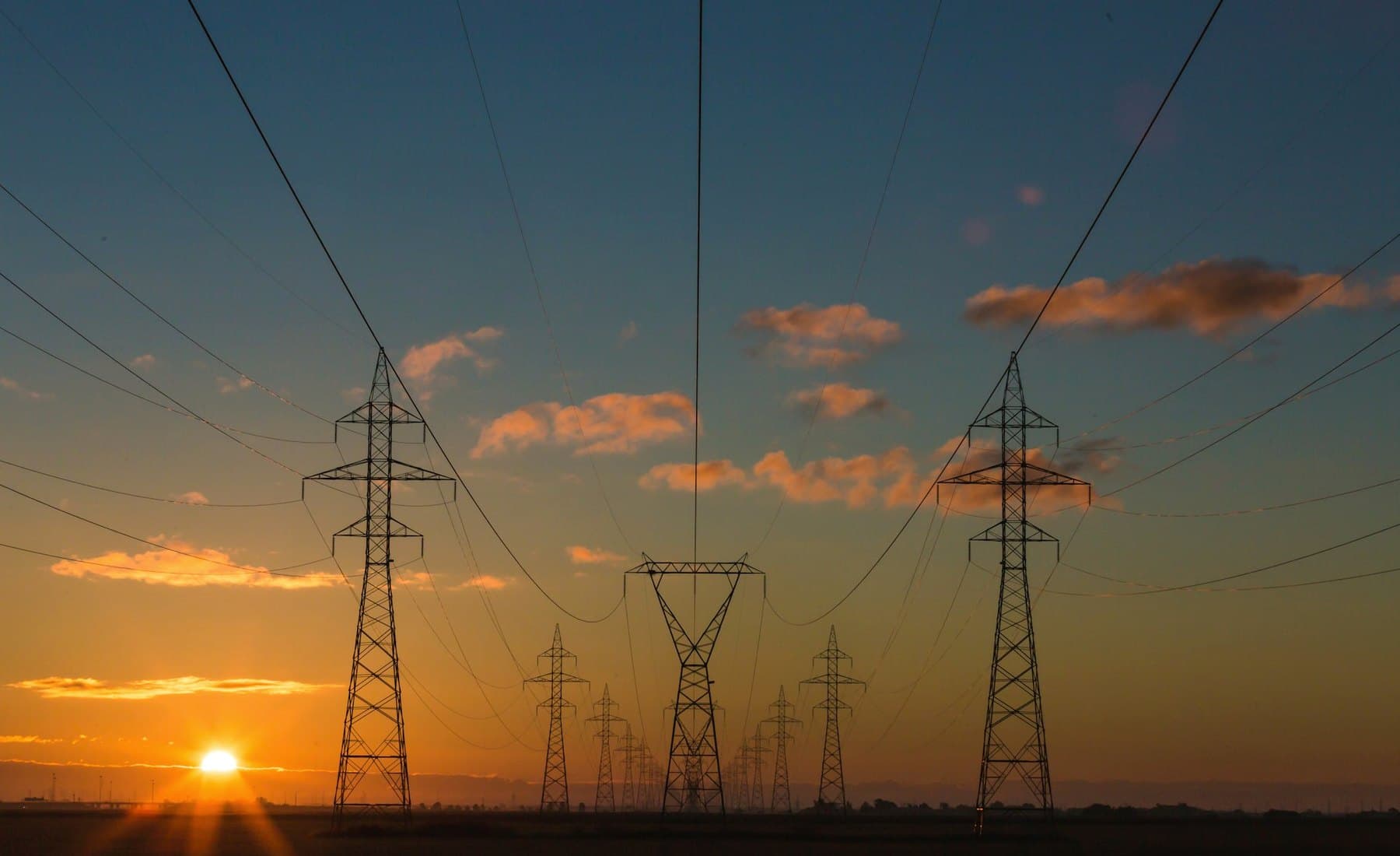
SRP Conserve 6–9 p.m. solar plan, July–August: 40.20¢ per kWh on-peak, 1.87¢ for exports.
The short answer
Tempe addresses can be served by SRP or APS. A grid-tied array produces nothing in an outage; a battery with a transfer switch keeps selected circuits up through a monsoon outage.
On SRP's Conserve 6–9 p.m. and Save plan for solar, on-peak is 6–9 p.m. weekdays all year, super off-peak is 8 a.m.–3 p.m., and exported solar is credited at 1.87¢ per kWh. That makes stored energy worth more than exported energy in the evening. We size to a critical load panel, set the outage reserve deliberately and confirm the current plan in writing for your account.
Find out what a battery would run in your house
Tell us your Tempe address, whether you are on SRP or APS, your price plan and whether you already have solar. We confirm coverage first, then size to a critical load panel — and handle the interconnection paperwork rather than leaving it with you.
Three things that are specific to here
Who supplies the street, and how SRP's evening-peak solar plan is written.
Two utilities in one city
The City of Tempe's new-resident directory lists both Arizona Public Service and Salt River Project for electricity. The plan on this page is SRP's; an APS address works under different rules, so the bill comes first.
The expensive hours start after sunset
On SRP's Conserve 6–9 p.m. and Save plan for solar customers, on-peak is 6–9 p.m. on weekdays all year. In a Tempe summer that window starts when panels are fading and the air conditioning is still working hardest.
Midday is the cheapest time — even to buy
The same plan's super off-peak runs 8 a.m. to 3 p.m. every day. Solar produces most when grid energy is cheapest, so the value of a kilowatt-hour moves to whatever can be stored and used after 6 p.m.
What a Tempe battery actually does
An outage produces the critical-load list. The price plan decides what the battery does on an ordinary July weekday.
What SRP pays for exported solar
On this plan, energy you send to the grid is measured instantly and credited — it is not net metering. As of the May 2026 billing cycle the export rate is 1.87¢ per kWh, recalculated each May. SRP's older Time-of-Use Export and EV Export plans credit a fixed 3.45¢.
What it costs to buy at 6 p.m. in July
In SRP's standard July–August prices for this plan, on-peak energy is 40.20¢ per kWh, off-peak 12.76¢ and super off-peak 6.61¢. From November through April it is 15.08¢, 13.55¢ and 4.32¢. These exclude the temporary reduction SRP applied to May–October 2026 bills and the monthly service charge.
The battery's job: move midday to evening
Charging from solar or super off-peak energy and discharging from 6 to 9 p.m. is the pattern this plan rewards. How much of the evening a battery covers depends on its capacity, the house's load and the outage reserve we set at commissioning.
Outage reserve still matters
Monsoon storms and summer heat are why Phoenix-area households ask about backup at all. Energy held for an outage is energy not used against the evening peak — a trade-off we set deliberately rather than leave on a default.
The price plan is part of the design, not the brochure
SRP offers several solar plans, and each reads a battery differently. In Chandler we cover the Customer Generation plan's demand-based peak; in Gilbert the SRP Battery Partner program; in Mesa the East Valley loads that should and should not be on a backed-up panel. For an APS address, Scottsdale covers APS Storage Rewards.
A battery on SRP's grid is an interconnection like solar. Adding a battery to an existing array is its own application, and the home battery siting checker walks the locations the residential code permits — which matters on a west wall in a Tempe summer. The state licenses Seamless Home works under are on the licenses page. If the house also needs water treatment, the Tempe water quality page covers the City's report.
Where these facts come from
- SRP — Conserve 6-9 p.m. and Save (Solar) — on-peak, off-peak and super off-peak hours, how exports are credited, the export rate as of the May 2026 billing cycle, and the temporary May–October 2026 reduction.
- SRP — Compare solar price plans — standard per-kWh prices by season and the fixed 3.45¢ credit on the export plans.
- City of Tempe — New Community Member Directory — APS and SRP both listed for electricity.
What a home battery job with us covers
Installation of storage and the backup circuits behind it, with the siting and utility paperwork handled.
Battery installation
Wall or floor-mounted storage installed to the listing and to the residential code sections that govern where it may go.
Backup and critical load panel
Deciding and wiring which circuits stay live, and which must never be on backup — the choice that defines what an outage feels like.
Integration with existing PV solar
Connecting storage to an array that is already on the roof, including whether the existing inverter supports it.
Transfer switch and disconnection
The equipment that separates the house from the grid during an outage, which is what makes backup legal as well as possible.
Siting to code
Location, clearances, separation and impact protection assessed against the adopted code before anything is mounted.
Permit, inspection and utility approval
The electrical permit, the inspection, and the utility's own approval step where storage touches the service.
This is installation work. No runtime, capacity or incentive figure is quoted before your loads and your utility are confirmed. Coverage is confirmed per service area rather than promised as blanket availability.
What the work actually looks like
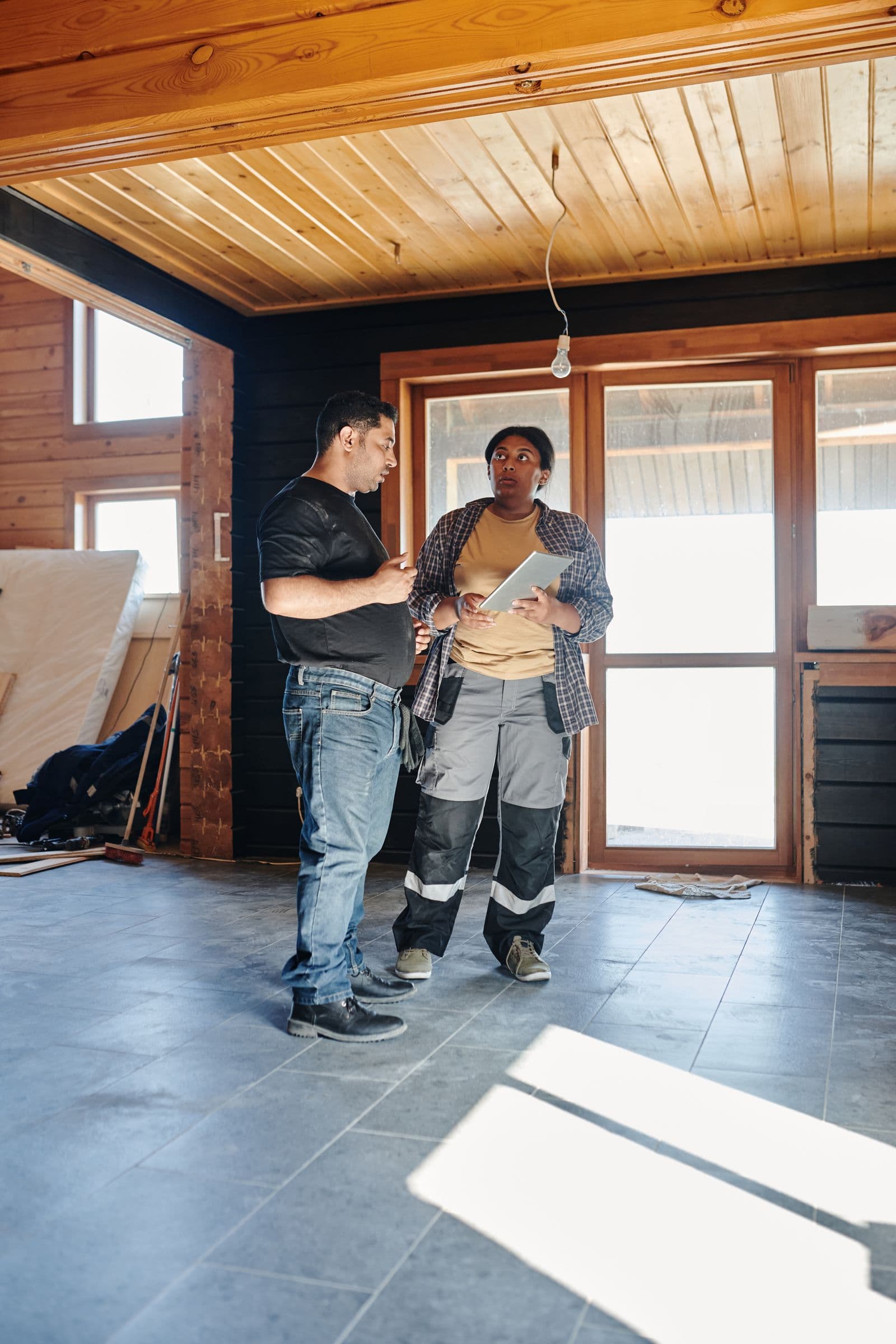
A battery job is an electrical job. The panel, the circuits and the disconnection are most of it.
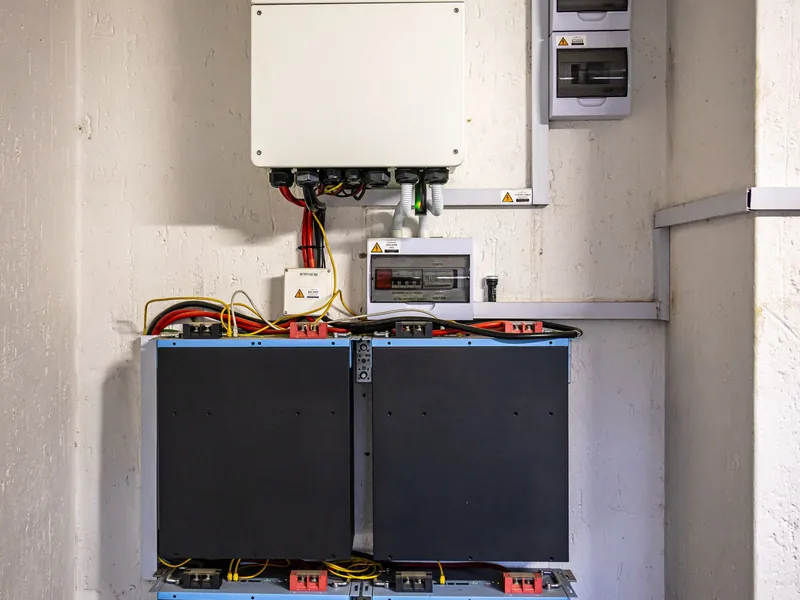
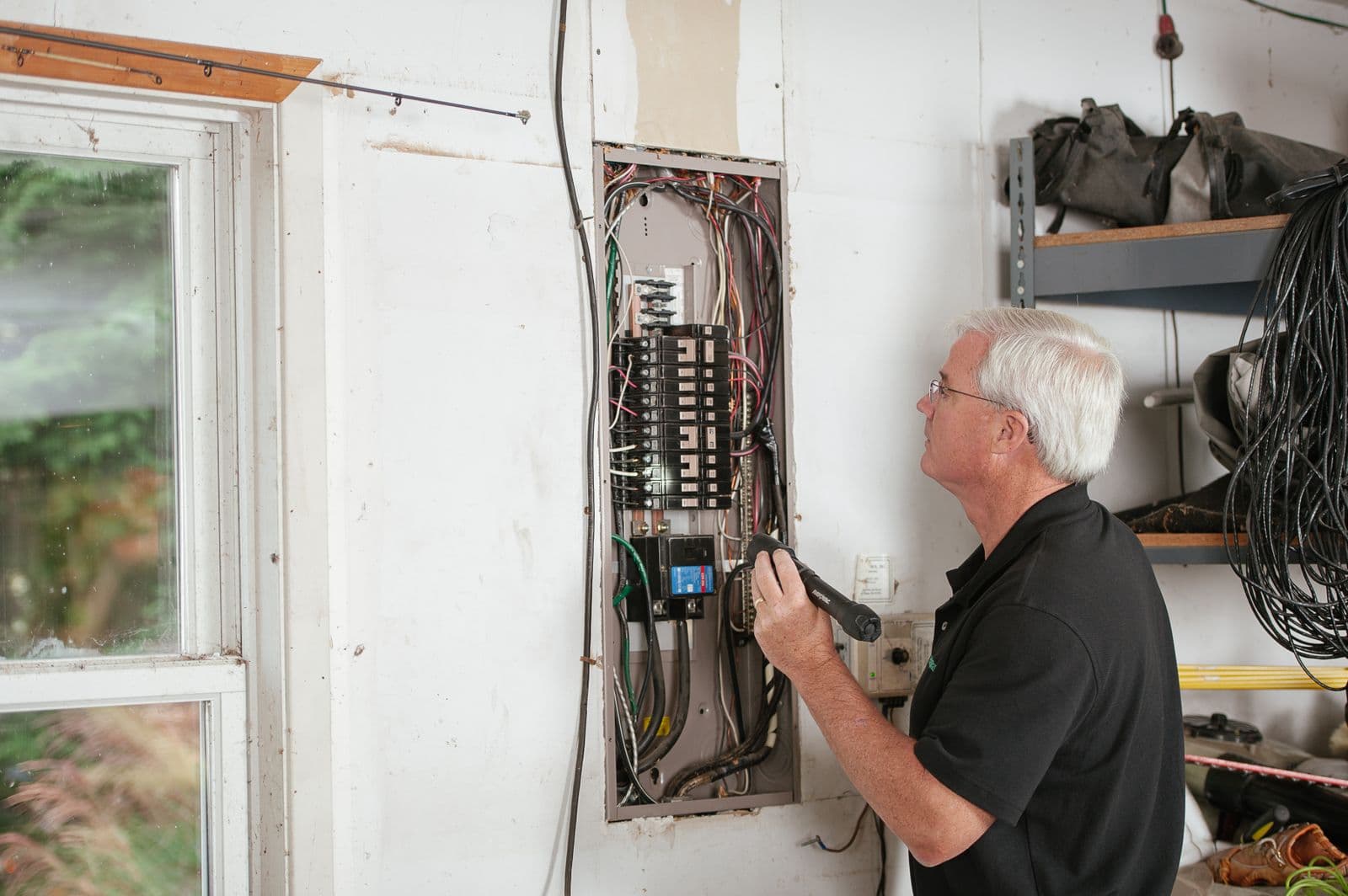
Battery backup in Tempe, answered plainly
Who is the electric utility in Tempe?+
It depends on the address. The City of Tempe's new-resident directory lists both Arizona Public Service (APS) and Salt River Project (SRP) under electricity. Your bill is the final word, and the rules on this page are SRP's.
What is SRP's Conserve 6–9 p.m. and Save plan for solar?+
A time-of-use plan for homes with rooftop solar. On-peak is 6–9 p.m. Monday through Friday all year, excluding six observed holidays. Super off-peak is 8 a.m. to 3 p.m. every day, and all other hours are off-peak. Exported energy is credited at an export rate rather than netted.
How much does SRP pay for solar I send back?+
On the Conserve 6–9 p.m. solar plan, SRP's page lists an export rate of 1.87¢ per kWh as of the May 2026 billing cycle, recalculated every May. The older Time-of-Use Export and Electric Vehicle Export plans credit a fixed 3.45¢ per kWh. Either way, it is far below what the same plan charges for on-peak energy.
Does a battery make sense on this plan?+
That is a site question, not a brochure one. The plan's structure — cheap midday, low export credit, expensive 6–9 p.m. — is the pattern a battery is built for, but whether it pays depends on your usage, your array and your equipment cost. We do not quote a savings figure before seeing the house.
What about SRP's other battery program?+
SRP also runs the Battery Partner pilot, which rewards the capacity a battery provides above its own baseline; our Gilbert page covers how that is measured. Which plan and program combination fits your house is confirmed with SRP in writing for your account.
Who installs it, and who is responsible afterwards?+
Seamless Home is the licensed contractor of record on the work it runs. Installation is performed by vetted installing partners engaged as our subcontractors, so the permit, the inspection and any correction notice carry one name. Coverage is confirmed per service area rather than promised as blanket availability.
Related resources
Home battery backup installation
The national service page: essential-circuit, whole-home and managed-load backup compared.
Learn more →Home battery backup in Chandler, AZ
SRP's Customer Generation plan and its demand peak.
Learn more →Home battery backup in Gilbert, AZ
SRP Battery Partner and how it is measured.
Learn more →Home battery backup in Mesa, AZ
East Valley loads and the backed-up panel.
Learn more →Tempe water quality
The City of Tempe's report — the other local page.
Learn more →All home services
Battery backup, water treatment, HVAC and solar under one licensed contractor of record.
Learn more →Find out what a battery would actually run in your house
A panel-level look at your service, your existing solar, your SRP or APS price plan and the circuits you want kept up through a monsoon outage — at no cost, and with no savings, runtime or incentive figure promised before anyone has seen the house.
Get a Free Estimate