Buffalo, New York
Buffalo Water Quality
Buffalo drinks Lake Erie water drawn just above the Niagara River. The 2025 report shows lead from not detected to 7.13 ppb in homes tested, PFOS around 2 ppt, and a shortfall in required lead sampling early in the year.
Lake Erie · lead ND–7.13 ppb (273 homes) · PFOS avg 2.07 ppt · TTHM RAA 35.9 ppb · 82 of 100 lead samples, Jan–Jun 2025.
The short answer
Buffalo's tap water comes from Lake Erie, treated by Buffalo Water (managed by Veolia) at the Colonel Francis G. Ward plant. The 2025 report says the water met all State drinking water health standards.
Lead results across 273 homes ranged from not detected to 7.13 ppb, under the 15 ppb action level. The report also lists a monitoring violation: only 82 of 100 required lead and copper samples were submitted for January–June 2025.
Get a free test
Tell us your Buffalo address. We confirm coverage first, then schedule a licensed technician to test at your tap — no charge, no obligation.
What the 2025 Buffalo report shows
Figures below are system-level results from Buffalo Water's Annual Drinking Water Quality Report for 2025. A later report supersedes them.
Lead: not detected to 7.13 ppb
Buffalo Water tested 273 homes during 2025. Lead results ranged from not detected to 7.13 ppb, against a 15 ppb action level. Copper ranged from not detected to 3.8 ppb, far under its 1,300 ppb action level. Lead comes from service lines and household plumbing, not the lake.
Lead sampling shortfall in early 2025
The report lists a Tier III monitoring violation: during the January–June 2025 lead and copper period, 82 of the 100 required samples were submitted. Buffalo Water also certified one customer-notification requirement two days late. These are sampling and paperwork violations, not a reported lead exceedance.
PFOS about 2 ppt
PFOS was detected at 1.34 to 3.56 parts per trillion, averaging 2.07 ppt, against the 10 ppt limit shown in the report. The report lists PFOA among the compounds it tests for; it does not appear in the detected table.
Disinfection byproducts
Total trihalomethanes had a running annual average of 35.9 ppb, with individual results from 15 to 67 ppb, against an 80 ppb limit. Haloacetic acid averages at the Stage 2 sampling sites ran roughly 6 to 22 ppb.
Moderately hard water
Calcium hardness averaged 87 mg/L as CaCO₃ at the plant and 89 mg/L in the distribution system (80–100), about 5 grains per gallon. That figure is calcium hardness only; total hardness, which includes magnesium, is not listed.
Low sodium
Sodium averaged 10.3 mg/L at the entry point, below the 20 mg/L level the report flags for people on severely restricted sodium diets.
How the water is produced
One Great Lake, one tunnel, one treatment plant.
Lake Erie, at the head of the Niagara River
Buffalo's intake sits in the northeastern end of Lake Erie, just upstream of the Niagara River, in an area the report calls the Emerald Channel. Water enters through 12 sluice gates and runs by gravity down a 12-foot, mile-long tunnel under the lake bed.
Colonel Francis G. Ward plant
Treatment uses a poly-aluminum chloride coagulant, flocculation and settling basins, 40 sand and anthracite filters and a 28-million-gallon clear well. A phosphate corrosion inhibitor and fluoride are added before the water enters the city's pipes.
Buffalo Water, run by Veolia
Buffalo Water is managed by Veolia NA. In 2025 it treated more than 23.4 billion gallons, averaging over 64 million gallons a day, for about 278,349 people through roughly 825 miles of water main and 80,000 service connections.
Buffalo next to other lake cities
Along the same lake, Erie also draws Lake Erie water under a different utility and report. Elsewhere in upstate New York, Rochester relies mainly on protected Finger Lakes reservoirs, while New York City draws from the Catskill and Delaware systems.
Where these figures come from
Everything on this page traces to Buffalo Water's Annual Drinking Water Quality Report for Calendar Year 2025 (PWS ID NY1400422).
- Buffalo Water — water quality reports — the 2025 report and earlier years.
- Buffalo Water — lead service line inventory and lead testing results.
Matching treatment to the finding
Older plumbing drives most Buffalo decisions; the lake water itself tested within limits.
Lead filter for older plumbing
With results up to 7.13 ppb and service lines owned by the property owner, a lead-reduction filter at the kitchen tap is the usual first step in older Buffalo homes. Check the service line inventory on buffalowater.org first.
Carbon for taste and byproducts
Point-of-use activated carbon can reduce chlorine taste and disinfection byproducts. It is a preference, not something the report says you need.
Softening is optional
At about 5 grains per gallon of calcium hardness, Buffalo water is moderately hard. Some households soften to cut scale on fixtures and water heaters; the report does not call for it.
Free lead test from the city
The report says you can call the City of Buffalo 3-1-1 line to have your water tested for lead by Buffalo Water. Our free test covers more than lead and tells you which of the items above apply at your tap.
How the free test works
A licensed technician tests at your kitchen tap, walks the plumbing, and tells you which of the findings above applies to your house and which does not. There is no charge and no obligation.
Seamless Home is the licensed contractor of record on the work that follows. Installation is performed by vetted installing partners engaged as our subcontractors, and the workmanship obligation stays with us. Coverage is confirmed per service area rather than promised as blanket availability.
What a water treatment job with us covers
Installation and replacement of whole-home and point-of-use treatment, specified against what your water actually contains.
Sediment filtration
Installation of the first stage that protects everything downstream of it, sized to the service line and the household draw.
Softening
Installation of ion-exchange softening where hardness is the problem, including the drain connection the plumbing code treats as indirect waste.
Carbon filtration
Installation of carbon stages for taste, odour and disinfection by-products, specified from your utility's own water quality report.
Reverse osmosis
Point-of-use installation at the kitchen sink where the target is dissolved solids rather than whole-home flow.
Disinfection
Installation of UV or equivalent treatment where the supply is a private well or is otherwise not continuously disinfected.
System replacement
Replacing equipment that has reached the end of its service life, including the discharge and air gap details an inspector looks at.
This is installation and replacement work, specified from a published water quality report or a test of your supply — not from a sales chart. Coverage is confirmed per service area rather than promised as blanket availability.
What the work actually looks like
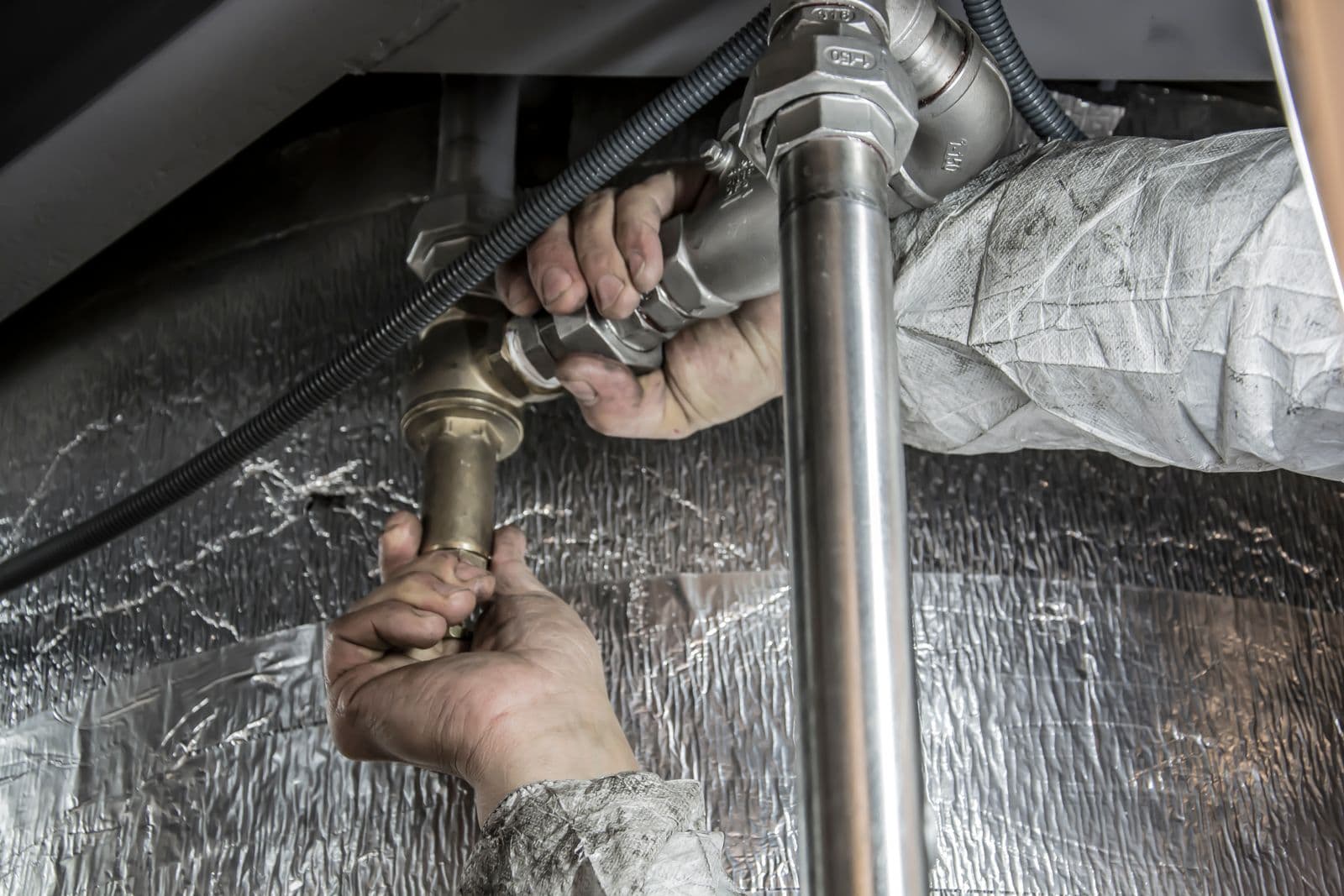
Treatment equipment is plumbing. Most of the job is the connection, the drain and the code detail behind it.


Buffalo water, answered plainly
Where does Buffalo get its water?+
From Lake Erie. The intake is in the northeastern part of the lake, just upstream of the Niagara River, and the water is treated at the Colonel Francis G. Ward Pumping Station and treatment plant.
Is there lead in Buffalo tap water?+
Lead was found in some homes. Across the 273 homes Buffalo Water tested in 2025, results ranged from not detected to 7.13 ppb, under the 15 ppb action level. Lead comes from service lines and plumbing, and the service line from the main to the building is the property owner's.
Did Buffalo Water have any violations in 2025?+
The report lists no violations of contaminant limits. It does list a Tier III monitoring violation: 82 of the 100 required lead and copper samples were submitted for January–June 2025, and one notification requirement was certified two days late.
Is Buffalo water hard?+
Moderately. The report lists calcium hardness averaging 87 to 89 mg/L as CaCO₃, about 5 grains per gallon. It does not list total hardness.
Where do these figures come from?+
From Buffalo Water's Annual Drinking Water Quality Report for Calendar Year 2025, published on buffalowater.org. Third-party aggregators are not used.
Related resources
Home water purification and treatment
The national service page behind this one.
Learn more →Rochester water quality
Hemlock and Canadice lakes, 90 minutes east.
Learn more →Erie water quality
Lake Erie supply across the state line.
Learn more →New York City water quality
Catskill and Delaware reservoir water downstate.
Learn more →All home services
Water, battery, HVAC and solar under one licensed contractor of record.
Learn more →Get a free test at your tap
A licensed technician tests at your kitchen tap and tells you which Buffalo Water findings apply to your house — lead from plumbing, hardness, or disinfection byproducts. No charge, no obligation, and coverage confirmed at your address first.
Get a free test