Durham, North Carolina
Home Battery Backup in Durham
Duke Energy Progress' standard residential rate is a flat 12.623¢ per kWh. PowerPair can cut the cost of solar plus storage, and storage is what keeps power on in an outage.
Schedule RES: $14/mo + 12.623¢ · ~$177 at 1,000 kWh · PowerPair up to $9,000 · NM → NMB Dec 31, 2026.
The short answer
Durham is mostly served by Duke Energy Progress. On standard Schedule RES, the NC Public Staff lists a $14.00 monthly basic charge and 12.623¢ per kWh, with an illustrative 1,000 kWh bill around $177 as of September 1, 2026.
Duke's PowerPair pilot can pay up to $9,000 toward a qualifying solar-plus-battery system. Legacy net metering moves to Rider NMB on December 31, 2026, and outage power still needs storage plus a transfer switch.
Get a Free Estimate
Tell us your Durham address, whether you have solar and what must stay on in an outage. We confirm coverage before anyone sizes a battery.
Duke Energy Progress rates and incentives in Durham
From the NC Public Staff rates page and Duke Energy's PowerPair announcement.
Schedule RES: $14 plus 12.623¢
On Duke Energy Progress' standard residential Schedule RES, the Public Staff lists a $14.00 monthly basic customer charge and a $0.12623 per kWh base energy charge, as of September 1, 2026, before other riders.
About $177 at 1,000 kWh
The Public Staff's illustrative DEP residential bill at 1,000 kWh is $176.85 in summer and $174.85 in winter under Schedule RES as of September 1, 2026.
PowerPair: up to $9,000
Duke Energy's PowerPair pilot offers a one-time incentive of up to $9,000 for qualifying residential solar-plus-battery systems in its Duke Energy Progress North Carolina territory, with Trade Ally installation required.
Where a battery fits in Durham
Outage operation, the 2026 net metering change and PowerPair program rules.
Backup is what solar alone cannot do
North Carolina's Public Staff notes that the only way a net-metered system supplies power during an outage is with energy storage and a transfer switch. Grid-tied solar shuts off when the grid does.
Legacy net metering ends December 31, 2026
Rider NM is closed to new customers. Existing NM customers transition automatically to Rider NMB on December 31, 2026. Rider RSC requires a time-of-use critical-peak schedule.
PowerPair pairs the incentive with control
Duke's PowerPair announcement ties the NMB enrollment path to Power Manager / EnergyWise Home battery control, with ongoing bill credits for meeting program requirements.
Choose the circuits that matter
Refrigeration, well or sump pump, heat-pump controls, internet, lights and medical devices. A critical load panel decides what the battery carries in an outage.
Durham next to Raleigh and Charlotte
Where these figures come from
RES bill examples and net metering rules trace to the NC Public Staff; PowerPair dollars to Duke Energy's own release.
- NC Utilities Commission Public Staff — Electric Section rates — Duke Energy Progress Schedule RES elements and illustrative bills as of September 1, 2026.
- NC Public Staff — Net Metering — Rider NM / NMB / RSC and outage operation with storage.
- Duke Energy — PowerPair pilot announcement — up to $9,000 incentive in DEC and DEP North Carolina.
What a home battery job with us covers
Installation of storage and the backup circuits behind it, with the siting and utility paperwork handled.
Battery installation
Wall or floor-mounted storage installed to the listing and to the residential code sections that govern where it may go.
Backup and critical load panel
Deciding and wiring which circuits stay live, and which must never be on backup — the choice that defines what an outage feels like.
Integration with existing PV solar
Connecting storage to an array that is already on the roof, including whether the existing inverter supports it.
Transfer switch and disconnection
The equipment that separates the house from the grid during an outage, which is what makes backup legal as well as possible.
Siting to code
Location, clearances, separation and impact protection assessed against the adopted code before anything is mounted.
Permit, inspection and utility approval
The electrical permit, the inspection, and the utility's own approval step where storage touches the service.
This is installation work. No runtime, capacity or incentive figure is quoted before your loads and your utility are confirmed. Coverage is confirmed per service area rather than promised as blanket availability.
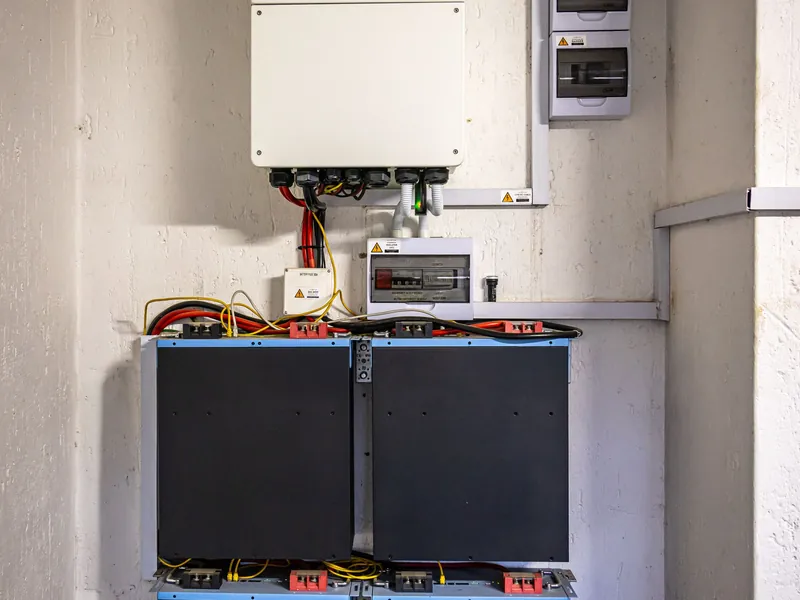
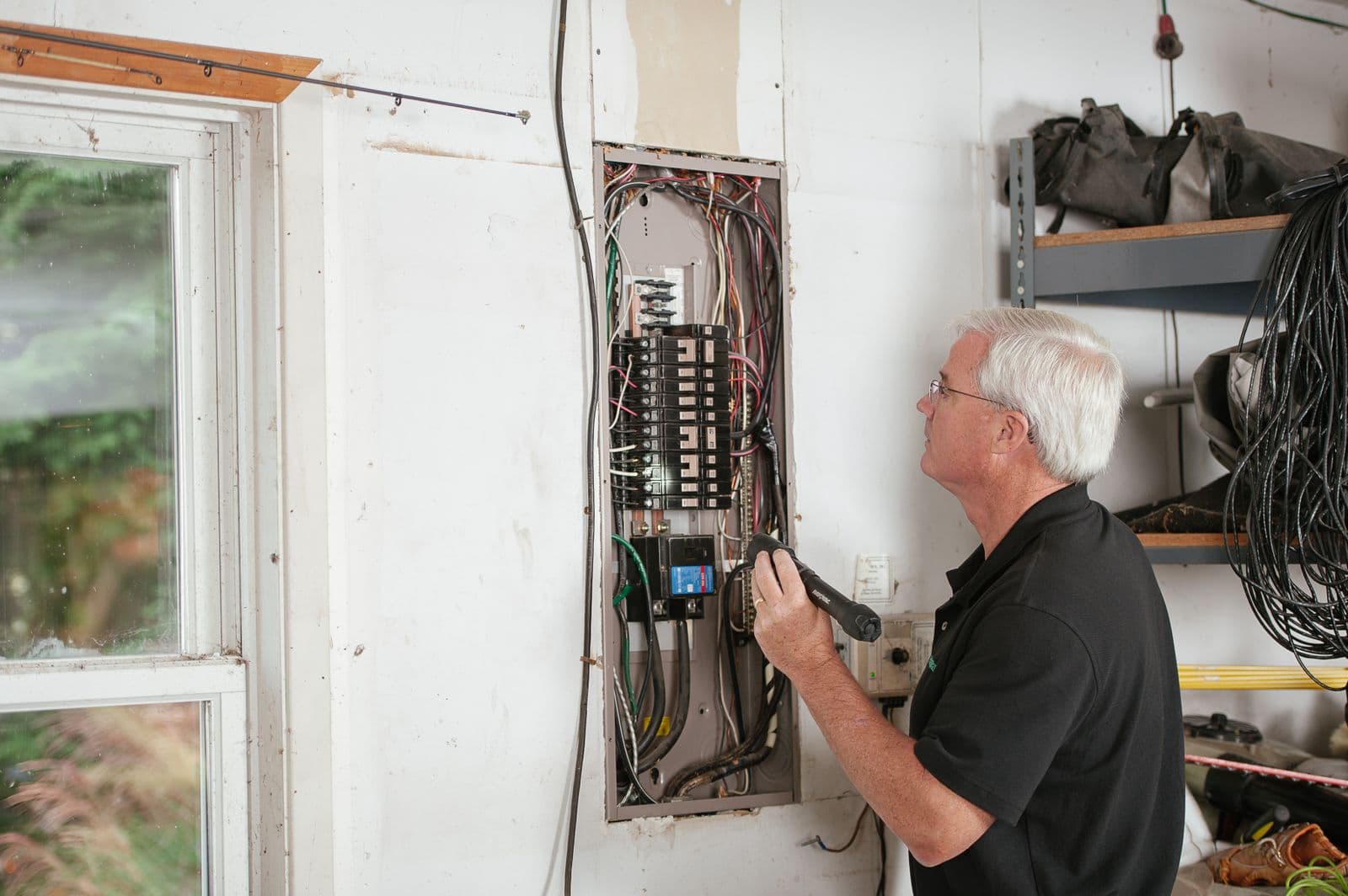
What the work actually looks like
A battery job is an electrical job. The panel, the circuits and the disconnection are most of it.

Battery backup in Durham, answered plainly
Who is the electric utility in Durham?+
Duke Energy Progress for most of Durham. It is a different Duke operating company from Duke Energy Carolinas, which serves Charlotte.
What does Schedule RES cost?+
Per the NC Public Staff's rates page, as of September 1, 2026 Schedule RES has a $14.00 monthly basic customer charge and a $0.12623 per kWh base energy charge. An illustrative 1,000 kWh bill is $176.85 in summer and $174.85 in winter.
What is PowerPair?+
A Duke Energy pilot that can pay a one-time incentive of up to $9,000 toward a qualifying residential solar-plus-battery system in Duke Energy Progress and Duke Energy Carolinas North Carolina territories. Participants must use a Duke Energy Trade Ally.
What happens to net metering at the end of 2026?+
Residential customers still on legacy Rider NM move automatically to Rider NMB on December 31, 2026. New customers already use Rider RSC or NMB; RSC requires a TOU-CPP rate schedule.
Will my solar keep the lights on in an outage?+
Not by itself. The NC Public Staff states that energy storage and a transfer switch are what let a net-metered system supply power during an outage.
How long will a battery run my house?+
It depends on capacity and which circuits you put on it, so we don't quote a runtime before seeing the panel.
Who installs it, and who is responsible afterwards?+
Seamless Home is the licensed contractor of record on the work it runs. Installation is performed by vetted installing partners engaged as our subcontractors, so the permit, the inspection and any correction notice carry one name. Coverage is confirmed per service area rather than promised as blanket availability.
Related resources
Home battery backup
The national service page behind this one.
Learn more →Home battery backup in Raleigh, NC
Duke Energy Progress R-TOU-CPP rates and the 2026 net metering change.
Learn more →Home battery backup in Charlotte, NC
Duke Energy Carolinas RSTC rates and Solar Choice rules.
Learn more →Home battery backup in Greenville, SC
Duke Energy Carolinas on the South Carolina side, after Helene.
Learn more →All home services
Water, battery, HVAC and solar under one licensed contractor of record.
Learn more →Get a free estimate for Durham
Tell us your address, whether you have solar and which circuits must stay on in an outage. We confirm Duke Energy Progress coverage first — no charge to talk, no obligation.
Get a Free Estimate