Des Moines, Iowa
Home Battery Backup in Des Moines, IA
Des Moines is MidAmerican Energy territory. The August 2020 derecho knocked out power to nearly 300,000 MidAmerican customers at once — and Iowa's inflow-outflow billing makes backup, not bill arbitrage, the reason to add a battery.
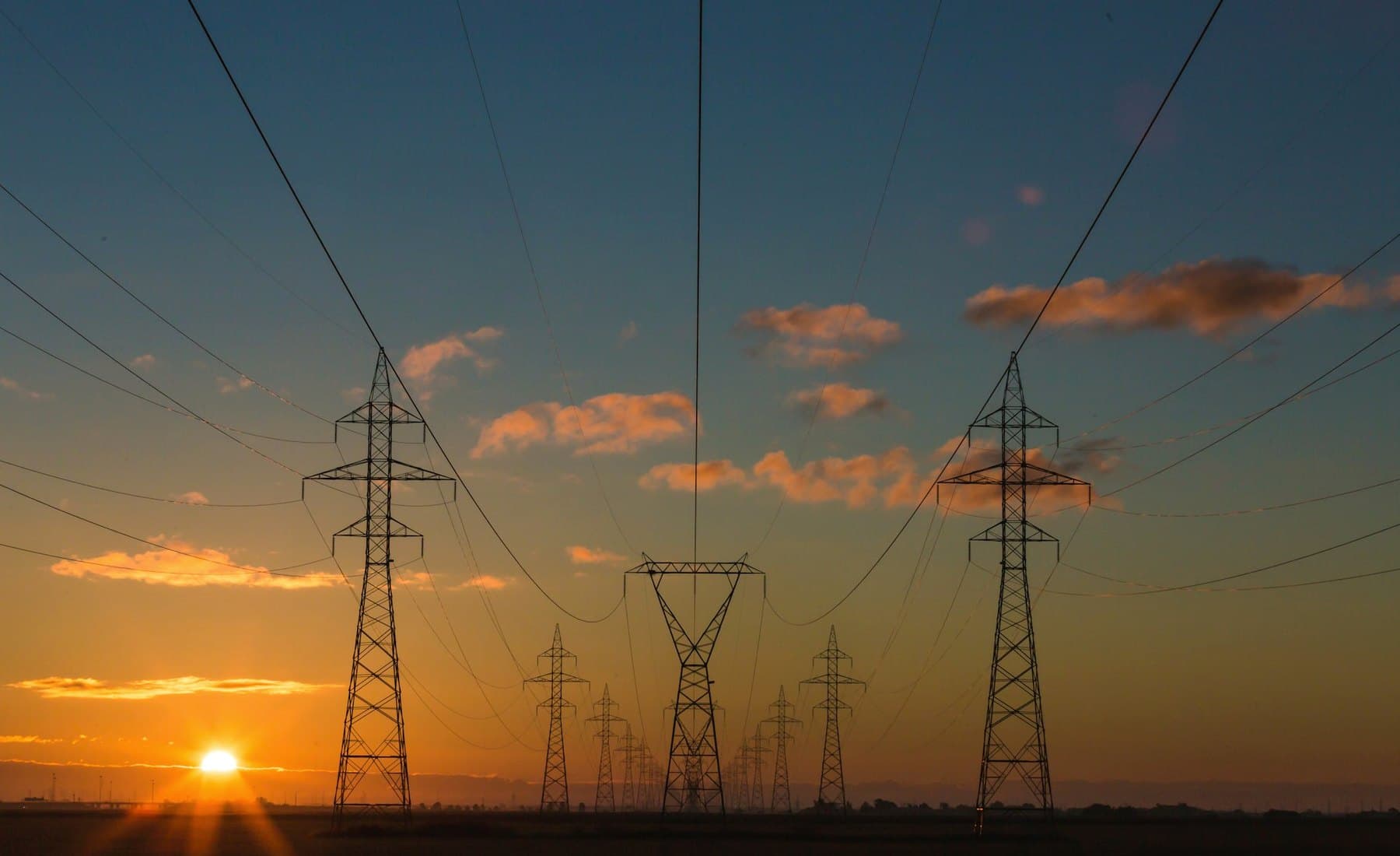
Derecho, Aug 10, 2020: 292,905 MidAmerican customers out at peak, ~60% of customers interrupted · Rate IO: 15-minute inflow/outflow, outflow credited at the retail rate.
The short answer
Des Moines homes are served by MidAmerican Energy. On August 10, 2020, a derecho interrupted power to 292,905 MidAmerican customers at the peak — 458,000 customer interruptions in all, affecting nearly 60% of its customer base. MidAmerican restored 86% of affected customers within 96 hours.
For solar owners, MidAmerican's Iowa Rate IO nets power in and out every 15 minutes and credits outflow at the retail volumetric rate. Because exports already earn retail value, the main case for a battery here is keeping the lights, sump pump and furnace running when the grid is down.
Get a Free Estimate
Tell us your Des Moines address, whether you have solar and what must stay on in an outage. We confirm coverage before anyone sizes a battery.
MidAmerican outages, billing and Iowa policy
From MidAmerican's derecho review, its Iowa interconnection and rates page, and the Iowa Utilities Commission.
The 2020 derecho
MidAmerican called it the largest storm response it had ever mounted: more than 2,500 crew members from 24 states, about 1,000 poles replaced and more than 2,700 overhead service lines repaired. NOAA estimated $11.5 billion in damage across the Midwest, the costliest thunderstorm disaster in U.S. history.
Rate IO: inflow and outflow
You pay the retail volumetric rate, including riders, for power taken from MidAmerican in each 15-minute period, and are credited the same rate for net power sent to the grid. Excess credits carry forward and expire once a year, at the January or April billing-year reset you choose.
A value-of-solar review ahead
Iowa Code § 476.49 tells the Iowa Utilities Commission to develop a value-of-solar method when statewide distributed generation reaches 5%, or if a utility petitions after July 1, 2027. The IUC put statewide penetration at 3.90% for 2025 and MidAmerican's at 1.47%.
Where a battery fits in Des Moines
Wind storms in summer, ice and cold in winter.
Sump pumps come first
Storms that take the power out often bring heavy rain. A sump pump on the backed-up panel keeps a basement dry through a multi-day outage like the derecho.
The furnace still needs power
A gas furnace needs electricity for its blower, igniter and controls. In a January outage, that circuit, refrigeration and internet are the usual short list.
Retail-rate credits change the math
Because Rate IO already credits exports at the retail volumetric rate, storing solar to use later saves little on the bill. Size the battery for the hours of backup you want, not for arbitrage.
Adding to existing solar
Adding a battery to a system already on Rate IO may need an updated interconnection application with MidAmerican. Check before the work is scheduled.
Des Moines next to its neighbors
West on I-80, Omaha is served by public power district OPPD, whose July 2024 storm left some customers out for nearly eight days. South, in Kansas City, Kansas, the municipally owned BPU runs both power and water.
For the water side of the same house, see Des Moines water quality, where nitrate is the number to watch. If you already have panels, read whether adding a battery needs a new interconnection application.
Where these figures come from
- MidAmerican Energy — derecho anniversary (August 9, 2021) — peak outages, restoration and crew figures.
- MidAmerican Energy — Customer Interconnection and Rates Information — Iowa Rate IO inflow/outflow billing.
- Iowa Utilities Commission — On-site (Distributed) Generation — Rate IO approval, Iowa Code § 476.49 and penetration data.
What a home battery job with us covers
Installation of storage and the backup circuits behind it, with the siting and utility paperwork handled.
Battery installation
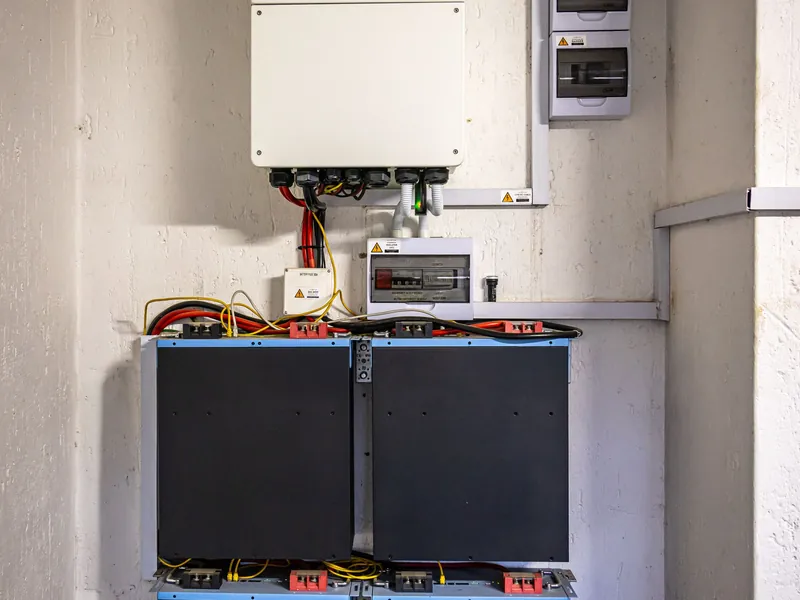
Wall or floor-mounted storage installed to the listing and to the residential code sections that govern where it may go.
Backup and critical load panel
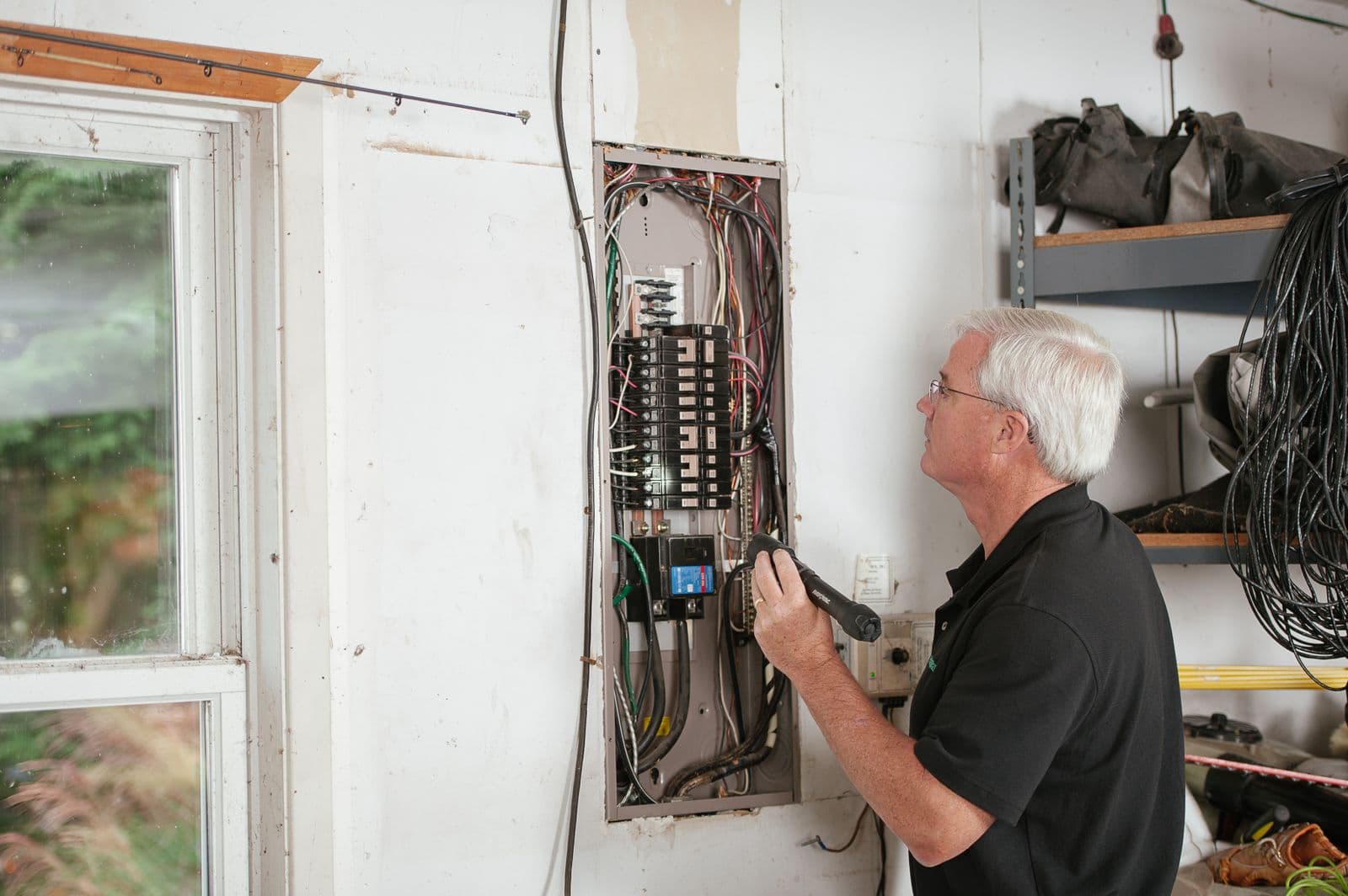
Deciding and wiring which circuits stay live, and which must never be on backup — the choice that defines what an outage feels like.
Integration with existing PV solar
Connecting storage to an array that is already on the roof, including whether the existing inverter supports it.
Transfer switch and disconnection
The equipment that separates the house from the grid during an outage, which is what makes backup legal as well as possible.
Siting to code
Location, clearances, separation and impact protection assessed against the adopted code before anything is mounted.
Permit, inspection and utility approval
The electrical permit, the inspection, and the utility's own approval step where storage touches the service.
This is installation work. No runtime, capacity or incentive figure is quoted before your loads and your utility are confirmed. Coverage is confirmed per service area rather than promised as blanket availability.
What the work actually looks like
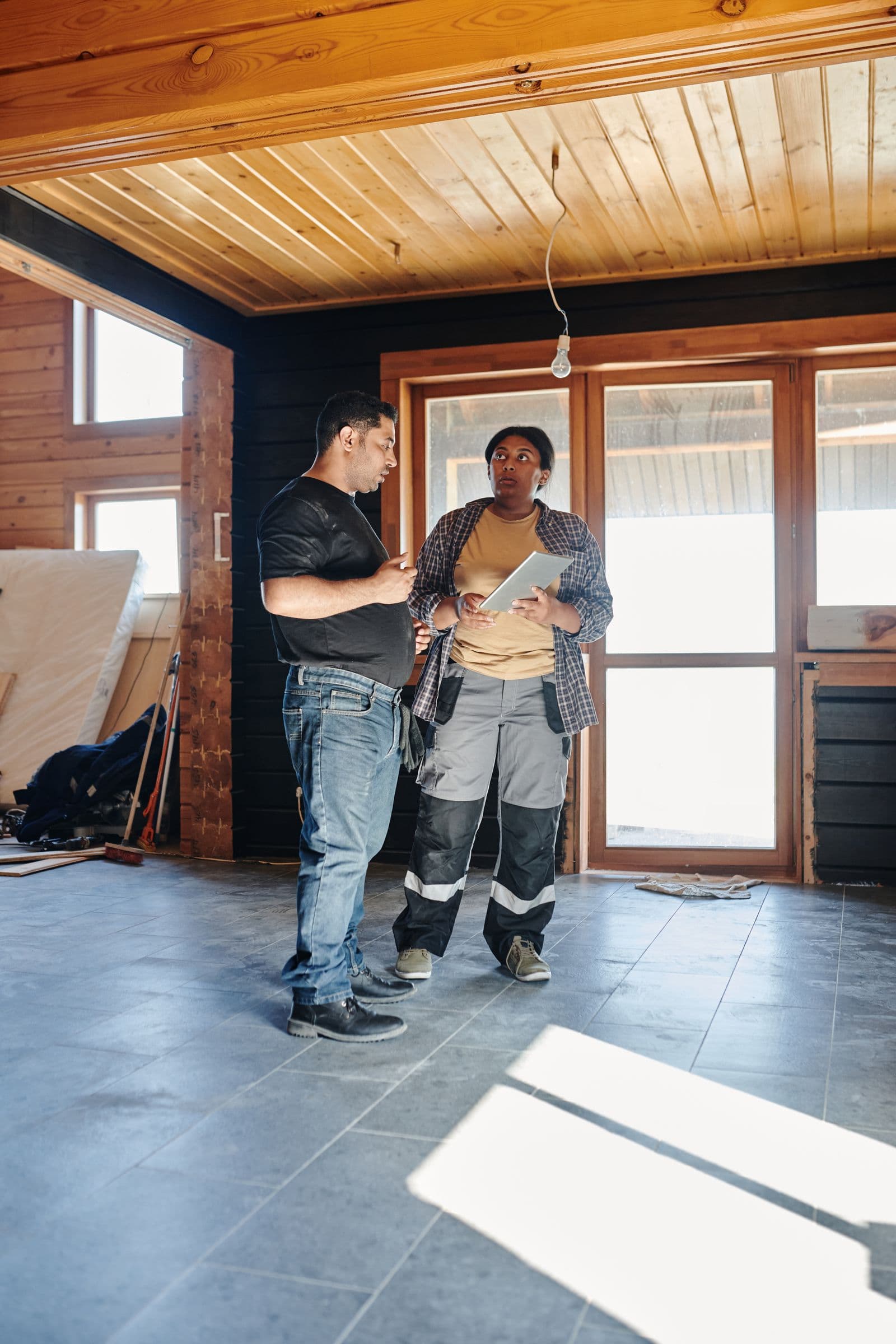
A battery job is an electrical job. The panel, the circuits and the disconnection are most of it.
Battery backup in Des Moines, answered plainly
Who is the electric utility in Des Moines?+
MidAmerican Energy, which is headquartered in Des Moines. It is rate-regulated by the Iowa Utilities Commission.
How does MidAmerican credit solar in Iowa?+
Under Rate IO, inflow and outflow are measured separately in 15-minute periods. Inflow is billed at the retail volumetric rate including riders, and net outflow is credited at the same rate. Excess credits carry over and expire at the annual reset you select, in January or April.
How bad was the 2020 derecho in Des Moines?+
MidAmerican reports 292,905 customers without power at the peak and 458,000 customer interruptions in total, nearly 60% of its customers. It restored 86% of affected customers within the first 96 hours.
Will Iowa's solar credit change?+
Iowa law directs the Iowa Utilities Commission to develop a value-of-solar method once statewide distributed generation reaches 5%, or if a utility petitions after July 1, 2027. Statewide penetration was 3.90% in 2025.
Do solar panels keep my power on in an outage?+
Not on their own. Grid-tied inverters shut down when the grid is down. A battery and an isolating transfer device are what let solar keep chosen circuits running.
Who installs it, and who is responsible afterwards?+
Seamless Home is the licensed contractor of record on the work it runs. Installation is performed by vetted installing partners engaged as our subcontractors, so the permit, the inspection and any correction notice carry one name. Coverage is confirmed per service area rather than promised as blanket availability.
Related resources
Home battery backup
The national service page behind this one.
Learn more →Home battery backup in Omaha
OPPD rates and the July 2024 storm.
Learn more →Home battery backup in Kansas City, KS
BPU rates and storm outages.
Learn more →Des Moines water quality
Raccoon and Des Moines River water, nitrate results.
Learn more →How many watts does a sump pump use?
Running and starting watts for backup sizing.
Learn more →Get a free estimate for Des Moines
Tell us your address, whether you have solar on Rate IO and which circuits — sump pump, furnace, refrigerator — must stay on in a storm. We confirm coverage first — no charge to talk, no obligation.
Get a Free Estimate