Solar Interconnection and Permission to Operate: The Approval That Decides When You Get Paid
By Seamless Home Team, Solar fulfillment operations · August 12, 2026
Quick answer
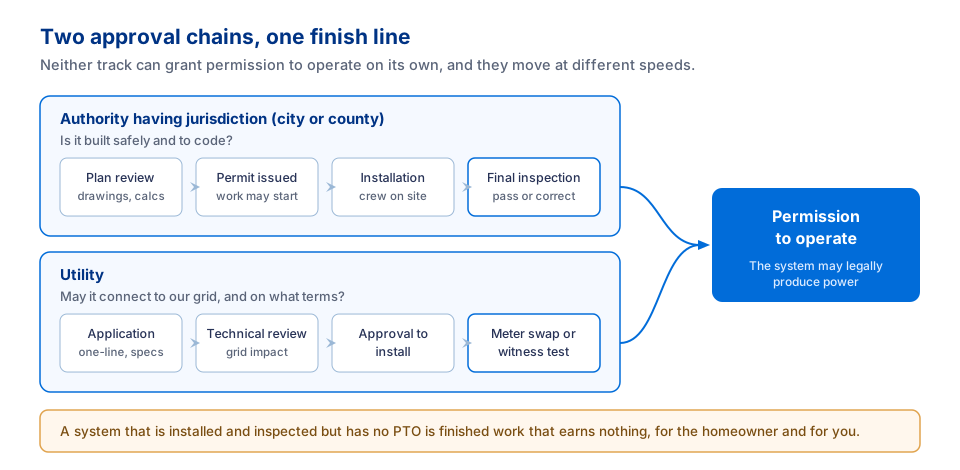
Interconnection is the utility's permission to connect a PV solar system to the grid, and permission to operate (PTO) is its final sign-off that the system may start producing. They are separate from the building permit issued by your city or county, they run on the utility's own calendar, and they usually cannot be hurried once filed. Because the final funding draw is typically tied to activation rather than installation, PTO is the approval that decides when a completed project turns into money. The one lever you control is the quality of the application package you file.
A residential PV solar project has a moment that surprises almost everyone the first time they meet it. The crew has left, what happens on installation day covers the visit itself. The panels are on the roof, the conduit is run, the inverter is mounted, the inspector has been and passed it. By every visible measure the job is done. And the system is switched off, producing nothing, because the utility has not yet said it may run.
That gap between installed and allowed to operate is where projects quietly stall, homeowners start calling, and, because the final funding draw is usually tied to activation rather than installation, where money that has already been spent sits waiting to be collected. It is also the part of the process that gets the least attention when a project is sold.
This is what interconnection and permission to operate actually are, why applications come back, and which parts of the timeline you can genuinely influence.
Interconnection is not your building permit
The most useful thing to understand first is that two entirely separate organisations have to approve a PV solar project, and they are answering different questions.
Your authority having jurisdiction, the city or county building department, is asking whether the system is designed and built safely and to code. That produces a building or electrical permit before work starts, and a final inspection after it finishes.
Your utility is asking a different question entirely: what happens to our distribution grid if we let this system connect at this address and push power back onto it? That produces an interconnection agreement, and eventually permission to operate. That agreement describes one specific configuration, which is why adding a battery years later normally reopens it.
Both must complete before PTO is granted. Neither can substitute for the other.
What the utility is actually reviewing
The interconnection application is a technical filing, and the utility is checking a specific set of things:
- The electrical design, via a one-line diagram showing how the array, inverter, overcurrent protection and point of connection fit together.
- The equipment, checked against a list of inverters and modules it has certified for grid connection in its territory. A model that is absent from that list is refused regardless of how compliant the installation is, and the reasons a model falls off it are mostly about certification timing rather than about the hardware.
- The point of interconnection: where on the premises the system ties in, and whether the existing service can carry it.
- System size against the site, since what is permitted to export can be constrained by the service, the account's historical usage, or the local circuit. Each of those is a separate mechanism with a separate remedy, set out in why a utility can limit or shrink a solar system.
- Metering and disconnection, including whether a utility-accessible AC disconnect is required and where it will be.
None of this is unusual or adversarial. It is a form, and it is checkable before you file.
Why applications come back
Here is the part worth internalising: when an interconnection application is returned, it is rarely because the utility objects to the project. It is almost always because the package was incomplete or internally inconsistent.
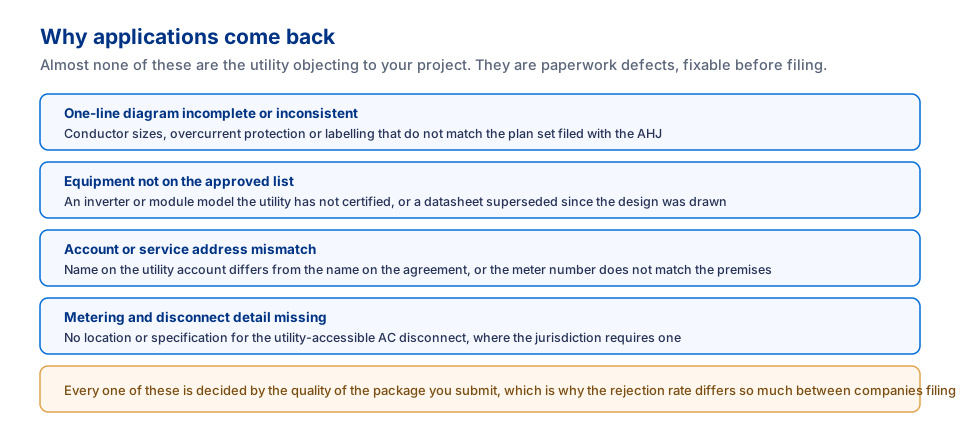
The evidence that these are fixable is straightforward: rejection rates differ sharply between companies filing into the same utility. If the cause were the utility's standards, every submitter would bounce at the same rate. They don't. The variable is the submitter.
There is a structural reason that gap persists. A utility reviewer sees applications arriving from many independent submitters, each with its own idea of what "complete" means. When a correction notice goes out, exactly one company learns something: and the next application, from a different company, arrives with the same defect. Nobody accumulates the knowledge, because nobody is filing enough volume through a single consistent process to accumulate it.
What the delay actually costs
The instinct is to treat a bounced application as an administrative nuisance. The arithmetic says otherwise, and it has three parts.
The requeue. A corrected package does not resume where it stopped. It generally rejoins the reviewer's queue behind everything submitted in the meantime. The cost of a correction is not the hour it takes to fix. It is the wait it re-enters.
The held draw. Because milestone funding is normally released in two parts, with the second tied to activation, anything that delays PTO delays collection on work already delivered. The materials are bought, the crew is paid, and the remaining share of the contract is booked revenue that has not become money. Milestone funding: M1 and M2 takes that gap apart, and explains why every bounced application extends it.
The cancellation risk. Every additional week between signature and a working system is a week in which a homeowner can change their mind, and late-stage cancellations are the expensive kind, as our breakdown of what a dead deal costs at each stage sets out, the costs already sunk by that point are substantial.
What you can actually control
Some of this timeline genuinely is not yours. Utility queue depth, seasonal volume, and how a particular reviewer works are external facts. Four things are not.
File early, and in parallel. The interconnection application does not have to wait for the permit. Reviews run concurrently, and filing at install time rather than at design time is the most common self-inflicted delay in residential PV solar. It converts two overlapping waits into two sequential ones.
Make the one-line match the plan set. A large share of corrections are simply the two documents disagreeing with each other. If the design changes after a site survey, both filings need the change, not just the one you happened to be looking at.
Verify the equipment against the utility's current approved list, at design time. Not the list from last quarter. A superseded datasheet is a correction notice with a several-week wait attached.
Confirm the account details before filing. Name on the utility account, service address and meter number, matched against the utility's records rather than against the sales agreement. It is a two-minute check that prevents one of the most common and most avoidable rejections. The full set of cases, including trusts, company-held property and recently sold homes, is in who signs a solar interconnection application. On a new-construction home the check is harder again, because the permanent account may not exist yet and the service may still be temporary and in the builder's name.
Beyond that, the highest-leverage change is structural rather than procedural: reduce the number of parties who could be holding it.
Who owns this on your projects
The most reliable predictor of how a project's interconnection goes is not the utility. It is whether one identifiable party owns the design, the permit package and the interconnection filing together. The contractor of record, rather than a chain of companies each holding one piece.
When those three sit with three different vendors, the failure is always the same and always mundane. A correction notice arrives naming a deficiency in the plan set. The party that received it did not draw the plan set. The party that drew it has moved on to other work. The sales organisation assumed the installer filed the interconnection application; the installer assumed it came with the design package. Nobody is lying and nobody is incompetent. There is simply no single party who can both receive the problem and fix it.
Seamless Home is the licensed contractor in the middle of the project, and that is the point of the arrangement here. Design, engineering, permitting, the interconnection filing and the follow-through to PTO sit with one entity. That produces two things worth having. The party that receives a correction notice is the party that can resolve it. And because the same package structure is filed on every project across every partner and crew, a deficiency fixed once stops recurring, which is the accumulation that a fragmented market never gets.
Milestone funding is submitted the same way, as the contractor of record, with the second draw tied to activation rather than install alone. That is deliberate: it keeps the incentive pointed at a system that is actually energised and working, which is the only definition of "done" that means anything to the homeowner.
The bottom line
Interconnection and permission to operate are not paperwork at the end of a project. They are a parallel approval track, on somebody else's calendar, that determines when a finished installation becomes a working system and when the last of the money arrives.
You cannot make a utility move faster. You can file early, file consistently, and make sure one party owns the filing end to end, which together remove most of the delay that is actually within reach. Start with the PTO and interconnection checklist to see where a live project stands across both approval chains, and get in touch if you would rather this were not your team's problem to track.
Frequently asked questions
What is solar interconnection?
Interconnection is the utility's authorisation to connect a PV solar system to its distribution grid and, in most markets, to export power back onto it. It is a separate process from the building or electrical permit issued by your city or county, with its own application, its own technical review and its own queue. The utility is answering a different question from the inspector: not is this built safely, but what happens to our grid if we allow this to connect here.
What is permission to operate (PTO)?
PTO is the utility's final written authorisation that a completed, inspected PV solar system may begin producing power. It normally comes after the jurisdiction has passed the final inspection and after the utility has completed whatever it needs on its side, commonly a meter exchange or a witness test. Until PTO is granted the system must stay switched off. A system that is installed but has no PTO is finished work generating nothing.
How long does interconnection and PTO take?
It varies enormously by utility and by season, which is why it should be tracked as its own line on a project schedule rather than folded into installation. What is consistent is the shape: the interconnection application should be filed early, well before install, because its review runs in parallel with permitting rather than after it. Filing late is the single most common self-inflicted delay, and it pushes activation, and the final funding draw, out by whatever the utility's current queue happens to be.
Why do interconnection applications get rejected?
Almost always for administrative rather than engineering reasons. The recurring causes are a one-line diagram that is incomplete or inconsistent with the plan set filed with the jurisdiction, equipment models that are not on the utility's approved list or whose datasheets have been superseded, account names or service addresses that do not match the utility's records, and missing detail on metering or a required utility-accessible disconnect. All of these are decided by the quality of the package you file, which is why rejection rates differ so much between companies submitting into the same utility.
Can you install solar before interconnection approval?
It depends on the utility and the market, and it is a question to answer for each one rather than assume. Many utilities issue an approval to install once technical review clears, and expect installation to follow it. Some allow installation to proceed at the applicant's risk before that point. Installing ahead of approval and then discovering the design must change is an expensive way to learn the local rule, because the correction lands after materials and labor are already spent.
Why is the final funding draw tied to PTO rather than installation?
Because activation, not installation, is what proves the project actually works. Milestone funding on residential PV solar is commonly released in two parts, one against evidence of install, one against evidence of activation, precisely so the incentive stays pointed at a permitted, energized, working system rather than at panels on a roof. It also means the gap between install day and PTO is money already spent and not yet collected, which is why it belongs in a cash-flow model rather than a footnote.
Who is responsible for the interconnection application?
Whoever the contract says, and it is worth checking rather than assuming, because it is a frequent gap. In a fragmented project the sales organization assumes the installer files it, the installer assumes the design vendor filed it with the plan set, and nobody does until somebody notices the schedule has stopped. The safer arrangement is one party that owns design, permitting and interconnection together, so the entity that receives a correction notice is the entity that can resolve it.