EPC, Installer, or Sales Org? Choosing Your Role in the Solar Value Chain
By Seamless Home Team, Solar fulfillment operations · July 15, 2026 · Updated August 5, 2026

Quick answer
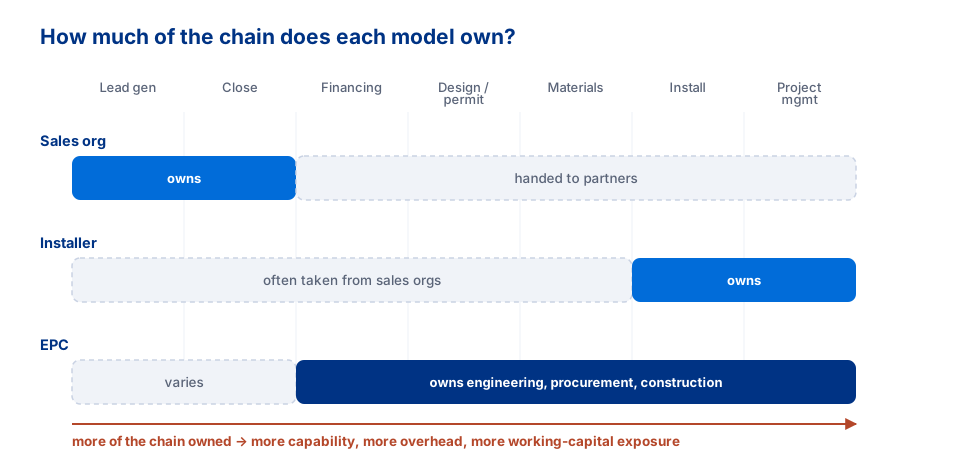
Every residential solar project runs through the same stages: generate the lead, close the homeowner, arrange financing, engineer and permit, procure materials, install, and manage the project to completion. The three business models differ only in how much of that chain they own. A sales organization owns lead generation and the close. An installer owns the physical build. An EPC owns engineering, procurement and construction end to end. Owning more of the chain buys control and costs overhead and working capital, so the right choice depends on where your real advantage is.
A residential solar project moves through the same stages regardless of who runs it: generate the lead, close the homeowner, arrange financing, engineer and permit the system, procure materials, install, and manage the project to completion. What separates the main business models is how much of that chain a company chooses to own. Understanding the three common shapes helps you decide where you want to compete.
Whichever model you are running, the same back-office functions have to exist on every project, and the real choice is whether you employ them or buy them — in-house vs outsourced solar operations compares the two on cost behaviour and on failure mode.
The sales organization
A sales org owns lead generation and the close and hands the rest to partners. Overhead is low, no crews, no warehouse, no financing desk, so it can scale sales quickly, and its risk is concentrated in one place: whether its fulfillment partners reliably build what it sells. This model suits teams whose real strength is generating and closing homeowner deals, and how to sell solar without installing covers it in depth. The licensing question underneath it, who may sell, and who must hold the licence, is in can you sell solar without a contractor licence. If this is the model you are choosing, the practical build-out is in how to start a solar sales business, and the route in through an existing program is how to become a solar dealer.
The installer
An installer owns the physical build, crews, equipment, and the on-site work, and often takes deals from sales orgs rather than generating them. The strength is control over installation quality and timelines; the challenge is keeping crews busy with steady deal flow and financing the materials for each job. Installers frequently want more deal flow and better materials terms without fronting working capital. The installer network exists for the first half of that and Direct Pay for the second.
The EPC
EPC stands for engineering, procurement, and construction. A company that owns the technical and physical delivery of the project end to end. EPCs carry the most operational capability and, with it, the most overhead and working-capital exposure. Many EPCs still lean on partners for financing breadth and procurement to keep cash free and offer homeowners more options; solar EPC services sets out what that division of labour looks like.
The term itself is used loosely across the industry, and the definition matters before the model choice does: what an EPC is in solar.
Each model breaks at a different point
Comparing these models on margin alone is how businesses end up in the wrong one. Every model is profitable per project when it is working. What differs is the constraint that stops it from doing more, and that constraint is what you will actually spend your time managing.
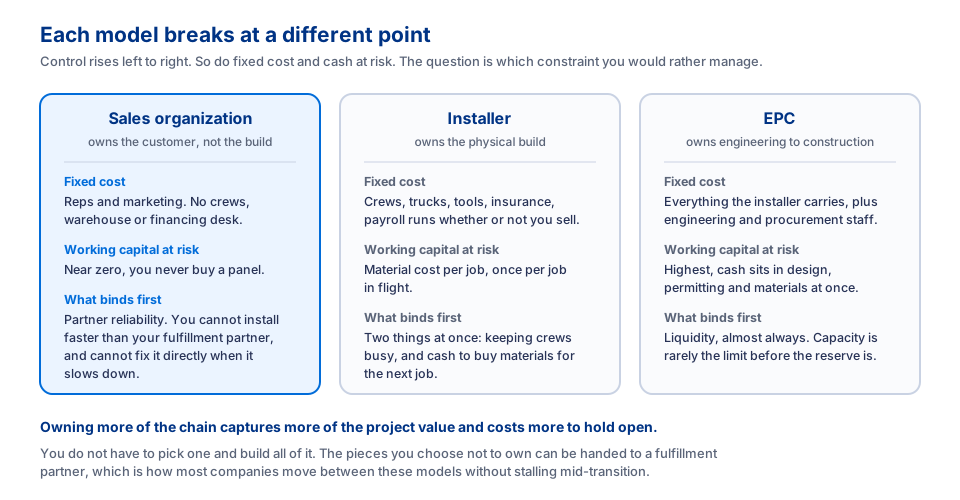
| Sales organization | Installer | EPC | |
|---|---|---|---|
| Owns | Lead generation and the close | The physical build | Engineering, procurement and construction |
| Fixed cost | Reps and marketing | Crews, trucks, tools, insurance | All of the installer's, plus engineering and procurement staff |
| Working capital at risk | Near zero | Material cost per job in flight | Highest: design, permitting and materials at once |
| Revenue per project | Lowest | Middle | Highest |
| Speed into a new market | Fast | Slow, hiring and licensing | Slowest |
| Control over timelines | Indirect | Direct on install; not on permitting | Direct across most of the chain |
| What binds growth first | Partner reliability and coverage | Deal flow, then materials cash | Liquidity, almost always |

Moving between models without stalling
Most transitions in this industry go one of two directions, and they carry very different risks.
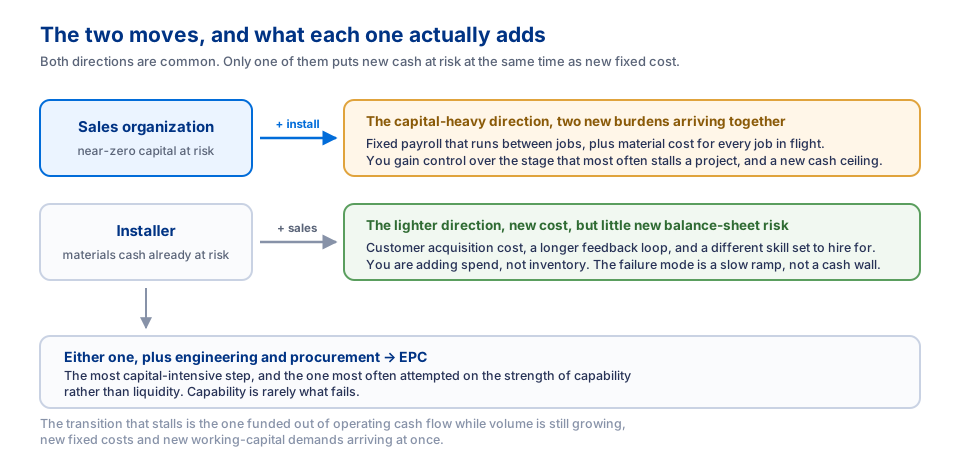
- Sales organization adds installation. The upside is control over the stage that most often stalls a project. The risk is that you take on fixed payroll and a working-capital requirement you have never had to manage, at the same time. Crews cost money between jobs, and materials freeze cash for weeks before funding lands. Model the ceiling at your target concurrency first; the in-house vs outsourced calculator and the install subcontract rate calculator compare owning the function against buying it.
- Installer adds sales. Less balance-sheet risk, because you are adding customer acquisition rather than inventory. The cost is a longer feedback loop and a genuinely different skill set. The sales funnel calculator and rep ramp planner are for sizing that before you hire into it.
- Either one adds engineering and procurement to become an EPC. The most capital-intensive step, and the one most often attempted on the strength of capability rather than liquidity. Capability is rarely the thing that fails.
The transition that stalls is almost always the one funded out of operating cash flow while volume is still growing, new fixed costs and new working-capital demands arriving together, in a business whose cash was already fully committed to projects in flight.
The move to installing is the largest of these, and it has a licensing, insurance and working-capital checklist of its own: how to start a solar installation company.
You do not have to own a stage to control it
Framing this as three models to choose between is convenient but slightly false. The chain decomposes. You can own the stages where you have a real advantage and hand off the rest: and plenty of companies that call themselves installers or EPCs outsource financing breadth, procurement or permitting, not because they lack the capability but because owning it consumes cash and headcount better spent elsewhere.
The more productive question is therefore not "which model am I?" but "which stages am I genuinely better at owning than a partner would be?" For most sales-led organizations that is lead generation and the close. For most install businesses it is build quality and scheduling. Very few businesses have a real advantage in permitting throughput or in procurement pricing, which is exactly why those are the stages most commonly handed off.
Which model fits you?
- Choose sales-only if your edge is generating and closing deals and operations would slow you down.
- Choose the installer path if you want to own build quality and can secure steady deal flow.
- Choose the EPC path if you want end-to-end control and can carry the overhead and capital it requires, and run your working-capital ceiling before you commit, because that is what usually binds first.
How a fulfillment partner fits every model
None of these models has to be built alone. Seamless Home provides the shared back end, multi-lender financing, Direct Pay materials with no upfront working capital, installer connections, and project management, that a sales org, an installer, or an EPC can plug into for the pieces it chooses not to own. The in-house vs outsourced calculator compares the cost of owning a function against handing it off, and what 'turnkey' actually means covers how to test what a fulfillment partner is really accountable for. It is a fulfillment platform, not the installing contractor, so you keep your role in the value chain and hand off the rest, get in touch to map it to your business.
Frequently asked questions
What does EPC stand for in solar?
Engineering, procurement and construction. An EPC owns the technical design, the sourcing of equipment and the physical build of the system. In residential solar the term is used for companies that deliver the project end to end rather than specialising in one stage, which means they carry the most operational capability and also the most overhead and working-capital exposure.
What is the difference between an installer and an EPC?
The boundary is engineering and procurement. An installer owns the physical build, crews, equipment and on-site work, and frequently takes deals and sometimes plansets from others. An EPC additionally owns the engineering and the procurement, so it controls system design and equipment sourcing rather than executing someone else's design. In practice many companies sit between the two labels.
Which solar business model is most profitable?
There is no single answer, because the models trade margin against overhead and risk. Owning more of the chain captures more of the project value but adds fixed cost, working-capital exposure and operational risk. A lean sales organization can be highly profitable per head with almost no capital at risk, while an EPC captures far more revenue per project and carries far more cost. The more useful question is which model fits the advantage you actually have.
Can a company change models as it grows?
Yes, and many do: most often a sales organization adding install capability, or an installer adding sales. The constraint is usually capital rather than capability: each step toward owning more of the chain increases the cash tied up in projects in flight. Understanding your working-capital ceiling before you expand is what keeps that transition from stalling mid-way.
How much working capital does each solar business model need?
It scales with how much of the chain you own and how many projects you run at once. A sales-only organization needs working capital for payroll and marketing but not for equipment, because it never buys a panel. An installer needs the material cost of every job in flight simultaneously, since materials are typically paid for weeks before a lender disburses. An EPC carries that plus cash committed in design and permitting on projects that have not reached installation. The useful calculation is not a single number but a ceiling: your available reserve divided by the cash committed per concurrent project.
Is it better to add installation to a sales business, or sales to an install business?
They fail differently, so the answer depends on which constraint you already handle well. A sales organization adding installation takes on fixed payroll and working-capital exposure it did not previously carry, and hits a liquidity ceiling it has never had to manage. An installer adding sales takes on customer acquisition cost and a longer feedback loop, but does not add much balance-sheet risk. Adding sales is generally the less capital-intensive direction; adding installation buys more control over the thing that most often stalls a project.
Do I have to pick one model and build all of it?
No, and treating it as a binary is what makes these transitions expensive. The chain decomposes: you can own the stages where you have a real advantage and hand off the rest to a fulfillment partner. Many companies that describe themselves as installers or EPCs outsource financing breadth, procurement or permitting: not because they cannot do it, but because owning it consumes cash and headcount they would rather spend elsewhere. Deciding stage by stage is usually a better question than deciding model by model.