What Is a Solar Dealer Program? How It Works and Who It's For
By Seamless Home Team, Solar fulfillment operations · July 19, 2026 · Updated September 9, 2026

Quick answer
A solar dealer program lets an organization sell solar and rely on a partner's back end, financing, materials, engineering, permitting, installation and project management, to fulfill what it sells. It suits sales-led teams that close homeowners but do not want to own crews, warehouses or a financing desk, and installers who want steady deal flow and program materials pricing. Programs differ most in lender breadth, materials terms, install coverage in your specific metros, and how much visibility you keep after the handoff.
“Solar dealer program” gets used loosely, so it helps to define it plainly: a solar dealer program is an arrangement that lets an organization sell solar and rely on a partner's back end, financing, materials, engineering, permitting, and installation, to fulfill what it sells. Instead of building all of that infrastructure yourself, you plug into a system that already has it. For the step-by-step version of joining one, see how to become a solar dealer.
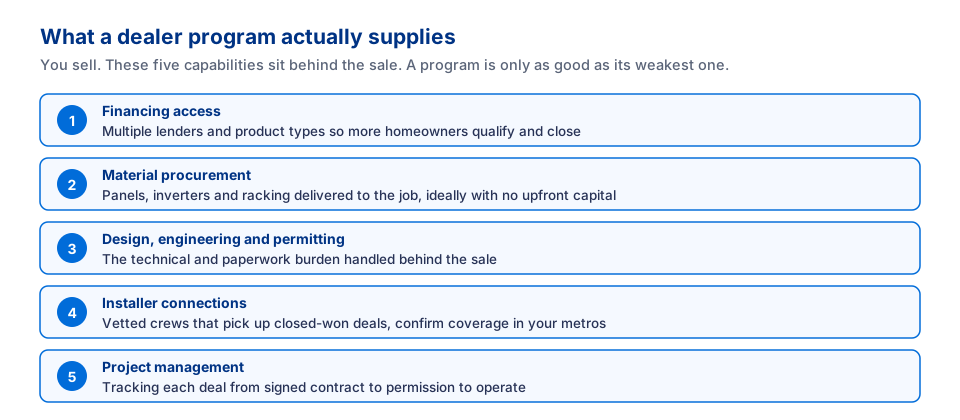
What a dealer program typically includes
- Financing access: multiple lenders and product types so more homeowners qualify and close.
- Material procurement: panels, inverters, and racking sourced and delivered to the job, often at program pricing, and ideally with no upfront working capital.
- Design, engineering, and permitting: the technical and paperwork burden handled behind the sale.
- Installer connections: vetted crews that pick up closed-won deals and build the system.
- Project management: tracking each deal from signed contract to permission to operate.
What a dealer program does not include
This is the more useful list, and it is rarely printed. A dealer program supplies fulfillment. It does not supply demand. In practice that means the following stay yours:
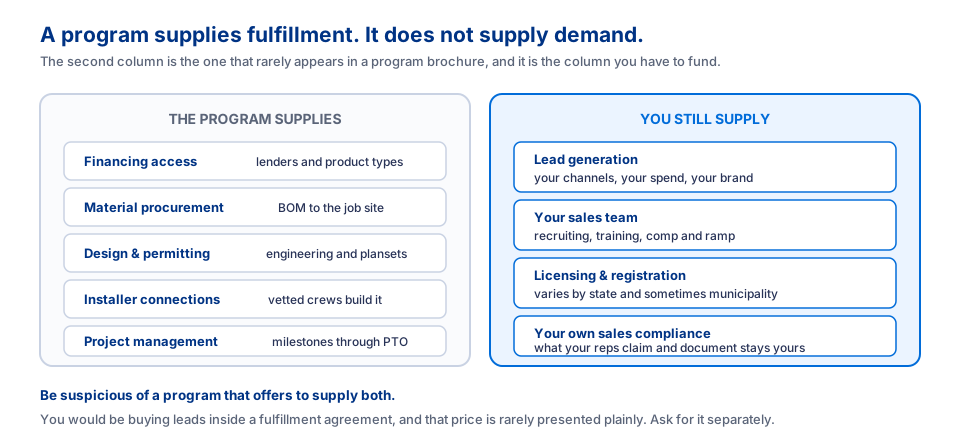
- Lead generation. Your channels, your spend, your brand. A program that offers to supply both leads and fulfillment is selling you two things inside one agreement, worth pricing separately before you agree to it.
- Your sales team. Recruiting, training, comp plans and ramp. The rep ramp planner is for modelling that side.
- Licensing and registration. Requirements differ by state and sometimes municipality, and they differ for selling versus installing. Confirm them with the relevant licensing board and your own counsel, not by copying how another company appears to operate. Can you sell solar without a contractor licence covers what varies from state to state.
- Your own compliance. How your reps sell, what they claim, and what they document remains your exposure regardless of who fulfils the project.
Four shapes of program, and how to tell them apart
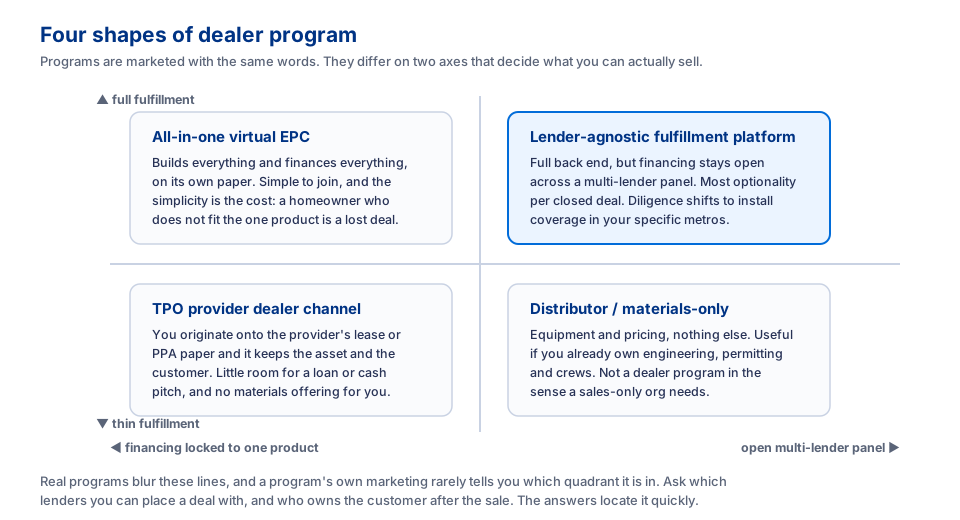
Programs describe themselves with nearly identical language, which makes marketing copy close to useless for comparison. Two axes separate them cleanly: how much fulfillment they actually perform, and whether financing is locked to their own product or open across a panel of lenders.
| Shape | Strength | The trade |
|---|---|---|
| All-in-one virtual EPC | Simplest to join; one relationship covers everything | Financing is usually locked to its own product, so a poor-fit homeowner is a lost deal |
| Lender-agnostic fulfillment platform | Full back end with financing kept open across a multi-lender panel | Diligence shifts onto install coverage in your specific metros |
| TPO provider dealer channel | Deep balance sheet behind the paper; strong lease and PPA products | Little room for a loan or cash pitch, and the provider keeps the asset and the customer |
| Distributor / materials-only | Equipment and pricing | Not a dealer program in the sense a sales-only org needs. You still own engineering, permitting and crews |
Real programs blur these boundaries, and several major ones have moved between quadrants as the market consolidated. Our comparison of dealer and fulfillment programs, the Powur alternatives roundup and the head-to-head Seamless Home vs Powur breakdown work through the named platforms with sources and current counterparty status.
Who a dealer program is for
The clearest fit is a sales-led organization. A team that generates and closes homeowner deals but does not want to own crews, warehouses, or a financing desk. A dealer program lets that team scale sales without building six other departments. Installers can also benefit from the other direction: joining a network for steady deal flow and better materials pricing without fronting working capital, and the same logic extends to EPCs.
How you join

Most programs start with a conversation about your markets, your monthly volume, and how you generate deals. From there the partner sets up your financing access and materials pipeline and establishes how closed deals are routed to installers. A good partner will be direct about install coverage in your specific markets, because a program is only as useful as its ability to actually build what you sell where you sell it.
How to tell a strong program from a weak one
- Lender breadth: one financing product is a bottleneck; several is a close-rate advantage. See what lender-agnostic means for how to test a claim of independence.
- Materials terms: look for discounted pricing and, ideally, no upfront working capital required. The working capital calculator shows what the difference is worth.
- Install coverage: confirm crews actually serve the metros where you sell, not just nationally.
- What is actually restricted: territory is the term most often discussed and least often written down. Does a dealer program give you an exclusive territory sets out what a program can and cannot bind, and the four narrower things usually offered instead.
- Visibility: you should be able to see where every project stands after the sale, not go dark at handoff. Add counterparty stability to this list, our comparison of dealer programs documents where each one currently stands.
Those five signals are qualitative, and comparing two programs against them from memory is harder than it sounds. The dealer program scorecard turns them into 33 specific terms and, more usefully, forces the distinction between a term that is written down and an assurance that was merely given.
Where the money actually comes from
Most programs do not charge a joining fee, which sometimes gets read as "free". It is not free; it is priced inside the project. Your compensation is the spread between what the homeowner finances and what it costs to fulfil the job, and several things move that spread that never appear in a headline commission rate:
- The lender's dealer fee, deducted from funded proceeds in exchange for a lower advertised rate. It comes out of project economics, not the homeowner's monthly payment. TPO vs loan vs cash works through the arithmetic.
- Materials pricing and terms, which affect both the cost and, if capital is required upfront, how many projects you can run at once.
- The financing structure on the deal. A loan and a third-party-owned system do not net the same on an identical install; the TPO vs loan proceeds calculator compares them.
- Cancellation terms. A program with generous rates and punitive fallout terms can pay worse than a modest one, depending on your fallout rate, see the deal fallout cost calculator.
Red flags worth walking away from
- Vagueness about install coverage in your specific metros. "We're national" is not an answer to "do you have crews in mine?"
- No clear answer on what happens when a deal cancels after materials ship. If nobody will put it in writing, you are the one carrying it.
- A single financing product presented as sufficient. It is a bottleneck, and the deals it costs you are invisible because they never enter your pipeline as losses.
- No visibility after handoff. If tracking a project means emailing a rep, you will hear about problems from your homeowner first.
- Evasiveness about financial standing. In this market that is a question a healthy counterparty can answer plainly. Several large residential solar companies have entered bankruptcy since 2024, and the failures were visible in public filings before they were visible in the sales conversation.
Where Seamless Home fits
Seamless Home is a fulfillment platform for residential solar and home-services businesses. It connects sales organizations to multiple funding sources, delivers materials through Direct Pay with no upfront working capital, matches deals to a network of installers, and manages projects from inception to install, see how it works or the full program. It is not the installing contractor. It is the back end that turns your closed deals into completed installations. Get in touch to see whether it fits your markets.
Frequently asked questions
What is a solar dealer program?
It is an arrangement in which you sell solar under a partner's fulfillment infrastructure. The partner supplies financing access, material procurement, design and permitting, installer connections and project management; you generate and close the deals. Instead of building all of that capability yourself, you plug into a system that already has it.
How do I become a solar dealer?
Most programs start with a conversation about your markets, your monthly volume and how you generate deals. From there the partner sets up your financing access and materials pipeline and establishes how closed deals are routed to installers. Expect to confirm licensing for the states you sell in, and expect a serious partner to be direct about where its install network actually has coverage.
What should I look for when comparing dealer programs?
Four things do most of the work: lender breadth, because one financing product is a bottleneck and several is a close-rate advantage; materials terms, especially whether upfront working capital is required; install coverage in the specific metros where you sell, not nationally; and visibility, meaning you can see where every project stands after the sale instead of going dark at handoff. Counterparty stability is a fifth, several large residential solar companies have entered bankruptcy since 2024.
Is a dealer program the same as a virtual EPC?
They overlap heavily and the terms are often used interchangeably in marketing. Both let a sales organization close homeowners while a partner engineers, procures and builds. The practical differences are in how much optionality you keep, particularly whether financing is locked to the partner's own product or open to a multi-lender panel, and whether materials procurement is a real offering or an afterthought.
What does a solar dealer program cost to join?
Most programs do not charge a conventional joining fee, because they are not selling you software. They earn from the projects you route through them. The real cost is embedded in project economics: the spread between what the homeowner finances and what fulfillment costs, plus any lender dealer fee deducted from funded proceeds. That makes headline commission rates a poor basis for comparison. Two programs quoting the same rate can pay very differently once materials pricing, fee structure and cancellation terms are accounted for. Ask to see the economics on a representative project rather than the rate alone.
What does a dealer program not cover?
Almost always: generating your own leads, your sales team and its training, your licensing and registration in the states where you sell, and your own compliance obligations. Programs supply fulfillment, not demand. A program that promises to supply both deal flow and fulfillment is worth examining closely. You would be paying for leads inside a fulfillment agreement, and the economics of that are rarely presented plainly.
How long does it take to start selling through a dealer program?
Onboarding itself is usually measured in weeks rather than months: market and volume review, financing access setup, materials pipeline, and how closed deals route to installers. What takes longer is your first project reaching completion, because that runs the full sequence of survey, design, permitting, materials, installation and permission to operate. Plan cash for the gap between your first close and your first milestone payment rather than assuming revenue starts with the first signature.